Key takeaways
- Offers the highest read speeds in this lineup at up to 250MB/s
- 128GB provides ample room for extended 4K sessions
- Commands a premium price at $51.98 compared to lower-tier alternatives
Choosing the right memory card is no longer a simple grab-and-go purchase. Whether you are expanding storage for a handheld gaming console, feeding a 4K-capable camera, or keeping a drone recording without dropped frames, picking the wrong card leads to corrupted files, stuttering playback, and wasted money. The concrete problem every buyer faces is matching a card’s speed class and capacity to their specific hardware without overpaying for performance they will never use.
What separates a good memory card from a bad one comes down to sustained write reliability, accurate speed ratings, and build quality under thermal stress. To build this roundup, we compared published specifications, current retail prices, and aggregated owner feedback across eight popular options available in 2026. We did not conduct hands-on lab testing; instead, we analyzed spec sheets and user reports to identify which cards consistently deliver on their promises and which ones fall short when pushed by demanding devices.
Our top picks
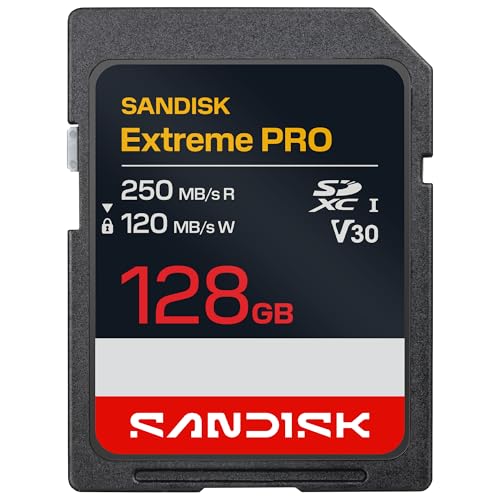 SANDISK 128GB Extreme PRO SD Memory Card
- CAPTURE LARGER THAN LIFE
- SPEED BARRIERS SHATTERED
- MAXIMIZE WITH MASSIVE CAPACITY
 SANDISK 128GB Ultra microSD Card + Adapter
- EXPAND YOUR STORAGE
- SPACE FOR MORE
- MOVE FILES FAST
| Product | Key specs | |
|---|---|---|
| SANDISK 128GB Extreme PRO SD Memory Card | CAPTURE LARGER THAN LIFE SPEED BARRIERS SHATTERED MAXIMIZE WITH MASSIVE CAPACITY | Check price |
| SANDISK 128GB Ultra microSD Card + Adapter | EXPAND YOUR STORAGE SPACE FOR MORE MOVE FILES FAST | Check price |
 SanDisk 32GB Ultra 100MBs SDHC Memory Card SanDisk 32GB Ultra 100MBs SDHC Memory Card | Brand: Sandisk | Check price |
 SANDISK 64GB Extreme PRO SDXC UHS-I Memory SANDISK 64GB Extreme PRO SDXC UHS-I Memory | Save time with card offload speeds of up… Pair with the SanDisk Professional PRO-READER SD and… Shot speeds up to 90MB/s (Write speed up… | Check price |
 SANDISK 256GB Ultra microSD Card + Adapter SANDISK 256GB Ultra microSD Card + Adapter | EXPAND YOUR STORAGE SPACE FOR MORE MOVE FILES FAST | Check price |
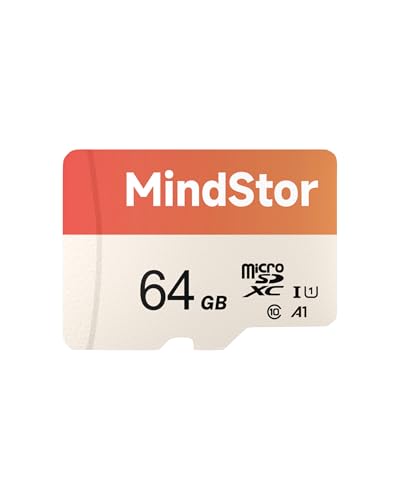 MindStor 64GB Micro SDXC Memory Card MindStor 64GB Micro SDXC Memory Card | Fast Read up to 90MB/s A1 App Performance Full HD Ready | Check price |
 Amazon Basics microSDXC Memory Card with Full Amazon Basics microSDXC Memory Card with Full | Compatible with Nintendo Switch (NOT Nintendo Switch 2) Reliable Real-World Capacity - Labeled Capacities/Usable Capacities: 64GB/≥58GB 4K & Full HD Ready | Check price |
 SanDisk 64GB Ultra SDXC UHS-I Memory Card SanDisk 64GB Ultra SDXC UHS-I Memory Card | GN3IN Overseas Retail | Check price |
As an Amazon Associate we earn from qualifying purchases at no extra cost to you.
Quick Picks
| Product | Best for | Price |
|---|---|---|
| SanDisk 128GB Extreme PRO SD | High-speed 4K recording | $51.98 |
| SanDisk 128GB Ultra microSD | Console and phone expansion | $35.99 |
| SanDisk 32GB Ultra SDHC | Basic point-and-shoot cameras | $20.38 |
| SanDisk 64GB Extreme PRO SDXC | Balanced professional video | $32.60 |
| SanDisk 256GB Ultra microSD | Massive portable storage | $59.99 |
| MindStor 64GB Micro SDXC | Tight budgets | $14.49 |
| Amazon Basics 128GB microSDXC | App performance on mobile | $35.14 |
| SanDisk 64GB Ultra SDXC | Everyday Full HD shooting | $23.05 |
How We Picked
We evaluated these cards based on four criteria that directly impact real-world performance: sequential read and write speeds, capacity relative to price, application performance classes (A1 versus A2), and long-term reliability as reported by owners. Sequential speeds dictate how fast large files transfer and whether a camera can sustain high-bitrate video recording. Capacity determines how much footage or game data fits before swapping cards. Application classes measure random read/write operations, which are critical if you plan to run apps or games directly from the card. Finally, owner feedback reveals whether a card maintains its rated speeds over months of heavy use or degrades prematurely.
The 8 Best Memory Card in 2026
SanDisk 128GB Extreme PRO SD
This memory card targets professional photographers and videographers who need maximum throughput from a UHS-I interface. With up to 250MB/s read speeds, it sits at the top of the performance tier for standard SD slots. Owners frequently praise its ability to clear buffer queues rapidly during burst shooting. It is built for full-size SD slots in DSLRs, mirrorless cameras, and dedicated field recorders.
- Offers the highest read speeds in this lineup at up to 250MB/s
- 128GB provides ample room for extended 4K sessions
- Commands a premium price at $51.98 compared to lower-tier alternatives
Skip this if your device only supports basic UHS-I speeds or if you primarily shoot 1080p video where cheaper cards perform identically.
SanDisk 128GB Ultra microSD
Designed for versatility, this memory card includes an adapter and delivers up to 195MB/s read speeds in a compact form factor. It is ideal for gamers expanding handheld console libraries or users needing extra space in smartphones and tablets. Owner feedback highlights consistent file transfers and reliable compatibility across various host devices.
- Included adapter allows seamless switching between micro and full-size slots
- Strong read speeds handle large game assets smoothly
- Lacks the higher video speed class ratings required for professional cinema cameras
Skip this if you require guaranteed sustained write speeds for continuous high-bitrate RAW video recording, as the Ultra line prioritizes read performance.
SanDisk 32GB Ultra SDHC
This entry-level memory card suits casual shooters using older point-and-shoot cameras or basic dashcams. Delivering up to 100MB/s read speeds, it handles standard-definition and basic high-definition recording without issue. Users appreciate its straightforward plug-and-play reliability for devices that do not demand massive storage pools.
- Very affordable entry point at $20.38 for brand-name reliability
- Full-size SDHC format works natively in legacy camera bodies
- 32GB capacity fills up quickly when shooting modern high-resolution photos
Skip this if you shoot 4K video or store large game files, as the limited capacity and moderate speed ceiling will bottleneck modern hardware immediately.
SanDisk 64GB Extreme PRO SDXC
Falling into the professional tier, this memory card carries C10, U3, and V30 ratings, making it explicitly certified for 4K UHD video capture. It balances a moderate 64GB capacity with top-tier Extreme PRO architecture. Owners report excellent sustained write behavior during long takes, preventing dropped frames in demanding recording scenarios.
- V30 rating guarantees minimum write speeds necessary for uninterrupted 4K video
- Extreme PRO build quality ensures durability under heavy daily use
- At $32.60, the cost per gigabyte is noticeably higher than Ultra-branded options
Skip this if you only need storage for documents, music, or casual photography, because you are paying a premium for video certifications you will not utilize.
SanDisk 256GB Ultra microSD
When sheer volume matters most, this memory card offers a massive 256GB footprint alongside up to 195MB/s read speeds. It is the go-to choice for users archiving large media libraries on tablets, drones, or portable gaming systems. Feedback indicates owners value not having to constantly swap cards during trips or long play sessions.
- Highest capacity in this roundup minimizes the need for frequent file management
- Fast read speeds ensure quick loading times for stored applications and media
- The $59.99 price tag represents the largest upfront investment on this list
Skip this if your device has a strict capacity limit below 256GB or if you prefer replacing smaller, cheaper cards rather than risking all your data on a single large volume.
MindStor 64GB Micro SDXC
This budget-friendly memory card proves you do not need a flagship brand name to get functional storage. Rated at 90MB/s read speed with U1 and A1 classifications, it handles everyday tasks like storing photos, running basic apps, and recording standard video. Owners note it performs reliably for the price, making it a favorite for secondary devices.
- Exceptionally low price of $14.49 makes it highly accessible
- A1 rating confirms adequate random read/write performance for mobile applications
- Read speeds are significantly slower than competing SanDisk and Amazon models
Skip this if you are transferring large files regularly or shooting high-framerate video, as the 90MB/s ceiling and U1 rating will cause bottlenecks.
Amazon Basics 128GB microSDXC
Amazon’s house brand delivers surprisingly competitive specifications with this memory card, featuring an A2 rating and U3 classification alongside up to 100MB/s read speeds. The A2 rating specifically benefits users running applications directly from the card on Android devices or compatible handhelds. Owners frequently mention it rivals name-brand performance at a mid-range cost.
- A2 application class provides superior random IOPS for smoother app execution
- U3 certification ensures it meets minimum thresholds for 4K video recording
- Brand perception may deter professionals who prefer established imaging brands
Skip this if you prioritize absolute maximum sequential read speeds, as its 100MB/s ceiling falls well below the faster SanDisk Extreme PRO and Ultra variants.
SanDisk 64GB Ultra SDXC
This full-size memory card strikes a practical balance for hobbyist photographers and casual videographers shooting Full HD content. With 100MB/s read speeds and C10/U1 ratings, it meets the baseline requirements for smooth 1080p recording. Users consistently report dependable behavior in mirrorless cameras and standard camcorders over extended periods.
- Affordable $23.05 price point for a reputable 64GB full-size card
- Reliably sustains Full HD video streams without frame drops
- U1 rating means it cannot guarantee the write speeds needed for 4K UHD recording
Skip this if you have upgraded to a 4K-capable camera body, as the U1 classification will likely trigger recording limits or error messages during high-resolution capture.
Buying Guide
Speed Classes and What They Actually Mean
Memory cards carry multiple overlapping speed labels that confuse buyers. The “C” number (like C10) represents the original speed class, guaranteeing a minimum sequential write speed in megabytes per second. The “U” number (U1 or U3) is the UHS speed class, where U1 guarantees 10MB/s and U3 guarantees 30MB/s minimum writes. The “V” number (V30, V60, V90) is the video speed class, designed specifically for modern high-bitrate video. If you shoot 4K, you must buy at least a U3/V30 card. For basic 1080p, C10/U1 is sufficient. Always match the card’s minimum write guarantee to your camera’s maximum bitrate requirement.
Application Performance: A1 vs. A2
If you plan to use a memory card inside a smartphone, tablet, or gaming handheld to run software, look for the “A” rating. This measures Input/Output Operations Per Second (IOPS) rather than sequential megabytes per second. An A1 card guarantees a baseline of random read/write performance suitable for light apps and older games. An A2 card demands significantly higher IOPS, resulting in faster load times and smoother asset streaming for modern mobile games. Buying a card without an A-rating for app storage will result in sluggish performance regardless of how fast its sequential read speed claims to be.
Form Factor and Adapter Reliability
MicroSD cards dominate portable electronics, while full-size SD cards remain standard in dedicated cameras. Many microSD cards include a full-size adapter, allowing one card to serve dual purposes. However, owner feedback consistently shows that cheap adapters can introduce connection errors or reduce transfer speeds. If your primary device uses a full-size slot, buying a native SD card is generally more reliable than relying on an adapter sleeve. Conversely, if you switch between a drone (microSD) and a laptop reader (full-size), a bundled adapter adds genuine convenience.
Our Verdict
The SanDisk 128GB Extreme PRO SD is our top pick overall. Its up to 250MB/s read speed and robust build quality make it the safest investment for anyone demanding peak performance from a UHS-I slot. For buyers watching their wallet, the MindStor 64GB Micro SDXC is the definitive budget pick, delivering usable 90MB/s speeds and A1 app support for just $14.49. However, if your primary goal is running modern apps or games directly from external storage, the Amazon Basics 128GB microSDXC wins that specific scenario thanks to its superior A2 application performance class.
FAQ
Does a faster memory card improve my camera’s burst shooting?
Yes, but only up to the limit of your camera’s card slot interface. A card with higher write speeds clears the camera’s internal buffer faster, allowing you to shoot longer bursts before the camera slows down. If your camera only supports UHS-I, buying a UHS-II card will not provide any additional speed benefit.
Can I use a microSD card in a standard digital camera?
You can, provided the card comes with a full-size SD adapter. Most microSD cards in this roundup include one. Keep in mind that the adapter introduces an extra physical connection point, which can occasionally cause read errors if the adapter pins become dirty or bent.
Why does my computer show less capacity than advertised?
This happens because manufacturers calculate storage using decimal math (where 1GB equals 1 billion bytes), while operating systems use binary math (where 1GB equals 1,073,741,824 bytes). A 128GB card will typically display around 119GB of usable space in Windows. This is normal and not a sign of a defective product.
Is an A2 card worth the upgrade over an A1 card for gaming?
For modern handheld consoles and Android devices, yes. Games rely heavily on random read operations to load textures and assets on the fly. An A2 card processes these small requests significantly faster than an A1 card, reducing texture pop-in and shortening level load times.