Our Top Picks
Choosing a macro lens for a Sony E-mount body is less about finding the sharpest glass and more about deciding how close you need to get, how far you want to stand from the subject, and how much weight you will carry. Insects and flowers reward a longer focal length that keeps you at a distance. Product shots and food photography are happy with something shorter and lighter. The search for the best Sony macro lens is really a search for the right compromise.
This guide covers six E-mount options, from compact 30mm and 50mm primes to a 100mm G Master and a macro-capable telephoto zoom, plus a Tamron half-macro alternative. Duplicate listings, including renewed and bundle versions of the same 90mm, were merged into one entry, and the Sony FE 50mm f/1.8 was left out because its listing does not describe macro capability. For 2026 buyers, E-mount macro is a mature, well-supplied category, so the decision is mostly budget versus reach.
Quick Picks

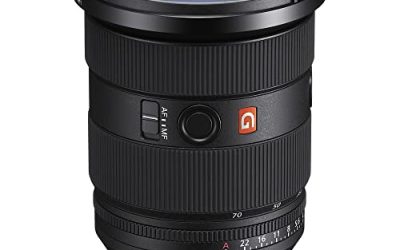
Sony FE 100mm F2.8 GM OSS Macro Lens with 1.4X Magnification (Sony E-Mount) | 1.4x magnification with f/2.8 aperture and OSS for macro photography, nature videography and professional portraits
One of the consumer electronics options compared in this guide.
View on Amazon
Sony FE 90mm F2.8 Macro G OSS Full-Frame Lens | Mirrorless Cameras
One of the consumer electronics options compared in this guide.
View on AmazonSony SEL90M28G FE 90mm f/2.8-22 Macro G OSS Lens for Mirrorless Cameras (Renewed)
One of the consumer electronics options compared in this guide.
View on Amazon
Sony SEL30M35 30mm f/3.5 e-mount Macro Fixed Lens | 1:1 macro magnification with 30mm focal length and f/3.5 aperture for close-ups, portraits and travel
One of the consumer electronics options compared in this guide.
View on Amazon
Sony FE 70-200mm f/4 Macro G OSS II Lens - E Mount
One of the consumer electronics options compared in this guide.
View on Amazon
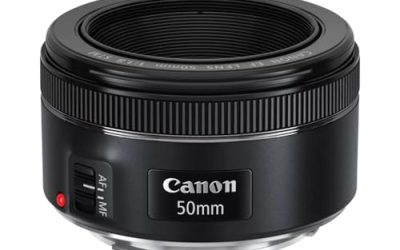
Sony SEL50M28 FE 50mm F2.8 Full Frame E-mount Lens (Black) | 1:1 Macro lens with f/2.8 aperture and 8.4oz weight for close-ups, portraits and everyday photography
One of the consumer electronics options compared in this guide.
View on Amazon| Product | Best for | Key spec from the title |
|---|---|---|
| Sony FE 100mm F2.8 GM OSS | Premium macro and portraits | 1.4X magnification, f/2.8, OSS |
| Sony FE 90mm F2.8 Macro G OSS | Balanced all-round macro | Full-frame, Macro G, OSS |
| Sony SEL30M35 | Light kit and APS-C bodies | 1:1 macro, 30mm, f/3.5 |
| Sony FE 70-200mm f/4 Macro G OSS II | Versatile telephoto with macro ability | f/4 constant aperture, Macro G OSS II |
| Sony SEL50M28 | Everyday macro and portraits | 1:1 macro, f/2.8, 8.4oz weight |
| Tamron 35mm f/2.8 Di III OSD M1:2 | Compact budget wide-angle close-ups | M1:2 magnification, f/2.8, 35mm prime |
How to Choose
Magnification ratio is the first number to read
True macro means 1:1, where the subject is projected on the sensor at life size. A 1:2 lens, written M1:2 on the Tamron, reaches half life size, which is fine for flowers and product shots but not for the tiniest insects. The Sony 100mm GM lists 1.4X, which goes beyond life size. If your subjects are smaller than a coin, favor 1:1 or higher.
Focal length controls working distance
A 30mm or 50mm macro requires you to place the lens only a few inches from the subject, which can cast shadows and startle bugs. A 90mm or 100mm gives roughly double the space, so lighting is easier and skittish subjects stay put. A 70-200mm f/4 gives much more distance, but usually with less than life-size magnification, so check what the manufacturer lists.
Stabilization, aperture, and build
OSS means optical stabilization in the lens, which helps handheld close-ups on bodies without sensor stabilization. An f/2.8 aperture gives bright viewfinders and background separation; f/3.5 is slightly slower. For macro you usually shoot at f/8 to f/16 for depth of field, so the widest aperture matters less than the optics and focus system. Weather sealing and weight are worth checking if you shoot outdoors.
Where budget choices compromise
Cheaper macros offer shorter working distance, slower autofocus at close range, and no stabilization. Third-party lenses can also lack the same body integration. Ignore the bundle extras in some listings, such as bags and memory cards, and judge the lens on its optical specs. Also remember that macro shooting is hard on autofocus, so many photographers switch to manual focus with peaking at close range. A lens that focuses smoothly by wire and has a clear focus ring will feel better in practice than one with a long feature list. Finally, think about accessories: a ring light or a small diffuser often improves macro results more than a pricier lens does.
The 6 Best Options
Sony FE 100mm F2.8 GM OSS
The G Master 100mm is the flagship macro here. The listing states 1.4X magnification, f/2.8, and OSS for E-mount, which makes it appealing for demanding macro work as well as portraits. It is built for photographers who want maximum quality and are willing to pay in the premium tier. Macro work rewards precision, and the GM designation signals the top of Sony’s lens lineup, which matters if you crop heavily or print large. The 100mm length also doubles as a flattering portrait lens, so the cost spreads across two genres, and OSS steadies close handheld framing.
- Strength: 1.4X magnification goes past life size for tiny subjects.
- Strength: 100mm focal length provides comfortable working distance.
- Trade-off: it carries the highest price tier and weight in the group.
Skip it if your macro shooting is occasional or your budget is limited. Buyers who need only 1:1 can get excellent results from the 90mm for less.
Sony FE 90mm F2.8 Macro G OSS
This full-frame 90mm Macro G OSS is the long-standing answer for E-mount macro shooters. It combines a comfortable focal length, a bright f/2.8 aperture, and stabilization for mirrorless cameras. It suits those who also shoot portraits, since 90mm renders faces nicely. Photographers moving up from a kit lens often find the 90mm to be the first lens that makes close-up work feel easy, because the working distance leaves room to place a reflector or diffuser. The Full-Frame label also tells you it covers the whole sensor on bodies such as the Alpha series.
- Strength: G-series optics and OSS in a focal length suited to insects and flowers.
- Strength: dual use for macro and portrait work.
- Trade-off: it is a mid-to-premium tier purchase and not tiny.
Skip it if you need something lightweight for travel. Note that several listings of this lens bundle accessories or sell renewed copies, so compare the lens itself.
Sony SEL30M35
The 30mm f/3.5 macro is a compact fixed lens offering 1:1 magnification for close-ups, portraits, and travel. It is a smart match for APS-C bodies and photographers who prioritize a light kit and want the lowest cost of entry into true macro. The listing also mentions portraits and travel, so it is not locked into bug photography. At f/3.5 it is not the fastest, but macro work is usually done stopped down, and the small size means it rarely feels like a burden on a hike or city walk.
- Strength: 1:1 magnification in a very small lens.
- Strength: budget-friendly tier compared with the G lenses.
- Trade-off: at 30mm the working distance is very short, so bugs and shadows are a challenge.
Skip it if you photograph skittish insects or need a faster aperture than f/3.5.
Sony FE 70-200mm f/4 Macro G OSS II
A telephoto zoom that carries Macro in its name, this lens offers a constant f/4 aperture and OSS on E-mount. It suits sports, wildlife, and travel photographers who also want a taste of close-up work from a distance without carrying a dedicated macro lens. The II in the name marks a later generation, and a constant f/4 keeps exposure steady as you zoom, which helps for video and events. For flowers at a roadside or details at a distance, the reach gives options a prime cannot.
- Strength: constant f/4 and a wide telephoto range.
- Strength: one lens covers portraits, events, and close-ups.
- Trade-off: it is not a true dedicated macro design, and size and cost are larger than a prime.
Skip it if macro is your main goal, since the dedicated 90mm or 100mm will magnify more. Two listings appear for this lens; they are the same product.
Sony SEL50M28
The 50mm f/2.8 full-frame E-mount macro lens delivers 1:1 magnification and weighs 8.4oz according to the title. It is a popular match for photographers who want one lens for macro, portraits, and everyday walks, and it keeps a camera bag light. Because the title states the weight, it is easy to see how it compares with heavier G and GM lenses. The 50mm field of view is natural, so product shots, food, and small objects look believable rather than stretched.
- Strength: 1:1 macro in a light, versatile 50mm package.
- Strength: f/2.8 handles low light and gentle background blur.
- Trade-off: the short working distance can be tricky for insects.
Skip it if you want long reach, or if you need stabilization in the lens, which the title does not mention.
Tamron 35mm f/2.8 Di III OSD M1:2
This Tamron is a compact 35mm f/2.8 prime for full-frame and APS-C E-mount, with M1:2 half-macro capability. It is for buyers who want one small, affordable prime that can also shoot close-ups of flowers, food, and product details. The OSD in the name indicates a stepping-style focus motor, and the Di III designation means it is made for mirrorless bodies. Its wide-angle 35mm view makes it handy for travel, street scenes, and tabletop work where you also need some background in the frame.
- Strength: compact wide-angle prime with close-focus capability.
- Strength: lower cost tier and works on both sensor sizes.
- Trade-off: M1:2 only reaches half life size.
Skip it if you need true 1:1 macro or plan to photograph tiny insects.
Which One Fits Your Situation
You shoot insects and want comfortable distance
Go with the Sony FE 90mm F2.8 Macro G OSS, or the 100mm GM if the budget stretches. Both give enough distance to keep your shadow off the subject and both list stabilization.
You want a light travel kit
The Sony SEL50M28 balances 1:1 macro with a light 8.4oz body. It doubles as a portrait lens, which keeps the kit to one piece of glass.
You shoot APS-C and want macro at the lowest cost
The Sony SEL30M35 gives true 1:1 in a compact package. It is easy to carry, so it will actually come along on trips.
You want one lens for events and the occasional close-up
The Sony FE 70-200mm f/4 Macro G OSS II suits that mixed use. Treat the macro capability as a bonus rather than the main reason to buy.
Common Mistakes
- Assuming every lens with macro in the name reaches 1:1.
- Overlooking working distance and then casting shadows on the subject.
- Paying extra for bundled bags and memory cards instead of the lens itself.
- Shooting wide open and losing depth of field on small subjects.
- Buying a renewed unit without checking the return and warranty terms.
Related guides
- Gaming Headset Noise Isolation Vs Active Noise Cancellation
- Does Gaming Headset Noise Cancellation Work On Microphone
- How Much Does It Cost To Run A Gaming Pc Per Month
Frequently Asked Questions
What does 1:1 macro mean?
It means the subject appears life size on the sensor. A lens rated at 1:2 shows the subject at half life size.
Is a 90mm macro better than 50mm?
For insects, usually yes, because the extra working distance helps with lighting and skittish subjects. For product shots, 50mm is fine. For product shots, 50mm is fine, and it leaves more of the scene in frame when you want context around a small subject.
Do I need stabilization on a macro lens?
It helps handheld shooting, especially if your camera body lacks in-body stabilization. Tripod users can ignore it. Tripod users can ignore it, though handheld shooters at high magnification will notice the difference immediately.
Can I use these lenses on APS-C Sony cameras?
Yes, E-mount lenses fit both sensor sizes, though the field of view crops on APS-C. though the field of view crops on APS-C. A full-frame lens on a cropped body behaves like a longer lens, which can even help with working distance.