Our Top Picks
 Western Digital 16TB WD Red Pro NAS Internal16TB (Pack of 1)1 x 5.8 x 4 inches1.5 poundsCheck on Amazon
Modern game installs are enormous, and a library that once fit on a single drive now spills across several. That is where a big internal hard drive earns its keep: it is the cheapest way per terabyte to hold the games you are not playing this week, so your fast solid-state drive can stay reserved for the one or two titles you are actually in the middle of. If your Steam or launcher library keeps hitting the “disk full” wall, a 3.5-inch hard drive is the practical fix.
This guide is for desktop PC owners who want to add bulk storage for a game library, not for laptop users or console owners. The eight drives below range from 2TB to 26TB and come from the Seagate and Western Digital families, compared using only the listing details: capacity, spindle speed, cache, recording type, warranty wording and intended use. Think of them as a shelf for your 2026 backlog rather than a speed upgrade.
Quick Picks

Seagate 8TB BarraCuda Internal Hard Drive | SATA 6 Gb/s (ST8000DM004) | Desktop HDD for everyday PC storage, gaming, & computing. Trusted reliability with 2-Year Warranty + 2-Year Rescue
One of the home product options compared in this guide.
View on Amazon
Western Digital 8TB WD Blue PC Internal Hard Drive HDD - 5640 RPM, SATA 6 Gb/s, 256 MB Cache, 3.5" - WD80EAAZ
One of the home product options compared in this guide.
View on Amazon
Seagate BarraCuda 2TB Internal Hard Drive HDD – 3.5 Inch SATA 6Gb/s 7200 RPM 256MB Cache – Frustration Free Packaging (ST2000DM008/ST2000DMZ08)
One of the home product options compared in this guide.
View on Amazon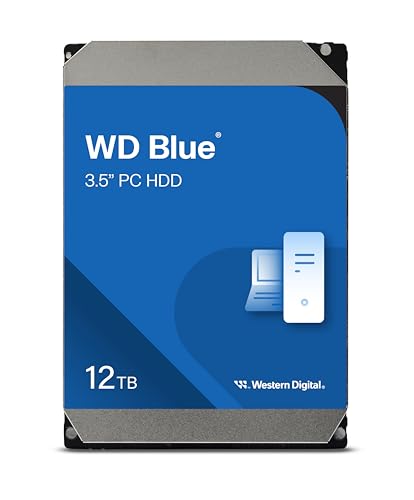
Western Digital 12TB WD Blue Internal Hard Drive HDD - 7200 RPM, SATA 6 Gb/s, 512 MB Cache, 3.5" - WD120EAGZ
One of the home product options compared in this guide.
View on Amazon
Seagate Exos 26TB Internal Hard Drive HDD - 3.5 in CMR SATA 6Gb/s, 7200 RPM, 512MB Cache, 2.5M MTBF (ST26000NM000C) (Renewed)
One of the home product options compared in this guide.
View on AmazonWestern Digital 16TB WD Red Pro NAS Internal Hard Drive HDD - 7200 RPM, SATA 6 Gb/s, CMR, 512 MB Cache, 3.5" - WD161KFGX
One of the home product options compared in this guide.
View on Amazon
Western Digital 10TB WD Blue Internal Hard Drive HDD - 7200 RPM, SATA 6 Gb/s, 512 MB Cache, 3.5" - WD100EAGZ
One of the home product options compared in this guide.
View on Amazon
Seagate BarraCuda 4TB Internal Hard Drive HDD – 3.5 Inch Sata 6 Gb/s 5400 RPM 256MB Cache For Computer Desktop PC – Frustration Free Packaging ST4000DMZ04/DM004
One of the home product options compared in this guide.
View on Amazon| Product | Best for | Key feature from the listing |
|---|---|---|
| Seagate BarraCuda 8TB | Large libraries with a warranty safety net | 8TB, SATA 6 Gb/s, 2-year warranty plus 2-year rescue |
| WD Blue 8TB | Quiet bulk storage | 8TB, 5640 RPM, 256 MB cache |
| Seagate BarraCuda 2TB | A small, speedier second drive | 2TB, 7200 RPM, 256 MB cache |
| WD Blue 12TB | A very large library on one drive | 12TB, 7200 RPM, 512 MB cache |
| Seagate Exos 26TB (Renewed) | Maximum capacity for a data hoarder | 26TB, CMR, 7200 RPM, 2.5M MTBF |
| WD Red Pro 16TB | A library that doubles as a home server | 16TB NAS drive, CMR, 7200 RPM |
| WD Blue 10TB | Mid-to-large libraries | 10TB, 7200 RPM, 512 MB cache |
| Seagate BarraCuda 4TB | A modest, easy upgrade | 4TB, 5400 RPM, 256 MB cache |
How to Choose
Capacity: leave room to grow
Add up the games you own and the ones you plan to install. A single large title can be well over a hundred gigabytes, so a 2TB drive fills quickly. Moving up to 8TB, 12TB or beyond costs less per terabyte and spares you from juggling installs later. Make sure your motherboard has a free SATA port and your case has a free 3.5-inch bay.
A simple way to size it: list your installed games, round up, then double it. Titles grow through patches, and libraries expand during seasonal sales, so a drive that looks roomy today can feel tight within a year or two.
Spindle speed and cache
The listings show 5400, 5640 and 7200 RPM, and cache sizes of 256 MB or 512 MB. Higher RPM generally means faster responses, which can help with level loads, but a hard drive will never match a solid-state drive. For a storage shelf, the difference between 5400 and 7200 is a quality-of-life matter, not a deal breaker.
Noise and heat are the practical side effects of spinning faster. A 7200 RPM drive is usually a little louder than a 5400 RPM drive, and several large drives in one case add up. If your PC sits on your desk, a quieter drive may be worth the slower spindle.
Drive type and intended use
Desktop drives like BarraCuda and WD Blue are made for everyday PCs. The WD Red Pro is a NAS drive, designed for network storage, and the Exos is an enterprise-class drive. Those can work in a desktop, but they may run louder and are aimed at constant use. Look for CMR, which refers to conventional recording, when you plan to write or rewrite a lot of data.
Warranty wording is another useful signal. The Seagate BarraCuda 8TB listing spells out a two-year warranty plus a rescue service, while other titles are silent, so read the manufacturer’s terms for the one you are considering and keep the receipt.
What to ignore, and where budget models cut corners
Ignore giant MTBF numbers as a promise about any individual drive; they describe a statistical design target. Lower-capacity or lower-speed drives economize on spin speed and cache. Pay attention to the word “Renewed”, which means the drive is not new, and check warranty language carefully. Whatever you buy, keep backups of anything important, because any hard drive can fail.
The 8 Best Options
Seagate BarraCuda 8TB
A desktop hard drive with SATA 6 Gb/s, intended for everyday storage, gaming and computing. The listing highlights a two-year warranty plus two years of data rescue service.
- Strength: 8TB covers a large library.
- Strength: warranty and rescue coverage are stated.
- Trade-off: no spindle speed or cache is given in the title.
Skip it if you need to know the RPM before buying.
WD Blue 8TB
A 3.5-inch desktop drive running at 5640 RPM with a 256 MB cache. It suits bulk storage where quiet running and capacity matter more than speed.
- Strength: 8TB capacity with a 256 MB cache.
- Strength: standard 3.5-inch desktop design.
- Trade-off: the 5640 RPM speed is slower than 7200 RPM drives.
Skip it if load times matter to you.
Seagate BarraCuda 2TB
A smaller 3.5-inch drive at 7200 RPM with a 256 MB cache, sold in frustration-free packaging. It fits as a simple second drive for a handful of games.
- Strength: 7200 RPM spindle speed.
- Strength: easy, low-commitment upgrade.
- Trade-off: 2TB fills quickly with modern game installs.
Skip it if your library is already large.
WD Blue 12TB
A 12TB desktop drive at 7200 RPM with a 512 MB cache. It combines a high capacity with a faster spindle speed, which suits a single-drive storage plan.
- Strength: 12TB and 7200 RPM together.
- Strength: a generous 512 MB cache.
- Trade-off: a large drive is a big basket for all your files, so back up important data.
Skip it if you prefer to spread data over smaller drives.
Seagate Exos 26TB (Renewed)
The largest drive here, using CMR with a 7200 RPM spindle, a 512 MB cache and a stated 2.5M MTBF. The listing marks it as renewed.
- Strength: 26TB is by far the biggest capacity.
- Strength: CMR recording and a large cache.
- Trade-off: a renewed drive is not new, so review the seller and warranty terms.
Skip it if you want a brand-new drive or a quiet desktop part.
WD Red Pro 16TB
A 16TB NAS-class drive with CMR, 7200 RPM and a 512 MB cache. It is a strong fit if the same drive will also serve files across a home network.
- Strength: built for NAS use with CMR recording.
- Strength: 16TB capacity with a 512 MB cache.
- Trade-off: NAS drives can be louder than desktop models.
Skip it if the drive will sit near your desk and noise is a concern.
WD Blue 10TB
A 10TB desktop drive at 7200 RPM and a 512 MB cache. It lands between the 8TB and 12TB options in capacity.
- Strength: high capacity with 7200 RPM.
- Strength: standard desktop 3.5-inch drive.
- Trade-off: it overlaps closely with its 12TB sibling.
Skip it if you need the absolute maximum space.
Seagate BarraCuda 4TB
A 4TB desktop drive running at 5400 RPM with a 256 MB cache, in frustration-free packaging. It is a modest and approachable upgrade for a gaming PC.
- Strength: 4TB suits mid-size libraries.
- Strength: easy installation in standard desktops.
- Trade-off: the 5400 RPM spindle is slower than the 7200 RPM options.
Skip it if you want faster loading.
Which One Fits Your Situation
Your solid-state drive is full and you want a cheap shelf
The Seagate BarraCuda 8TB or WD Blue 8TB give you plenty of space for games you rarely launch. Pick the Seagate for its stated warranty and rescue coverage.
You want faster loading from the bulk drive
The WD Blue 12TB and 10TB, both at 7200 RPM with a 512 MB cache, are the better choices than the 5400 and 5640 RPM options.
You also run a home media server
The WD Red Pro 16TB is built for NAS use, and the renewed Seagate Exos 26TB suits someone who wants as much capacity as possible and can accept a renewed drive.
A tidy way to use any of these drives is to dedicate it to a library folder in your game launcher, then move titles over when you finish them. Games can be moved back to a solid-state drive when you return to them, which keeps the fast storage for current favorites.
Common Mistakes
- Installing the game you play daily on a hard drive instead of a solid-state drive.
- Ignoring whether the listing says “Renewed”.
- Forgetting to check for a free SATA port and a 3.5-inch bay.
- Treating one huge drive as safe storage without any backup.
- Assuming an internal desktop drive will work in a console or laptop.
Related guides
- Gaming Headset Noise Isolation Vs Active Noise Cancellation
- Does Gaming Headset Noise Cancellation Work On Microphone
- How Much Does It Cost To Run A Gaming Pc Per Month
Frequently Asked Questions
Should I use a hard drive or an SSD for games?
An SSD loads games faster, while a hard drive stores far more per dollar. Many players keep their current games on an SSD and the rest on a hard drive.
What does CMR mean?
CMR stands for conventional magnetic recording, a method that handles heavy writing consistently. It is listed on the Exos and Red Pro drives, and it is worth looking for if you rewrite data often.
Does RPM matter for game libraries?
A higher RPM generally means quicker responses, which helps load times slightly. For a storage shelf, capacity usually matters more.
Are these drives compatible with every PC?
They use SATA 6 Gb/s and a 3.5-inch size, which fits most desktop towers. Check that you have a free port, a bay and power connectors before you buy.
FAQ
Should I use a hard drive or an SSD for games?
What does CMR mean?
Does RPM matter for game libraries?
Are these drives compatible with every PC?
More from Amazon
Programs that pair well with the guide above. Offers and eligibility are set by Amazon and may change.
Free shipping on eligible items, Prime Video and more. Eligible new members can start with a free trial.
Start a Prime free trialAd-free music streaming. Eligible new subscribers can start with a free trial.
Try Music Unlimited freeA Prime membership for ages 18-24 with a trial period. Eligibility is set by Amazon.
See Prime for Young AdultsAudiobooks and podcasts to listen to on the go. Eligible new members can start with a free trial.
Try Audible freeAs an Amazon Associate we earn from qualifying purchases.