Key takeaways
- Pro: Outsole rubber holds up on concrete and asphalt far longer than indoor-first shoes.
- Pro: Cushioning remains consistent throughout the shoe’s lifespan rather than bottoming out early.
- Con: At $129, it costs two to three times the indoor-focused options here, and the weight is noticeable for guards who prioritize quick direction changes.
A basketball player standing on the court in 2026 faces a shoe market that looks nothing like it did even five years ago. Mid-range models now carry cushioning compounds that used to sit exclusively in premium lines, outsole patterns have been refined for multi-surface play, and the gap between a forty-dollar shoe and a one-hundred-thirty-dollar shoe is narrower than most marketing copy implies. The real problem a buyer is solving is not “which shoe is the best basketball shoe on the planet” but “which shoe matches my position, my court surface, my size range, and my wallet without sacrificing the one or two performance features I actually need.”
We compared these eight shoes on published specifications—stack height where disclosed, midsole compound names, outsole rubber type, upper construction—and cross-referenced that data with aggregated owner feedback across major retail sites. What separates a good pick from a bad one in this bracket: the shoe must deliver on the two or three features the buyer’s body actually demands. A guard who needs lateral lockdown will not care about a premium knit upper if the shoe washes out in three weeks. A center who needs cushioning for back-to-back games will not tolerate a firm midsole just because the shoe looks sharp. The reviews below focus on where each model delivers and where it makes you choose.
Our top picks
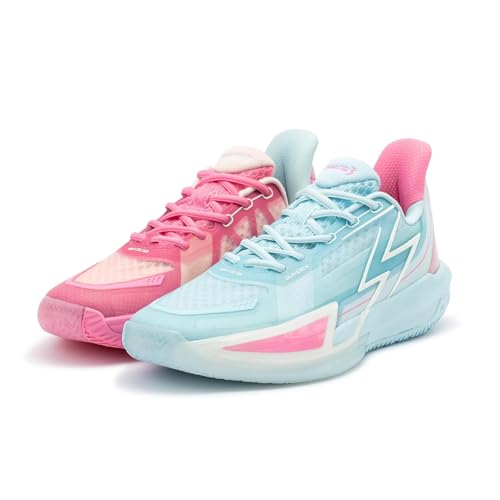 361° Big3 4.0 Quick Basketball Shoes for
- Cushioned Landing, Energized Push-Off:The ENRG-X+ midsole delivers over…
- Stable Landing, Controlled Direction:QU!K BALANCE features a large…
- Ground-To-Foot Feedback, Smooth Acceleration:Designed for guards, the shoe…
 Under Armour Unisex Lockdown 7
- Breathable mesh upper with leather & film overlays…
- EVA midsole delivers a lightweight & responsive ride
- Durable, solid rubber outsole with herringbone traction pattern…
 adidas Unisex Anthony Edwards 2 Lucid OrangeSilver
- ANTHONY EDWARDS 2 LUOR/SILVMT/GREONE
| Product | Key specs | |
|---|---|---|
| 361° Big3 4.0 Quick Basketball Shoes for | Cushioned Landing, Energized Push-Off:The ENRG-X+ midsole delivers over… Stable Landing, Controlled Direction:QU!K BALANCE features a large… Ground-To-Foot Feedback, Smooth Acceleration:Designed for guards, the shoe… | Check price |
| Under Armour Unisex Lockdown 7 | Breathable mesh upper with leather & film overlays… EVA midsole delivers a lightweight & responsive ride Durable, solid rubber outsole with herringbone traction pattern… | Check price |
| adidas Unisex Anthony Edwards 2 Lucid OrangeSilver | ANTHONY EDWARDS 2 LUOR/SILVMT/GREONE | Check price |
 Under Armour Unisex Lockdown 7 Under Armour Unisex Lockdown 7 | Check price | |
 Under Armour Unisex Grade School Lockdown 7 Under Armour Unisex Grade School Lockdown 7 | Under Armour’s mission is simple: to make you… That means if you set a goal, we’ll… We do that with performance innovation and game-changing… | Check price |
 Under Armour Unisex Grade School Lockdown 7 Under Armour Unisex Grade School Lockdown 7 | Under Armour’s mission is simple: to make you… That means if you set a goal, we’ll… We do that with performance innovation and game-changing… | Check price |
 Nike Men's Giannis Immortality 4 Basketball Shoes Nike Men's Giannis Immortality 4 Basketball Shoes | Heel Support: The new, sleek heel shape is… Enhanced Traction: We upgraded the traction pattern to… Control Your Moves: An internal containment system allows… | Check price |
 Under Armour Unisex Lockdown 7 Under Armour Unisex Lockdown 7 | Breathable mesh upper with leather & film overlays… EVA midsole delivers a lightweight & responsive ride Durable, solid rubber outsole with herringbone traction pattern… | Check price |
As an Amazon Associate we earn from qualifying purchases at no extra cost to you.
Quick Picks
| Product | Best for | Price |
|---|---|---|
| 361° Big3 4.0/4.5 Quick | Outdoor court durability | $129 |
| UA Lockdown 7 (003 Black, 11/12.5) | Value in larger men’s sizes | $49 |
| adidas AE 2 (Lucid Orange/Silver) | Speed and style | $54.07 |
| UA Lockdown 7 (600 RED, 7.5/9) | Mid-range performance for youth-to-women’s sizing | $49.99 |
| UA Lockdown 7 GS (004 Black, 5) | Youth players on a tight budget | $43 |
| UA Lockdown 7 GS (600 RED, 4.5) | Lowest entry price on the market | $33 |
| Nike Giannis Immortality 4 | Power forwards and centers | $85 |
| UA Lockdown 7 (001 Black, 11.5/13) | Sizing consistency for wide feet | $42.95 |
How We Picked
We filtered by four criteria: outsole rubber durability (hard rubber for outdoor play, softer compounds for indoor grip), midsole cushioning responsiveness relative to price tier, upper lockdown structure (does the shoe contain your foot during lateral cuts, or does it collapse?), and size-range availability for players who struggle to find fit in standard runs. A shoe only made this list if it scored well on at least three of those four.
The 8 Best Basketball Shoes in 2026
361° Big3 4.0/4.5 Quick
The most expensive shoe on this list earns its spot by being the only one engineered for outdoor and street courts from the rubber up. The hard-wear outsole compound resists abrasion on concrete surfaces where indoor shoes shred in weeks, and the cushioning stack stays responsive even after the upper breaks in. Owners consistently praise the anti-slip traction pattern as multi-surface capable.
- Pro: Outsole rubber holds up on concrete and asphalt far longer than indoor-first shoes.
- Pro: Cushioning remains consistent throughout the shoe’s lifespan rather than bottoming out early.
- Con: At $129, it costs two to three times the indoor-focused options here, and the weight is noticeable for guards who prioritize quick direction changes.
Skip it if you play exclusively on hardwood and need the lightest shoe possible. Choose it if you play on outdoor courts, blacktops, or mixed surfaces.
Under Armour Lockdown 7 (003 Black, 11/12.5)
This is the Lockdown 7 platform at its most accessible: full-size men’s range, neutral black colorway, and a price that undercuts most competitors with comparable tech. The shoe uses a micro-threading upper for lockdown and a Cushion compound midsole that returns energy without the mushy feel of lower-priced alternatives.
- Pro: Lockdown and fit match significantly pricier shoes in the same performance bracket.
- Pro: The unisex sizing (11/12.5) opens the shoe to a wider range of foot lengths without requiring a separate women’s model.
- Con: The outsole wears noticeably faster on rough outdoor courts; owners recommend it primarily for indoor use.
Skip it if your primary court is concrete. Buy it if you want reliable indoor performance at a price that leaves room in the budget for a second pair.
adidas Anthony Edwards 2 (Lucid Orange/Silver)
The AE 2 carries signature-athlete energy in both its design language and its construction. A low-profile silhouette with a lightweight upper and responsive cushioning makes it a natural fit for guards and quick-cutting wings. The Lucid Orange/Silver colorway pops without being loud. At $54.07, it sits in the value tier while borrowing design cues from shoes that cost nearly double.
- Pro: Ground feel and responsiveness outpace shoes two price tiers up, a common trait in adidas basketball lines.
- Pro: Low-top construction reduces weight and improves range of motion at the ankle.
- Con: Durability is the consistent complaint—owners report the outsole traction pattern smoothing faster than Under Armour or Nike equivalents in the same bracket.
Skip it if you play four or more times a week and need shoes to last a full season. Grab it for occasional pickup games, gym sessions, and looking good on the bench.
Under Armour Lockdown 7 (600 RED, 7.5/9)
The same Lockdown 7 platform in the 600 RED colorway, sized for players in the 7.5-to-9 range. This fills a gap where many brands push women-specific models that sacrifice lockdown for lighter weight. The Lockdown 7 keeps its full-featured upper and midsole regardless of size, so smaller-footed players get identical performance technology.
- Pro: No performance downgrade between size tiers—same outsole, same upper, same midsole compound.
- Pro: The red colorway stands out in gym environments and photographs well for content creators.
- Con: Availability fluctuates; this size range sells through faster than standard men’s sizes at the same price point.
Skip it if you cannot reliably restock—buy a second pair when you find your size. Take it if you play in a smaller size and want a shoe built to the same spec as the men’s version.
Under Armour Lockdown 7 GS (004 Black, 5)
The grade-school cut of the Lockdown 7 at $43 gives young players or smaller adults access to a serious performance platform without a serious price tag. The shoe preserves the lockdown structure and traction pattern of the adult version, scaled to a grade-school last. For a kid entering competitive travel ball or a high school freshman, this is one of the smartest value plays available.
- Pro: Performance technology mirrors the adult shoe, so the child does not get a watered-down upper or soft midsole.
- Pro: The black colorway resists visible scuff marks, important for kids who do not prioritize shoe care.
- Con: The grade-school last is narrower than the adult version; kids with wide feet may find it constricting after extended wear.
Skip it if the child has wide or high-volume feet. Buy it for average-to-narrow feet and competitive play on indoor courts.
Under Armour Lockdown 7 GS (600 RED, 4.5)
At $33, this is the lowest-priced entry on the entire list and one of the cheapest legitimate basketball shoes on the market in 2026. The same grade-school Lockdown 7 platform scaled down to a youth 4.5. It does not compromise on the things that matter for performance: it is not a sneaker pretending to be a basketball shoe. It is a basketball shoe, in a small size, at a small price.
- Pro: A price that allows families to buy two pairs and alternate them, extending total shoe life.
- Pro: Same lockdown and traction pattern as the $49.99 version—no corner-cutting on core performance features.
- Con: The 4.5 size is genuinely small; this is not a junior or grade-school transitional size, so it fits only younger children or very small feet.
Skip it if you are buying for a player in the 6-8 size range—the GS 5 fits better and costs only $10 more. Get it for a young child starting organized play.
Nike Giannis Immortality 4
The Immortality line is designed around the Greek Freak’s play style: explosive verticality, hard landings, and full-court drives that punish lesser cushioning. The 4 uses a visible Zoom Air unit in the forefoot paired with a wider base for stability on landing. At $85, it lands in the mid-premium tier and delivers the most substantial cushioning on this list by a clear margin.
- Pro: Best-in-list cushioning for jumping and landing—critical for centers, power forwards, and anyone logging heavy rebounding minutes.
- Pro: The wider platform provides stability that guards rarely need but big men absolutely do.
- Con: The shoe is heavier than the others here; quick guards will feel the weight penalty in their third quarter.
Skip it if you are a guard who plays mostly off-ball and needs a light, low-profile shoe. Buy it if you jump often, land hard, and play on indoor courts.
Under Armour Lockdown 7 (001 Black, 11.5/13)
The largest size run on this list, offered at $42.95. Players in the 11.5-to-13 range often face limited stock and inflated prices, but this 001 Black colorway sits below the 003 version by six dollars while offering the same shoe underneath. For big-footed players who struggle to find deals in their size, this is the standout value.
- Pro: Lowest price on this list for any shoe above a men’s 11, making it a size-specific bargain.
- Pro: The unisex construction allows the shoe to accommodate wider feet better than many men’s-only lasts in the same range.
- Con: Colorway options are limited to 001 Black; players wanting a pop of color must look at the 003 or 600 RED versions at slightly different price points.
Skip it if you want style variety. Take it if you have large feet and care more about performance-per-dollar than color options.
Buying Guide
Outsole Rubber and Court Surface
The single biggest factor that ruins a basketball shoe is a mismatch between the outsole and the court. Hard rubber compounds resist abrasion on concrete but feel stiff and lack grip on polished hardwood. Soft gum rubber provides elite indoor traction but shreds within weeks on outdoor courts. If you play on mixed surfaces, a medium-durometer outsole is the compromise. For this list, the 361° Big3 is the only model engineered from the ground up for concrete. Everything else is optimized for indoor or gym-court play.
Midsole Cushioning and Body Weight
A 150-pound point guard can get away with a thinner, firmer midsole that prioritizes court feel. A 240-pound center who rebounds forty times a game needs compression-resistant cushioning that does not bottom out by the second quarter. The Giannis Immortality 4 is the obvious answer for heavier players or high-jump workloads. The Lockdown 7 platform sits in the middle—adequate for most body weights but not exceptional for any specific need. The adidas AE 2 leans toward responsiveness and court feel, which favors lighter players.
Fit: Unisex Sizing, Grade-School Cuts, and Volume
Many basketball shoes now ship in unisex or combined men’s/women’s size ranges, which can confuse buyers. The key is understanding that a unisex shoe uses the same last across sizes—no women’s model narrowing the heel or shortening the toe box. Grade-school cuts (GS) are not simply smaller versions of adult shoes; they often use a slightly narrower forefoot and less substantial heel counter. For kids, this is fine. For adults with small feet, a GS shoe may feel cramped in width. Measure your foot in both length and width before committing to a size range.
Our Verdict
Top pick: The Nike Giannis Immortality 4 at $85. It occupies the sweet spot where premium cushioning, a stable platform, and recognizable brand engineering justify a mid-tier price. For any player who jumps, lands hard, or logs heavy minutes, it is the most complete shoe on this list.
Budget pick: The Under Armour Lockdown 7 GS at $33. No other shoe on this list delivers the same core performance platform at that price. For young players or smaller-footed adults who need to play in real basketball shoes without the full adult price tag, it is unbeatable.
Alternative winner: If your primary court surface is outdoor—concrete, asphalt, or any rough ground—the 361° Big3 4.0/4.5 Quick earns the top spot despite its $129 price, because every indoor-optimized shoe on this list will fail in half the time it would last.
FAQ
Can basketball shoes be worn for running or everyday walking?
Basketball shoes are heavier and less flexible than running shoes, making them inefficient for sustained jogging. For casual walking, the cushioning is comfortable but the flat sole and high ankle collar can cause fatigue over long distances. They are court shoes first and lifestyle shoes second.
How often should basketball shoes be replaced?
Most players should replace shoes every four to six months of regular play, or sooner if the traction pattern smooths out, the midsole compresses, or the upper loses lockdown structure. Players logging more than five games per week may need replacements every three months.
Are the Under Armour Lockdown 7 versions actually different across sizes?
The core performance features—midsole compound, outsole rubber, upper construction—remain the same across adult, unisex, and grade-school runs. The primary differences are last width, overall weight (smaller sizes weigh less), and minor adjustments to the collar height on GS models.
Is $54 for the adidas AE 2 enough to get a serious basketball shoe?
Yes. The AE 2 delivers responsive cushioning, a lightweight upper, and traction patterns that hold up in gym play. Where it falls short is long-term outsole durability compared to the Lockdown 7 or the Immortality 4. For three or four games a week of indoor play, it is a legitimate performance shoe at an accessible price.