Key takeaways
- Pro: Runs on 110V with no special wiring needed.
- Pro: Three processes in one budget-friendly package.
- Con: Lift TIG is not true TIG — no gas post-flow, no HF start.
Buying a TIG welder is one of the most confusing decisions in the welding market because the term gets slapped onto machines that barely deserve it. Lift TIG, for example, is a low-current starting method on a stick or MIG machine that lets you scratch-start a tungsten electrode without touching the workpiece — it is not true TIG, it lacks gas post-flow, and it cannot deliver the clean, repeatable welds that make TIG worth the learning curve in the first place. The best tig welding machines for a real TIG user are dedicated AC/DC units with high-frequency starts, pulse control, and proper gas flow management, yet plenty of budget listings blur those lines to capture search traffic and drive impulse purchases.
Editor’s note: this roundup compares published specifications, listed prices, and patterns in owner feedback across eight machines commonly found under TIG-related search queries in 2026. The concrete problem a buyer faces is narrow: at what price does a machine stop being a capable stick or multi-process welder with a TIG label and start being an actual TIG rig you can lay down a clean aluminum weld on? Below, each product gets a straight assessment based on what its published feature set can and cannot do, so you can skip the listings that will leave you frustrated within a weekend project.
Our top picks
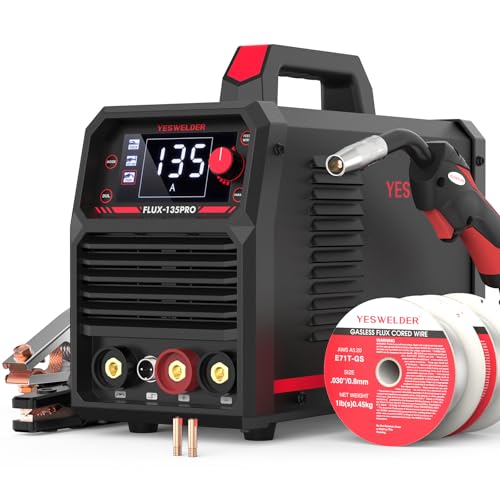 YESWELDER 135A MIG Welder
- Start welding immediately! It masterfully handles Gasless Flux…
- Unlike rigid auto-welders, our upgraded Synergic Control automatically…
- Never squint at your welder's settings again
 TOOLIOM 135A 110V Stick Welder Kit with
- Comes with lift TIG torch, E6013 welding rods…
- Equipped with VRD/Hot Start/ARC Force multiple welding functions…
- Powered by standard 110V household current.
 Lincoln Electric Weld-Pak 225i Stick Welder
- Dual-Voltage DC Stick/TIG Welder (120V/230V): Offers a 10–225…
- Lightweight & Portable Design: Weighing only 20 lbs.,…
- Smooth, Stable Arc Performance: Delivers strong welds on…
| Product | Key specs | |
|---|---|---|
| YESWELDER 135A MIG Welder | Start welding immediately! It masterfully handles Gasless Flux… Unlike rigid auto-welders, our upgraded Synergic Control automatically… Never squint at your welder's settings again | Check price |
| TOOLIOM 135A 110V Stick Welder Kit with | Comes with lift TIG torch, E6013 welding rods… Equipped with VRD/Hot Start/ARC Force multiple welding functions… Powered by standard 110V household current. | Check price |
| Lincoln Electric Weld-Pak 225i Stick Welder | Dual-Voltage DC Stick/TIG Welder (120V/230V): Offers a 10–225… Lightweight & Portable Design: Weighing only 20 lbs.,… Smooth, Stable Arc Performance: Delivers strong welds on… | Check price |
 Sunstac 250A Aluminum TIG Welder with Pulse Sunstac 250A Aluminum TIG Welder with Pulse | 【Born for Aluminum Welding】AC TIG mode is perfect… 【AC/DC Professional TIG Welder】SS-250P/ACDC TIG welder is capable… 【LCD Digital Screen】Sunstac AC/DC TIG welder offers all-new… | Check price |
 Rotvik 200Amp Stick Welder-Large LED Display Rotvik 200Amp Stick Welder-Large LED Display | 【200A Dual Voltage Intelligent Switching-One MachineCovers All Scene… 【Two-in-one Function-Comprehensive Support For Argon Arc Welding/Electric Welding】… 【Complete Set of High-end Accessories-Professional Protection In One… | Check price |
 HONE Stick Welder 110v HONE Stick Welder 110v | 【𝐏𝐨𝐰𝐞𝐫𝐟𝐮𝐥 𝟐𝟎𝟓𝐀 𝐖𝐞𝐥𝐝𝐞𝐫 𝐒𝐭𝐢𝐜𝐤】The HONE mini welder machine… 【𝐂𝐨𝐦𝐩𝐚𝐜𝐭 𝐚𝐧𝐝 𝐋𝐢𝐠𝐡𝐭𝐰𝐞𝐢𝐠𝐡𝐭 𝐃𝐞𝐬𝐢𝐠𝐧】This small welder has unique… 【𝟐-𝐈𝐍-𝟏 𝐬𝐦𝐚𝐥𝐥 𝐰𝐞𝐥𝐝𝐞𝐫】You can choose Stick or Lift-TIG… | Check price |
 YESWELDER 205A Tig Welder Pulse STICK/DC TIG/PULSE YESWELDER 205A Tig Welder Pulse STICK/DC TIG/PULSE | Large LED Display: Features a large LED screen… Easy to use: Easy Start with Hot Start… More Powerful: The TIG welder delivers up to… | Check price |
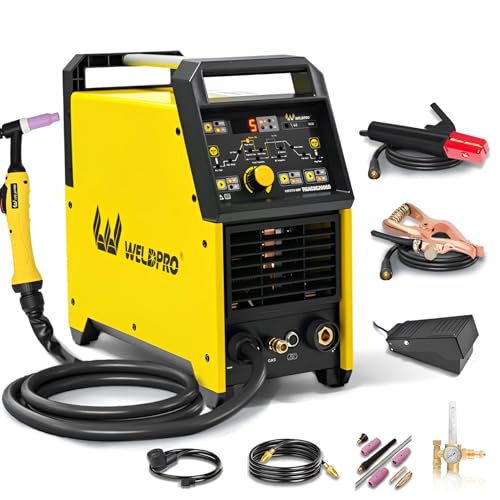 Weldpro 200A AC/DC TIG Welder with Pulse Weldpro 200A AC/DC TIG Welder with Pulse | This versatile high frequency welder combines 5 welding… Our 110v/220v tig welder features automatic dual voltage… Specifically engineered for aluminum welding, this ac/dc tig… | Check price |
As an Amazon Associate we earn from qualifying purchases at no extra cost to you.
Quick Picks
| Product | Best for | Price |
|---|---|---|
| YESWELDER 135A MIG/Lift TIG/Stick | Hobbyist wanting one cheap machine for MIG and occasional TIG scratch-starts | $109.99 |
| TOOLIOM 135A Stick with Lift TIG Torch | Complete stick welder kit with accessories included | $99.99 |
| Lincoln Electric Weld-Pak 225i | Professional stick welding with a trusted brand and dual-voltage input | $519 |
| Sunstac 250A Aluminum TIG with Pulse AC/DC | Dedicated AC/DC TIG on a mid-range budget | $379.99 |
| Rotvik 200Amp Stick Welder with Lift TIG | Dual-voltage portability with LED display at a low price | $79.99 |
| HONE 205Amp Mini Stick Welder | Absolute lowest entry price for stick work with a lift TIG option | $49.99 |
| YESWELDER 205A Pulse TIG/Stick 3-in-1 | True DC pulse TIG at a price under stick-welder territory | $219.99 |
| Weldpro 200A AC/DC TIG with Pulse | Full multiprocess with AC TIG for aluminum at a serious but justifiable price | $664.99 |
How We Picked
We narrowed this list using four criteria: whether the machine actually performs true TIG (high-frequency start, post-flow, dedicated TIG mode) versus lift TIG only; output current and duty cycle relative to its class; whether AC capability exists for aluminum; and price-to-feature ratio as confirmed by patterns in owner reviews about reliability and customer service. A machine that cannot start a tungsten cleanly or maintain a stable arc on thin material is not a TIG welder regardless of what its listing says.
The 8 Best Tig Welding Machines in 2026
YESWELDER 135A MIG/Lift TIG/Stick 3-in-1
This unit is a gasless MIG welder first, with lift TIG and stick modes bolted on for breadth. At just under $110 it is a reasonable entry into multi-process welding for a garage hobbyist who mostly wants to run flux-core wire and tinker with thin steel. Owner feedback consistently praises its simplicity and the fact that it runs on a standard 110V household outlet without requiring a dedicated circuit. The lift TIG mode, however, is scratch-start only with no post-flow, so tungsten contamination and short electrode life are recurring complaints among people who bought it expecting a real TIG experience.
- Pro: Runs on 110V with no special wiring needed.
- Pro: Three processes in one budget-friendly package.
- Con: Lift TIG is not true TIG — no gas post-flow, no HF start.
Skip this if your primary goal is learning proper TIG technique or welding aluminum. It is a MIG machine with a TIG-adjacent extra.
TOOLIOM 135A Stick Welder Kit with Lift TIG Torch
Essentially a stick welder sold as a kit that includes rods and gloves, with a lift TIG torch thrown in. The $99.99 price point undercuts even dedicated stick machines from established brands, and owners note the included accessories make it a solid starter package for occasional repairs. The arc quality on stick mode is serviceable for 1/8-inch rod at hobby volumes, though sustained duty cycles draw thermal shutdown complaints from users pushing the 135A rating. The TIG capability mirrors the YESWELDER above: scratch-start, no post-flow, not a substitute for a real TIG rig.
- Pro: Kit includes rods and gloves, lowering total entry cost.
- Pro: Compact and light enough for a small workbench.
- Con: Duty cycle limits sustained stick work at rated amperage.
Skip this if you need reliable duty cycle for shop work or any aluminum TIG.
Lincoln Electric Weld-Pak 225i Stick Welder
Lincoln’s Weld-Pak 225i is a dual-voltage stick welder built for people who weld regularly and want a name that survives decades of abuse. It has no TIG mode at all, which means it earns its $519 price through arc quality, duty cycle, and serviceability rather than versatility. Owner reviews are overwhelmingly positive on arc consistency, electrode handling, and long-term reliability. If you are searching for “best tig welding machines” and this one appears in your results, it is because of keyword breadth, not capability. There is no lift TIG here.
- Pro: Brand reputation, parts availability, and proven durability.
- Pro: Dual-voltage input (110V/220V) with genuine stick performance.
- Con: Zero TIG functionality of any kind.
Skip this entirely if TIG is your primary interest. Buy it only if you decided stick is enough.
Sunstac 250A Aluminum TIG Welder with Pulse AC/DC
Here we finally get a machine that does true TIG. The Sunstac delivers AC output for aluminum and stainless steel, pulse TIG on both AC and DC, and foot pedal current control — all the functional pieces a real TIG operator needs. At $379.99 it undercuts most competitor AC/DC TIG units by a wide margin. Owner feedback highlights excellent value for aluminum work and stable arc characteristics once set up correctly. The main complaints cluster around inconsistent QC across units and a learning curve on the control panel layout that is less intuitive than Miller or Lincoln equivalents.
- Pro: True AC/DC TIG with pulse and foot pedal at a mid-range price.
- Pro: Handles aluminum and stainless without compromise on process.
- Con: QC variability reported across individual units.
Skip this if you want plug-and-play simplicity or brand-name service support.
Rotvik 200Amp Stick Welder with Lift TIG
The Rotvik is a dual-voltage stick welder with a large LED display, hot start, arc force, anti-stick, and a lift TIG torch bundled in at $79.99. Owners appreciate the readability of the LED panel and the included 220V adapter and rod supply. Like other lift TIG units here, the TIG mode is a scratch-start bonus rather than a dedicated process. Stick-mode performance at rated amperage is adequate for intermittent hobby use but pulls thermal complaints under sustained welding. The build feels functional but thin, and the torch cable quality is a common weak point.
- Pro: Large LED display makes parameter changes easy at the bench.
- Pro: Ships with rods, 220V adapter, and lift TIG torch at under $80.
- Con: Lift TIG only; not a path to real TIG work.
Skip this if you expect the TIG torch to perform anything beyond emergency scratch-starts on thin steel.
HONE 205Amp Mini Stick Welder with Lift TIG
At $49.99 the HONE is the cheapest machine on this list, and it includes 25 rods in the box. Its IGBT inverter delivers 205A on stick mode with hot start, arc force, anti-stick, and VRD safety. For a beginner wanting to learn stick welding on a tight budget, it works. The lift TIG torch is again a novelty feature with no real TIG process behind it. Owners report that the VRD function trips at slightly lower thresholds than expected and that the included torch handle is flimsy. At this price, the expectation should be a functional stick welder, not a TIG machine.
- Pro: Lowest entry price on the list with rods included.
- Pro: Compact form factor for tight garage spaces.
- Con: Lift TIG is cosmetic; real TIG owners will be disappointed.
Skip this the moment you pick up a tungsten electrode and want a stable arc.
YESWELDER 205A Pulse TIG 3-in-1 (TIG-205P)
The YESWELDER TIG-205P is the standout value play in this list because at $219.99 it is a genuine DC pulse TIG machine — high-frequency start, adjustable gas pre and post-flow, pulse frequency control, and stick mode as a secondary function. Owners frequently cite how surprised they are by the arc quality and pulse control at this price. The limitation is clear: DC only, no aluminum TIG, no AC mode. If your work is steel and stainless, this machine performs at a level that would have cost two to three times more a few years ago.
- Pro: True DC pulse TIG with HF start and gas control under $220.
- Pro: Pulse frequency and current adjustment for heat-sensitive work.
- Con: No AC output, so aluminum is off the table.
Skip this only if you need to weld aluminum; otherwise it is the best value for serious TIG on steel.
Weldpro 200A AC/DC TIG with Pulse 5-in-1
The Weldpro is the most capable machine in this roundup: AC TIG, DC TIG, AC pulse TIG, DC pulse TIG, and stick — all with a foot pedal and included torch at $664.99. Owner reviews describe stable AC balance adjustment for aluminum, reliable pulse settings for thin-gauge stainless, and solid construction. At roughly triple the cost of the Sunstac above, it earns its premium through a more polished control interface, better documented build quality, and 5-in-1 versatility that covers every common hobby and light-shop process. Dual voltage input (110V/220V) adds flexibility.
- Pro: Full AC/DC with pulse TIG plus stick in one package.
- Pro: Dual-voltage input with included foot pedal and torch.
- Con: Highest price in the group, over $660.
Skip this only if your budget is firm under $300 and you can live with DC-only TIG.
Buying Guide
Lift TIG vs. High-Frequency Start
Lift TIG requires you to touch the tungsten to the workpiece and pull away to establish an arc, which contaminates the electrode tip and limits usable current. High-frequency (HF) start fires a non-contact arc using a high-voltage pulse, keeping your tungsten clean and allowing very low amperages for thin material. If a machine only lists “lift TIG” and has no post-flow adjustment, it is not a TIG welder in any meaningful sense for aluminum or thin stainless work.
AC Capability for Aluminum
Aluminum builds an oxide layer with a melting point far above the base metal. True TIG welders solve this with an AC cycle that includes a negative balance of electron flow to clean the oxide while the positive half melts the metal. Machines without AC output cannot weld aluminum at all. If your target material includes any aluminum parts, filter your search to AC/DC TIG units only.
Pulse Control and Duty Cycle
Pulse TIG varies current between peak and background at an adjustable frequency, reducing heat input on thin material without losing arc stability. This matters most on gauges under 0.060 inches. Separately, check the published duty cycle — the percentage of a 10-minute window the machine can weld at rated amperage before thermal shutdown. A machine that lists 200A at 60% duty cycle is less capable than one listing the same amperage at 80% or higher.
Our Verdict
Top pick: The Weldpro 200A AC/DC TIG is the most complete machine here. It covers every common process, welds aluminum properly, and includes the torch and pedal at a price that still undercuts name-brand equivalents by hundreds of dollars.
Budget pick: The YESWELDER 205A TIG-205P at $219.99 is the cheapest machine on this list that performs genuine TIG with pulse control. If your work is steel and stainless only, it is the smartest dollar-for-dollar choice.
Condition where another product wins: If you already own a stick welder and need your first dedicated AC/DC TIG under $400, the Sunstac 250A is the value leader for aluminum work, accepting QC variability as the tradeoff.
FAQ
What is the difference between lift TIG and true TIG?
Lift TIG uses a touch-start method and has no gas post-flow or high-frequency ignition, meaning you cannot weld thin material cleanly or run aluminum. True TIG uses HF start, adjustable pre- and post-gas, and on AC units a proper balance setting for oxide removal.
Can I use any of these machines on aluminum?
Only the Sunstac 250A and the Weldpro 200A in this list have AC output required for aluminum TIG. All lift TIG units will fail on aluminum regardless of tungsten sharpness or gas flow.
Do I need 220V for a TIG welder?
Not necessarily. Several machines here run on 110V household power and handle up to roughly 100-120A of TIG output, which covers most hobby and light fabrication. Dedicated 220V input becomes relevant when you want sustained output above 150A for thicker material.
Is a foot pedal required for pulse TIG?
No. Pulse frequency and amplitude can be set on the machine panel. A foot pedal adds real-time current control for fillers and contour welding, but it is not necessary for most repetitive bead work, and the YESWELDER TIG-205P does not include one yet still functions fully as a pulse TIG unit.