Key takeaways
- Step 1: Measure the Edge Thickness
Use a digital caliper or a standard tape measure to record the exact thickness of your desk’s front edge. Measure at the exact spot where you plan to mount the wheel, as some desks have decorative beveled edges that vary in thickness. - Step 2: Check for Under-Desk Obstructions
Look underneath your desk. Measure the distance from the front edge to any metal support beams, cable trays, or wooden modesty panels. Most heavy-duty clamps require a clear, flat depth of at least 3.5 to 5.0 inches (8.9 to 12.7 cm) underneath the desk to allow the clamping plates to sit flush. - Step 3: Evaluate the Desk Edge Profile
Identify if your desk has a flat vertical edge, a chamfered edge, or a rounded (bullnose) edge. If the edge is rounded or chamfered, the clamp jaws may slip under high torque loads. You will need to measure the flat portion of the edge to ensure there is enough contact surface. - Step 4: Calculate the Clearance for the Clamping Knobs
Ensure there is enough vertical clearance underneath the desk for your knees. Some industrial-style dual-screw clamps have long threaded rods with large plastic adjustment knobs that hang down 3 to 4 inches (7.6 to 10.2 cm) below the bottom of the desk surface.
What's inside
The Short Answer
When setting up a high-performance sim racing cockpit on a standard tabletop, understanding your direct drive wheel base desk clamp thickness specs is critical to prevent structural failure. Most consumer-grade direct drive (DD) desk clamps accommodate a desk thickness range of 0.2 inches to 2.4 inches (5 mm to 60 mm).
However, torque is the defining factor. For lower-torque DD bases (3 Nm to 5 Nm), a standard plastic or light-alloy clamp works perfectly on desks as thin as 0.6 inches (15 mm). For mid-to-high torque bases (8 Nm to 15 Nm), which can exert over 25 lbs (11.3 kg) of sudden rotational force, you must use heavy-duty steel or machined aluminum mounts. These heavy-duty clamps typically require a minimum desk thickness of 0.75 inches (19 mm) of solid wood or reinforced medium-density fiberboard (MDF) to prevent the clamp from crushing or cracking your desk surface.
As an Amazon Associate we earn from qualifying purchases at no extra cost to you. Product prices and availability are accurate as of the date shown and are subject to change.
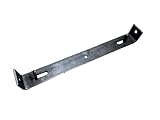
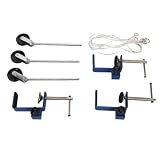
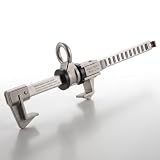

Standard Sizes
Different manufacturers design their mounting brackets to handle specific torque levels and desk profiles. Below is a detailed breakdown of the leading direct drive wheel base desk clamp thickness specs, maximum torque capacities, and typical retail price ranges.
| Brand & Wheel Base Model | Peak Torque (Nm) | Min. Desk Thickness | Max. Desk Thickness | Clamp Material & Style | Price Range (USD) |
|---|---|---|---|---|---|
| Moza Racing R3 / R5 Clamp | 3.9 Nm – 5.5 Nm | 0.20 in (5 mm) | 2.00 in (50 mm) | Steel Plate / Dual Screw Knobs | $30.00 – $45.00 |
| Fanatec ClubSport DD / CSL DD Table Clamp V2 | 5.0 Nm – 12.0 Nm | 0.35 in (9 mm) | 2.36 in (60 mm) | Fiber-Reinforced Plastic & Steel Bolt | $30.00 – $60.00 |
| Logitech G PRO DD Desk Clamp | 11.0 Nm | 0.60 in (15 mm) | 2.00 in (50 mm) | Integrated Steel Dual-Jaw Quick Release | Included (Replacement: $40) |
| Thrustmaster T818 Desk Mounting Kit | 10.0 Nm | 0.60 in (15 mm) | 1.96 in (50 mm) | Heavy-Duty Steel Plate & Dual Metal Screws | $40.00 – $55.00 |
| Simagic Alpha Mini Multi-Angle Clamp | 10.0 Nm | 0.40 in (10 mm) | 2.56 in (65 mm) | Machined Aluminum Bracket & Dual Bolts | $75.00 – $95.00 |
| Asetek SimSports Forte / Prima Desk Mount | 12.0 Nm – 18.0 Nm | 0.75 in (19 mm) | 2.20 in (56 mm) | Heavy-Duty Aluminum Plate & Steel Clamps | $90.00 – $110.00 |
How to Measure Your Space
Before purchasing a direct drive wheel base, you must verify that your current table or desk can physically accept the clamping mechanism. Follow these steps to get precise measurements:
- Step 1: Measure the Edge Thickness
Use a digital caliper or a standard tape measure to record the exact thickness of your desk’s front edge. Measure at the exact spot where you plan to mount the wheel, as some desks have decorative beveled edges that vary in thickness. - Step 2: Check for Under-Desk Obstructions
Look underneath your desk. Measure the distance from the front edge to any metal support beams, cable trays, or wooden modesty panels. Most heavy-duty clamps require a clear, flat depth of at least 3.5 to 5.0 inches (8.9 to 12.7 cm) underneath the desk to allow the clamping plates to sit flush. - Step 3: Evaluate the Desk Edge Profile
Identify if your desk has a flat vertical edge, a chamfered edge, or a rounded (bullnose) edge. If the edge is rounded or chamfered, the clamp jaws may slip under high torque loads. You will need to measure the flat portion of the edge to ensure there is enough contact surface. - Step 4: Calculate the Clearance for the Clamping Knobs
Ensure there is enough vertical clearance underneath the desk for your knees. Some industrial-style dual-screw clamps have long threaded rods with large plastic adjustment knobs that hang down 3 to 4 inches (7.6 to 10.2 cm) below the bottom of the desk surface.
By Room or Use Case
The Dedicated Home Office: Standard 1-Inch Desks
In a standard home office utilizing a typical 0.75-inch to 1.2-inch (1.9 cm to 3.0 cm) desk made of solid wood, engineered wood, or thick MDF, you have the most flexibility. This setup easily accommodates mid-range direct drive systems like the Fanatec CSL DD or Moza R5. Because these surfaces are flat and uniform, standard steel plate clamps with dual screw knobs distribute the weight evenly. If you are using a desk made of softer wood like pine, placing a small metal plate or a hard plastic shim between the clamp and the underside of the desk will prevent the clamp from digging into and damaging the wood fiber.
The Heavy-Duty Sim Rig Setup: 2-Inch+ Butcher Blocks
Many sim racers construct custom heavy-duty desks using thick solid oak, maple, or birch butcher blocks, which frequently measure 1.75 to 2.5 inches (4.4 cm to 6.4 cm) thick. While these desks offer incredible structural rigidity—perfect for 10 Nm to 15 Nm bases—they often push standard clamps to their physical limits. If your desk thickness exceeds 2.0 inches (5.1 cm), verify your clamp’s maximum clearance. For ultra-thick desks, you may need to swap out the standard clamp bolts for longer metric hex bolts or select specialized brackets like the Simagic Multi-Angle mount, which supports up to 2.56 inches (6.5 cm) of clearance.
Temporary Living Spaces: Thin Metal-Frame or Glass Desks
If you are racing in a rental space or a dorm room using a thin metal-frame utility table or a glass-top desk (under 0.5 inches or 1.2 cm thick), extreme caution is required. Never clamp a direct drive wheel base directly to a glass top, as the localized vibration and high torque will shatter the glass instantly. For thin metal-frame desks, the desk surface itself can flex and warp. To make this setup viable, use a DIY load-spreader plate. Placing a piece of 0.75-inch (1.9 cm) plywood above and below the desk surface increases the effective thickness and distributes the clamping force across a wider surface area, mimicking the structural stability of heavy-duty industrial framing.
Common Sizing Mistakes
- Clamping onto Hollow-Core Desks: Popular budget desks (such as the Ikea Linnmon series) feature a paper honeycomb interior sandwiched between thin sheets of fiberboard. Clamping a heavy, high-torque DD wheel to these surfaces will crush the desk’s interior structure under moderate pressure, causing the mount to wobble and eventually break through the surface.
- Ignoring Under-Desk Metal Support Frames: Many modern office desks feature a steel perimeter frame running right along the underside edge. If this metal tube is recessed by an inch or two, your clamp will bridge the gap unevenly, creating a pivot point that prevents a secure, flush grip.
- Using the Wrong Torque-to-Thickness Ratio: Attempting to run a 12 Nm wheel base at maximum force on a thin 0.5-inch (1.2 cm) desk without reinforcement. Even if the clamp physically fits, the structural leverage will cause the desk to flex, reducing the fidelity of the force feedback and risking structural damage.
- Forgetting the Clamp Pivot Angle: Some desk clamps feature a fixed tilt angle to position the wheel rim closer to your chest. This angle shifts the center of gravity of the 15-pound (6.8 kg) motor housing forward, which increases the pulling force on the rear edge of the clamp. Always ensure your clamp has a deep reach to counteract this rotational leverage.
FAQ
Can I use a direct drive wheel base on a glass desk?
No, you should never mount a direct drive wheel base directly to a glass desk. The intense, high-frequency vibrations and sudden rotational force spikes (torque spikes) generated by a direct drive motor will cause tempered glass to shatter. If you must use a glass desk, you must construct a bridge or use a freestanding wheel stand that bypasses the desk surface entirely.
How do I mount a DD wheel to a desk with a metal support frame underneath?
If a metal frame runs along the edge under your desk, you can bridge the gap by placing a block of hardwood or a high-density plastic spacer (matching the exact thickness of the metal frame) between the underside of the wooden desk surface and the clamp’s lower jaw. This creates a flat, continuous clamping surface and prevents the clamp from bending or slipping.
Do I need to upgrade my clamp if I transition from a 5 Nm to a 10 Nm wheel base?
Yes, in most cases. A 5 Nm wheel base can be safely supported by lightweight, single-point plastic or light-alloy clamps. However, as sim racing hardware advances into 2026, 10 Nm+ systems require dual-point steel or heavy-duty aluminum mounts. The increased torque will flex weaker brackets, causing a loss of detailed force feedback detail and accelerating wear on the mounting hardware.
What should I do if my desk is too thick for my wheel base clamp?
If your desk exceeds the maximum thickness spec of your clamp, you have three options: you can remove any rubber protective pads on the clamp jaws to gain an extra 0.1 to 0.2 inches of clearance (though you must protect your desk with thin cardboard or tape); you can replace the clamp’s standard threaded adjustment bolts with longer, matching-thread bolts from a hardware store; or you can bypass the clamp entirely by hard-mounting the wheel base to a small wooden riser that is secured to your desk with heavy-duty C-clamps.