Key takeaways
- Big, comfortable displays on the 17-inch and 16-inch models
- Wide price range so there’s a fit for almost any budget
- SSD storage across the board keeps boot and load times quick
- Strong high-end option in the 32GB Dell 15 for demanding users
What's inside
Finding a laptop that does everything reasonably well without breaking the bank is the goal for most shoppers who don’t want to overthink specs. An all-around machine needs to handle browsing, streaming, office work, video calls, and light multitasking without stuttering. In this review we look closely at a lineup that spans budget picks to more capable productivity notebooks, so you can match the right one to how you actually work.
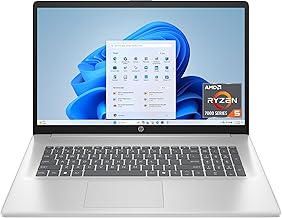
The standout of the group is the HP OmniBook 3 17.3-inch, a large-screen laptop with a Ryzen 3 processor, 8GB of RAM, and a 512GB SSD. It anchors a set that also includes the touchscreen Dell 16 with a Core 7 chip, the powerful Dell 15 with a Core i7 and 32GB of RAM, and lighter options like the HP 14 Essential and the ultra-affordable Amzboy 15.6-inch.
As an Amazon Associate we earn from qualifying purchases at no extra cost to you. Product prices and availability are accurate as of the date shown and are subject to change.


🎮 Get More From Your Setup — Free
Prime Gaming gives you free PC games every month, in-game loot, and a free Twitch channel sub — plus fast free shipping on all the gear above. New members get a 30-day free trial.
Watch: Great All Around Laptop: Review & Buyer’s Guide — Video Review
Design & Build
The OmniBook 3 leans into its 17.3-inch footprint, giving you a spacious FHD display that makes spreadsheets, side-by-side windows, and long documents far more comfortable than a cramped 13-inch panel. Its Mica Silver finish looks understated and professional, and the roomy chassis leaves space for a full number pad. It is not a machine you’ll want to carry around all day, but for a home or desk-based setup it feels substantial without being flimsy.
If portability matters more, the HP 14 Essential and the Amzboy 15.6-inch shift the balance. The 14 Essential is genuinely light and travel-friendly, while the Amzboy’s 180-degree lay-flat hinge and privacy camera add practical touches at a rock-bottom price. The Dell 15 and Dell 16, by contrast, feel the most premium, with sturdier decks, brighter touchscreens, and the kind of build quality you’d expect from a business-class notebook.
Performance
This is where the lineup separates into tiers. The OmniBook 3’s Ryzen 3 with 8GB of RAM is a comfortable daily driver for web apps, email, video, and office documents, and the 512GB SSD gives you real breathing room for files. It won’t chew through video edits, but for everyday all-around use it stays responsive.
The Dell 15 with its Core i7 and 32GB of RAM is the performance champion here, easily handling heavy browser tab loads, larger spreadsheets, and light creative work. The Dell 16’s Core 7 chip and 16GB of RAM sit in a strong middle ground with a sharp 2K touchscreen. At the entry level, the Amzboy and the older Dell Latitude 3190 2-in-1 are best kept to lightweight tasks; their modest processors and smaller memory pools show strain when you push them.
Pros & Cons
- Big, comfortable displays on the 17-inch and 16-inch models
- Wide price range so there’s a fit for almost any budget
- SSD storage across the board keeps boot and load times quick
- Strong high-end option in the 32GB Dell 15 for demanding users
- Entry models have limited RAM that caps multitasking
- Larger laptops are heavy and less travel-friendly
- Integrated graphics mean none are true gaming machines
Alternatives to Consider
If you specifically want a lighter machine for coffee-shop work, the HP 14 Essential trades screen size for portability and long battery life. Shoppers who need a convertible for note-taking or travel might look at the Dell Latitude 3190 2-in-1, though its aging N-series chip is best for basic use. And if your priority is raw headroom for years of use, the 32GB Dell 15 is worth the premium over the more modest configurations.
Frequently Asked Questions
How much RAM do I need for an all-around laptop?
8GB is the practical minimum for smooth everyday use, and it handles browsing, streaming, and office work fine. If you keep dozens of tabs open or run several apps at once, stepping up to 16GB or the 32GB Dell 15 gives you noticeably more comfort.
Is a 17-inch laptop too big for daily use?
Not if it stays mostly at a desk. The OmniBook 3’s larger screen is a genuine productivity boost, but it is heavier to carry. Frequent travelers usually prefer a 14 or 15-inch model.
Do any of these work for gaming?
These all use integrated graphics, so they’re suited to older or light indie titles and cloud streaming rather than demanding modern games. For serious gaming you’d want a dedicated GPU.
Is 512GB of storage enough?
For most people, yes. It comfortably holds your apps, documents, photos, and a healthy media library. Heavy media collectors can supplement with cloud or external storage.
Verdict
For a true jack-of-all-trades, the HP OmniBook 3 17.3-inch hits the sweet spot of screen size, storage, and everyday performance at a friendly price. If you want more muscle, the 32GB Dell 15 is the clear upgrade, while the HP 14 Essential and Amzboy cover budget and portability needs. Match the model to your real workload and you’ll get a laptop that quietly does it all.