Key takeaways
- Target systems: Be honest about what you actually want to emulate. Linux units like the XF40V and RF40H nail everything up to PS1 and light PSP, while the Android-powered RG477V reaches into Dreamcast, Saturn, and beyond.
- Chipset matters most: A device such as the RG477V with a Dimensity 8300 will chew through cores that budget SoCs stutter on, so prioritise the processor over cosmetic features.
- Screen and controls: Larger 4.7- to 5.5-inch panels suit 3D titles, and Hall-effect joysticks (found on the RG477V) eliminate the drift that plagues older analogue sticks.
- Open-source flexibility: The XF40V and RF40H run open Linux firmware, letting the community add cores, themes, and shaders long after launch.
- Battery versus power draw: More demanding emulation drains cells quickly, so a 5,500mAh-class battery like the RG477V’s is worth seeking if you plan long PSP sessions.
What's inside
Emulation handhelds occupy a fascinating middle ground between the affordable retro pocket players and full-blown Android gaming phones. These are the devices built specifically to run software from consoles that never fit in your palm, from the PlayStation Portable to the Nintendo DS and, in the more capable models, the Dreamcast and GameCube. If you want to carry decades of gaming history in one hand, this is the category to study closely.
In 2026 the field has split into two clear camps: lean Linux machines that squeeze remarkable performance from modest chips, and touch-screen Android units with the horsepower for the heaviest cores. The devices below represent the strongest picks across both approaches, so you can match your emulation ambitions to the right hardware without overspending.
As an Amazon Associate we earn from qualifying purchases at no extra cost to you. Product prices and availability are accurate as of the date shown and are subject to change.


⚡ Save on Your Next PC — Amazon Prime
Prime members get fast free shipping on the systems above, plus early access to Prime Day & Black Friday PC deals. New members get a 30-day free trial.
Watch: Best Emulation Handheld 2026 — Video Review
How to Choose an Emulation Handheld
- Target systems: Be honest about what you actually want to emulate. Linux units like the XF40V and RF40H nail everything up to PS1 and light PSP, while the Android-powered RG477V reaches into Dreamcast, Saturn, and beyond.
- Chipset matters most: A device such as the RG477V with a Dimensity 8300 will chew through cores that budget SoCs stutter on, so prioritise the processor over cosmetic features.
- Screen and controls: Larger 4.7- to 5.5-inch panels suit 3D titles, and Hall-effect joysticks (found on the RG477V) eliminate the drift that plagues older analogue sticks.
- Open-source flexibility: The XF40V and RF40H run open Linux firmware, letting the community add cores, themes, and shaders long after launch.
- Battery versus power draw: More demanding emulation drains cells quickly, so a 5,500mAh-class battery like the RG477V’s is worth seeking if you plan long PSP sessions.
The Best Emulation Handhelds Reviewed
Anbernic RG52MINI
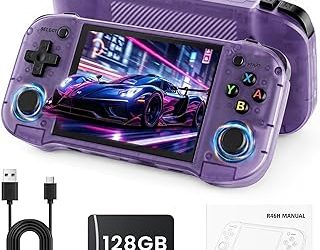
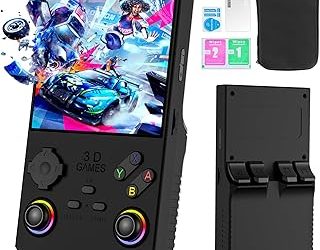
The RG52MINI packs a generous 5.5-inch IPS screen and a portable dual-system design, giving you room to appreciate 3D emulation on the move. With support for more than thirty emulators and a 64GB card holding 22,000-plus titles, it is a versatile all-rounder for players who want scale and screen size together.
Anbernic RG477V
Powered by the Dimensity 8300 and running Android 14, the RG477V is the performance flagship of this list. Its 4.7-inch touch panel, Wi-Fi, Bluetooth, RGB lighting, and drift-free Hall joysticks make it the device to beat for heavier cores like PSP, Dreamcast, and Saturn.
XF40V Open-Source Handheld
The XF40V keeps things focused and affordable with a 4-inch IPS screen and a fully open Linux system on a 64GB card. It is the enthusiast’s tinkering machine, ideal for anyone who enjoys customising firmware and squeezing every frame from 2D and PS1-era emulation.
RF40H Handheld
With a 4-inch display and more than 20,000 preloaded games, the RF40H leans into open-source Linux while keeping setup approachable. It strikes a fine balance between a curated out-of-box experience and the freedom to modify, making it a smart mid-tier choice.
V40MAX Upgraded Handheld
Rounding out the list, the 2026 V40MAX brings 40,000-plus games and 40-plus simulators to a 4-inch Linux device. Its emphasis on sheer content breadth makes it a compelling option for players who want the widest possible retro-to-emulation coverage in one package.
Frequently Asked Questions
What is the difference between a retro handheld and an emulation handheld?
The line is blurry, but emulation handhelds generally aim higher, targeting 3D systems like PSP and Dreamcast rather than stopping at 16-bit and PS1 classics.
Do I need an Android handheld to emulate PSP games?
Not necessarily. Capable Linux units handle many PSP titles well, but Android devices such as the RG477V offer smoother performance and better compatibility for demanding cores.
Can these handhelds stream games too?
Android-based models with Wi-Fi can run cloud and remote-play apps, so a device like the RG477V doubles as a streaming client alongside its local emulation.
How do I add my own games?
Most units let you drop ROM files onto the microSD card from a computer, then rescan the library so they appear automatically in the relevant system menu.
Final Thoughts
Choosing the best emulation handheld for 2026 comes down to how ambitious your library is. The RG477V is the clear pick for maximum power and future-proofing, the RG52MINI wins on screen real estate, and the XF40V and RF40H reward tinkerers who love open firmware. Whichever you choose, you will be carrying an astonishing slice of gaming history wherever you go.