Key takeaways
- Latency: Wired is effectively zero. Modern 2.4GHz wireless sits in the 20–40ms range — the NUBWO advertises 23ms sync — which is imperceptible to nearly everyone outside a professional setting. Bluetooth alone remains too laggy for competitive play.
- Battery: Wired never runs out. Wireless now buys you real endurance: 40 hours on the Ozeino, 60 on the Arctis Nova 5, 70 on the BlackShark V3 X, 80 on the Stealth 600, and 100 on the NUBWO.
- Price-to-performance: A wired headset spends its entire budget on drivers, padding, and the mic. A wireless headset of equal cost spends part of it on radio, battery, and charging circuitry, so wired usually sounds better dollar for dollar.
- Microphone quality: Wired mics transmit uncompressed and generally sound fuller. Wireless mics have improved sharply — the BlackShark V3 X uses a cardioid design and the Arctis Nova 5 uses ClearCast Gen2.X — but codecs still shave off some detail.
- Platform flexibility: Wireless wins decisively. Dongle-plus-Bluetooth models like the Stealth 600, Arctis Nova 5, and Razer Hammerhead V3 X Wireless let you sit on a party chat and take a phone call simultaneously. Wired usually means one cable, one device.
- Comfort and reliability: Wired is lighter with no battery weight and nothing to fail electronically. Wireless removes cable drag and snagging, which matters more than people expect during long sessions.
What's inside
For years the wireless-versus-wired argument in gaming audio had a simple answer: if you cared about latency, you plugged in. That answer no longer holds. By 2026, low-latency 2.4GHz dongles have become the default rather than the premium feature, sub-30ms sync is quoted on budget models, and battery life on mainstream headsets has stretched from a weekend to most of a month of casual play. The gap that once justified a cable has narrowed to the point where most players will never hear it.
That doesn’t make the decision obvious — it just moves it. The real trade-offs in 2026 are about price-to-performance, microphone quality, weight, and how many devices you need to jump between. A wired headset still delivers more raw driver and mic quality per dollar and never dies mid-raid. A wireless headset buys you freedom, multi-platform switching, and Bluetooth on top of a game connection. Here’s how to choose, and which models are worth your attention right now.
As an Amazon Associate we earn from qualifying purchases at no extra cost to you. Product prices and availability are accurate as of the date shown and are subject to change.


⚡ Save on Your Next PC — Amazon Prime
Prime members get fast free shipping on the systems above, plus early access to Prime Day & Black Friday PC deals. New members get a 30-day free trial.
Watch: Wireless vs Wired Gaming Headset in 2026 — Video Review
Quick Verdict
Buy wireless if you play on multiple systems, share space with other people, or want to take a call and keep gaming — the SteelSeries Arctis Nova 5 and Razer BlackShark V3 X HyperSpeed are the strongest all-rounders, while the Turtle Beach Stealth 600 is the pick for Xbox households. Buy wired if you want the absolute best audio and microphone fidelity for your budget, you’re a competitive FPS player who refuses to think about batteries, or you simply want a headset that works the moment it’s plugged in with zero firmware, pairing, or dongle management.
Key Differences
- Latency: Wired is effectively zero. Modern 2.4GHz wireless sits in the 20–40ms range — the NUBWO advertises 23ms sync — which is imperceptible to nearly everyone outside a professional setting. Bluetooth alone remains too laggy for competitive play.
- Battery: Wired never runs out. Wireless now buys you real endurance: 40 hours on the Ozeino, 60 on the Arctis Nova 5, 70 on the BlackShark V3 X, 80 on the Stealth 600, and 100 on the NUBWO.
- Price-to-performance: A wired headset spends its entire budget on drivers, padding, and the mic. A wireless headset of equal cost spends part of it on radio, battery, and charging circuitry, so wired usually sounds better dollar for dollar.
- Microphone quality: Wired mics transmit uncompressed and generally sound fuller. Wireless mics have improved sharply — the BlackShark V3 X uses a cardioid design and the Arctis Nova 5 uses ClearCast Gen2.X — but codecs still shave off some detail.
- Platform flexibility: Wireless wins decisively. Dongle-plus-Bluetooth models like the Stealth 600, Arctis Nova 5, and Razer Hammerhead V3 X Wireless let you sit on a party chat and take a phone call simultaneously. Wired usually means one cable, one device.
- Comfort and reliability: Wired is lighter with no battery weight and nothing to fail electronically. Wireless removes cable drag and snagging, which matters more than people expect during long sessions.
Wireless Gaming Headsets in 2026
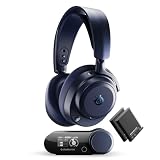
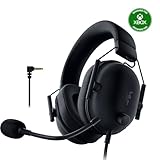
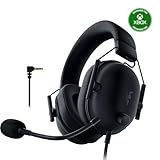
Wireless is now the default recommendation for most players, and the field is deep. The SteelSeries Arctis Nova 5 is the enthusiast’s choice, pairing neodymium magnetic drivers with 100+ audio presets and dual 2.4GHz/Bluetooth connectivity across PC, PS5, PS4, Switch, and mobile. The Razer BlackShark V3 X HyperSpeed targets competitive PC players with 50mm drivers, a cardioid mic that rejects room noise, and 70 hours of runtime. The Turtle Beach Stealth 600 remains the go-to for Xbox owners, since Xbox wireless compatibility is still the one area where you can’t simply buy any dongle headset and expect it to work.
Value has improved just as much as the flagships. The NUBWO wireless headset pushes 100 hours of battery with 23ms sync and triple-mode connectivity, which is remarkable for its class. The Ozeino model leans on lossless audio, a play-and-charge design so a dead battery never ends your session, and both USB-A and Type-C dongle options for PS5, PC, Switch, and mobile. If you’d rather not wear a headband at all, the Razer Hammerhead V3 X Wireless PS Edition delivers low-latency earbuds that pair cleanly with a PlayStation and disappear into a bag.
Wired Gaming Headsets in 2026
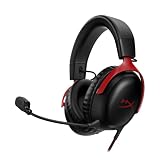
Wired hasn’t been eclipsed — it’s been repositioned. At every price point below roughly the mid-range, a wired headset gives you a better transducer, better padding, and a better microphone than its wireless counterpart, because none of the budget is diverted to radios and cells. For anyone building a desk-bound setup who values sound quality above all, that remains the most efficient way to spend money on audio.
There’s also the reliability argument. A wired headset has no pairing menu, no firmware update that breaks sidetone, no dongle to lose in a laptop bag, and no charge level to monitor before a tournament. Analogue 3.5mm connections plug straight into controllers, handhelds, phones, and mixers alike. The costs are real — cable snag, a tether to your chair, and the fact that many wired models rely on your device’s DAC — but for stationary players, they’re minor.
Which Should You Buy?
- For competitive FPS on PC: pick the Razer BlackShark V3 X HyperSpeed for its cardioid mic and 2.4GHz link, or a wired esports headset if you want maximum fidelity per dollar.
- For Xbox players: pick the Turtle Beach Stealth 600 — it’s the cleanest multiplatform path with 80-hour battery and flip-to-mute.
- For multi-console households: pick the SteelSeries Arctis Nova 5, which covers PC, PS5, PS4, Switch, and mobile on 2.4GHz or Bluetooth.
- For marathon sessions on a budget: pick the NUBWO for 100 hours of battery, or the Ozeino if play-and-charge and lossless audio matter more.
- For portable or handheld play: pick the Razer Hammerhead V3 X Wireless PS Edition, or any wired 3.5mm set if you want the simplest possible setup.
Frequently Asked Questions
Is wireless latency still a problem in 2026?
Not for 2.4GHz dongle connections. Figures in the 20–40ms range are standard and sit below the threshold most players can detect. Bluetooth is a different story and should be reserved for music, calls, and single-player games.
Do wired headsets really sound better?
At the same price, usually yes, because more of the cost goes into the drivers and microphone. At higher price points the difference shrinks considerably, and a good wireless headset will comfortably outperform a cheap wired one.
Can I use a wireless headset while it charges?
On many models, yes. The Ozeino explicitly supports play-and-charge, and most USB-C headsets will run while plugged in. It’s worth confirming before you buy if you game in very long stretches.
Will a PC wireless headset work on Xbox?
Not automatically. Xbox uses its own wireless protocol, so you need a headset that lists Xbox support explicitly — the Turtle Beach Stealth 600 does. PlayStation, PC, Switch, and mobile are far more forgiving with standard USB dongles.
Final Verdict
In 2026 wireless is the right default for the large majority of players: the latency argument is settled, battery anxiety has largely evaporated, and models like the SteelSeries Arctis Nova 5, Razer BlackShark V3 X HyperSpeed, and Turtle Beach Stealth 600 cover almost every platform combination you’re likely to own. Choose wired only if you’re optimising purely for sound and microphone quality on a tight budget, or if you never want to think about charging again — both are legitimate reasons, but they’re now the exception rather than the rule.