Key takeaways
- Confirm it’s actually mechanical: Some budget “gaming” keyboards use membrane or mecha-membrane switches. Look for a named switch type — Red, Brown, Blue, Yellow, or a branded option like Reaper — rather than vague phrases such as “mechanical-inspired” or “tactile feedback.”
- Keycap material: Double-shot PBT keycaps resist the greasy shine that ABS develops within weeks and feel noticeably more textured under the fingertips. At this price it’s the single biggest upgrade to daily feel, and several boards here include it as standard.
- Hot-swap sockets: A hot-swappable PCB lets you pull switches out with a puller and drop in a different feel — no soldering. It effectively future-proofs a cheap board, since you can spend $15 on switches later instead of $50 on a whole new keyboard.
- Layout and desk space: Full-size gives you a numpad for spreadsheets and MMO macros; 75% and TKL layouts free up several inches for low-sensitivity mouse sweeps. Decide based on how you actually play and work, not on which looks better in photos.
- Connectivity and polling: Wired USB is still the safest bet for competitive play and needs no charging. If you want wireless, insist on a 2.4GHz dongle rather than Bluetooth-only — Bluetooth latency is fine for typing but noticeable in fast-paced shooters.
What's inside
Shopping for a mechanical keyboard under $50 used to mean accepting real compromises: mushy stabilizers, thin ABS keycaps that go shiny in a month, and soldered switches that lock you into whatever feel the manufacturer chose. In 2026, that’s changed. Hot-swap sockets, double-shot PBT keycaps, and pre-lubed switches have all trickled down into genuinely budget territory, and the gap between a $45 board and a $120 board is narrower than it has ever been.
The catch is that the sub-$50 shelf is also where the most misleading marketing lives. Plenty of boards advertise “mechanical feel” while hiding membrane domes underneath, and others quietly cut corners on the parts you’ll notice every day. This guide covers what actually matters at this price, then reviews the boards we’d genuinely recommend to a friend — including wired workhorses from Redragon and Logitech, a surprisingly complete 75% wireless option from AULA, and one premium pick that regularly dips into range on sale.
As an Amazon Associate we earn from qualifying purchases at no extra cost to you. Product prices and availability are accurate as of the date shown and are subject to change.





⚡ Save on Your Next PC — Amazon Prime
Prime members get fast free shipping on the systems above, plus early access to Prime Day & Black Friday PC deals. New members get a 30-day free trial.
Watch: Best Mechanical Keyboard Under $50 — Video Review
How to Choose Mechanical Keyboard Under $50
- Confirm it’s actually mechanical: Some budget “gaming” keyboards use membrane or mecha-membrane switches. Look for a named switch type — Red, Brown, Blue, Yellow, or a branded option like Reaper — rather than vague phrases such as “mechanical-inspired” or “tactile feedback.”
- Keycap material: Double-shot PBT keycaps resist the greasy shine that ABS develops within weeks and feel noticeably more textured under the fingertips. At this price it’s the single biggest upgrade to daily feel, and several boards here include it as standard.
- Hot-swap sockets: A hot-swappable PCB lets you pull switches out with a puller and drop in a different feel — no soldering. It effectively future-proofs a cheap board, since you can spend $15 on switches later instead of $50 on a whole new keyboard.
- Layout and desk space: Full-size gives you a numpad for spreadsheets and MMO macros; 75% and TKL layouts free up several inches for low-sensitivity mouse sweeps. Decide based on how you actually play and work, not on which looks better in photos.
- Connectivity and polling: Wired USB is still the safest bet for competitive play and needs no charging. If you want wireless, insist on a 2.4GHz dongle rather than Bluetooth-only — Bluetooth latency is fine for typing but noticeable in fast-paced shooters.
The Best Picks Reviewed
AULA F75 Pro Wireless
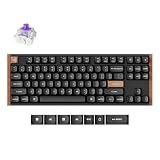
The most complete package on this list: a 75% hot-swappable board with pre-lubed Reaper switches, side-printed PBT keycaps, a volume knob, and triple connectivity via 2.4GHz, USB-C, and Bluetooth 5.0. It’s rare to get gasket-style typing feel and wireless flexibility at this price, and the pre-lubed switches mean it sounds properly damped straight out of the box.
Redragon Hot-Swappable Wired
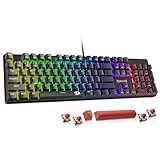
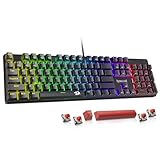
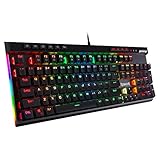
A straightforward, well-executed wired board with hot-swap Red switches, double-shot PBT keycaps, full anti-ghosting, and 11 backlight modes — the exact feature list you’d have paid double for a few years ago. It’s our default recommendation for anyone who wants to start modding switches without committing to a custom build.
Redragon K580
The K580 adds dedicated macro keys and a media wheel to Redragon’s usual formula, which makes it a strong pick for MMO and productivity users who live in hotkeys. Per-key RGB and solid build quality round out a board that punches above its price bracket.
Logitech G413 SE
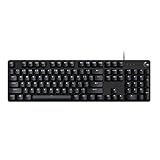
Logitech’s tactile mechanical switches, a brushed aluminium top plate, and PBT keycaps in a no-nonsense full-size chassis with clean white backlighting. There’s no RGB and no software bloat here — it’s simply one of the most reliably built keyboards you can buy under $50, and it’ll outlast most of its competition.
Razer BlackWidow V4 X
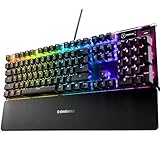
Ordinarily above budget, the BlackWidow V4 X drops into range often enough during sales to be worth watching, and its linear Yellow switches, doubleshot ABS caps, and dedicated macro column make it the most feature-rich option here. Set a price alert and buy on the dip rather than at list price.
Frequently Asked Questions
Are cheap mechanical keyboards actually durable?
Yes — the switches themselves are typically rated for 50 to 100 million keystrokes regardless of price, so the switch isn’t usually what fails. Budget compromises show up in stabilizers, case flex, and cable quality instead, none of which are usually deal-breakers.
Which switch type should I pick for gaming?
Linear switches such as Red or Yellow have no tactile bump, so actuation feels smooth and fast, which most competitive players prefer. Tactile switches like Brown give a small bump that helps typing accuracy, and they’re the better all-rounder if the same board handles work and play.
Do I really need hot-swap sockets?
Not if you’re happy with the stock feel, but it’s genuinely useful insurance. Switch preferences change as you type more, and hot-swap means a $15 switch set fixes that instead of a whole new purchase.
Is wireless worth it under $50?
It is now, provided the board includes a 2.4GHz dongle. Bluetooth-only budget keyboards introduce enough latency to matter in shooters, but a proper 2.4GHz connection is effectively indistinguishable from wired for most players.
Final Thoughts
For most buyers in 2026, the AULA F75 Pro is the smartest sub-$50 purchase — hot-swap sockets, pre-lubed switches, PBT caps, and 2.4GHz wireless is an absurd feature set at this price. If you’d rather stay wired, the hot-swappable Redragon board offers the same modding freedom for less, while the Logitech G413 SE remains the pick for anyone who values build quality and longevity over RGB and extra features.