Key takeaways
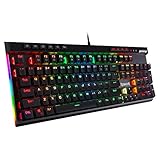
- Linear: Smooth from top to bottom with no bump, quiet, and consistent. Favored for gaming because the uninterrupted press feels fast. Red switches, like those in the Redragon board above, are the classic example.
- Tactile: A noticeable bump partway down tells your finger the key has registered. Popular for typing because the feedback improves accuracy without much noise.
- Clicky: A tactile bump paired with an audible click. Satisfying and precise, but loud enough to annoy roommates or a video call.
What's inside
The switch is the heart of a mechanical keyboard. It decides how a key feels under your finger, how loud it is, how fast it registers, and how the whole board sounds in a quiet room. Two keyboards with identical cases and keycaps can feel like completely different instruments simply because one uses a light linear switch and the other a heavy tactile one. Understanding switches is the difference between buying a keyboard you tolerate and buying one you genuinely enjoy.
This 2026 explainer breaks down the three main switch families, the specifications printed on every switch spec sheet, and why hot-swap sockets have changed the game for people who like to experiment. You will come away able to read a switch by its actuation force and travel distance, predict whether it suits gaming or typing, and choose confidently. The keyboards recommended below span linear, tactile, and clicky feels, so they make excellent hands-on references.
As an Amazon Associate we earn from qualifying purchases at no extra cost to you. Product prices and availability are accurate as of the date shown and are subject to change.





⚡ Save on Your Next PC — Amazon Prime
Prime members get fast free shipping on the systems above, plus early access to Prime Day & Black Friday PC deals. New members get a 30-day free trial.
Watch: Mechanical Keyboard Switches Explained — Video Review
The Three Switch Families
- Linear: Smooth from top to bottom with no bump, quiet, and consistent. Favored for gaming because the uninterrupted press feels fast. Red switches, like those in the Redragon board above, are the classic example.
- Tactile: A noticeable bump partway down tells your finger the key has registered. Popular for typing because the feedback improves accuracy without much noise.
- Clicky: A tactile bump paired with an audible click. Satisfying and precise, but loud enough to annoy roommates or a video call.
Reading the Key Specifications
Every switch lists a few numbers. Actuation force, measured in grams, tells you how hard you must press before the key registers; lighter switches around 45 grams feel fast, heavier ones near 60 to 70 grams resist accidental presses. Actuation distance is how far the key travels before it counts, and total travel is how far it goes to the bottom. Gamers often prefer a shorter actuation for speed, while typists may favor a bit more resistance to avoid typos. None of these numbers is universally better; they simply describe a feel.
Matching a Switch to How You Play
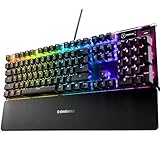
For fast-paced competitive games, light linear switches let you tap rapidly and double-tap cleanly, which is why so many gaming boards ship with red or yellow-style linears such as the Razer BlackWidow V4 X. If you split your time between gaming and long typing sessions, a tactile switch gives you gaming speed with better feedback for words. If you mostly type and do not share a room, clicky switches deliver the most satisfying experience. Think about your actual daily mix rather than chasing whatever is marketed as the fastest.
Why Hot-Swappable Boards Matter
Traditional keyboards solder their switches in place, so the feel you buy is the feel you keep. Hot-swap boards, like several Redragon and AULA models, use sockets that let you pull a switch out and press a new one in by hand, no soldering required. This is transformative for anyone unsure what they like: you can start with linears, try tactiles later, or replace a single failing switch in seconds. Even if you never swap, the sockets make cleaning and repair far simpler down the road.
Sound, Keycaps, and the Full Package
A switch does not act alone. The keycap material and the case construction shape the final sound as much as the switch itself. Thick PBT keycaps, common on better boards, produce a deeper, less hollow tone than thin ABS. Foam inside the case dampens ping and echo. So when you read a review describing a keyboard as sounding “thocky” or “clacky,” remember that the switch is only one ingredient. If sound matters to you, judge the whole assembled board, not the bare switch in isolation.
Tips
- Order a cheap switch tester or sampler before committing to a full board so you feel each type in person.
- If you are unsure, start with linears; they are the most forgiving all-rounder for mixed gaming and typing.
- Choose a hot-swap board when possible so you can change your mind later without buying a new keyboard.
- Do not obsess over actuation force differences of a few grams; the family type matters far more than tiny numbers.
Frequently Asked Questions
Which switch type is best for gaming?
Light linear switches are the usual favorite because their smooth, bump-free press feels fast and consistent for rapid inputs. That said, plenty of players game happily on tactiles, so try both if you can.
Are clicky switches too loud for an office?
Generally yes. Clicky switches are the loudest family and can distract coworkers or bleed into microphones. In shared spaces, a tactile or a quiet linear is the more considerate choice.
What does hot-swappable actually mean?
It means the switches sit in sockets rather than being soldered, so you can remove and replace them by hand. This lets you change switch feel or fix a bad switch without any tools or soldering.
Do more expensive switches feel better?
Price correlates with smoothness and consistency, but the family type and your personal preference matter more. A well-chosen budget linear can feel better to you than a pricey tactile you dislike.
Conclusion
Switches turn a keyboard from a generic input device into something tuned to your hands. Learn the three families, read the force and travel numbers as descriptions rather than scores, and weigh your real daily use of gaming versus typing. Where you can, buy a hot-swap board so your choice is never permanent. Use the recommended keyboards above to feel the differences directly, and you will understand in minutes what pages of specs only hint at.