Key takeaways
- Same performance, lower price: A wired mouse like the wired Logitech options typically costs less than a wireless model with a comparable sensor.
- No dongle to lose: Wired gear has no receiver to misplace or forget when traveling.
- Budget builds: If you are outfitting a whole setup, wired peripherals stretch a budget further without sacrificing responsiveness.
What's inside
- Watch: Wired vs Wireless Gaming Gear: Which Is Better? — Video Review
- Latency: The Gap Has Nearly Closed
- Battery Life and the Charging Habit
- Cost: Where Wired Still Wins Clearly
- Weight, Cable Drag, and Feel
- Reliability and Interference
- Tips
- Related Guides
- Frequently Asked Questions
- Conclusion
- Related Articles
- Related Guides
The wired-versus-wireless debate used to have an easy answer: wired won on performance, wireless won on convenience, and competitive players never touched a cordless mouse. That answer is out of date. Wireless technology has closed the latency gap to the point where pro players now compete on cordless mice, while wired gear still holds real advantages in price and simplicity. The right choice today depends less on raw performance and more on how you play, what you value, and how much you are willing to spend.
- Watch: Wired vs Wireless Gaming Gear: Which Is Better? — Video Review
- Latency: The Gap Has Nearly Closed
- Battery Life and the Charging Habit
- Cost: Where Wired Still Wins Clearly
- Weight, Cable Drag, and Feel
- Reliability and Interference
- Tips
- Related Guides
- Frequently Asked Questions
- Conclusion
- Related Articles
- Related Guides
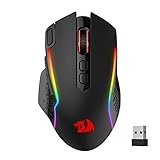
This 2026 guide compares wired and wireless gaming gear across the factors that genuinely matter: latency, battery, cost, weight, and reliability. You will see where the old assumptions still hold, where they have collapsed, and how to decide for your own setup. Because mice show the trade-offs most clearly, the recommended picks below are gaming mice spanning both wired-value and premium wireless designs, giving you concrete reference points.
As an Amazon Associate we earn from qualifying purchases at no extra cost to you. Product prices and availability are accurate as of the date shown and are subject to change.




⚡ Save on Your Next PC — Amazon Prime
Prime members get fast free shipping on the systems above, plus early access to Prime Day & Black Friday PC deals. New members get a 30-day free trial.
Watch: Wired vs Wireless Gaming Gear: Which Is Better? — Video Review
Latency: The Gap Has Nearly Closed
For years wireless meant lag, and that reputation lingers unfairly. Modern 2.4GHz wireless like Logitech’s Lightspeed or Razer’s HyperSpeed delivers response times indistinguishable from a cable for the vast majority of players. The Logitech G305 and Razer Viper V3 HyperSpeed are proof that cordless can be genuinely competitive. Bluetooth is a different story, carrying more latency and best reserved for productivity rather than fast gaming. So when comparing, distinguish between dedicated 2.4GHz dongles, which are gaming-grade, and Bluetooth, which is not.
Battery Life and the Charging Habit
Wireless gear needs power, and that is the real cost of cutting the cord. Battery life ranges from a few dozen hours to well over 200 depending on the device and its lighting. The trade-off is not lag but discipline: you must top up the battery before it dies mid-match. Many wireless mice can run on a cable while charging, so a dead battery never stops play. Wired gear sidesteps this entirely, drawing power from the same cable that carries its signal, which some players simply prefer for its zero-maintenance nature.
Cost: Where Wired Still Wins Clearly
- Same performance, lower price: A wired mouse like the wired Logitech options typically costs less than a wireless model with a comparable sensor.
- No dongle to lose: Wired gear has no receiver to misplace or forget when traveling.
- Budget builds: If you are outfitting a whole setup, wired peripherals stretch a budget further without sacrificing responsiveness.
Weight, Cable Drag, and Feel
Here wireless has a genuine edge. Removing the cable eliminates cable drag, the subtle tug that a wire exerts as you flick a mouse across the pad. Wireless mice like the Razer Basilisk V3 X or the ultralight Viper series can also be built extremely light because they no longer need a flexible cable strain relief. Wired mice counter with paracord-style cables and mouse bungees that reduce drag substantially, but they never fully match the free feel of a good wireless mouse gliding untethered.
Reliability and Interference
A cable is about as reliable as technology gets: plug it in and it works. Wireless introduces small risks such as signal interference in crowded radio environments or a dongle placed too far from the device. In practice, modern dedicated dongles are extremely stable, especially with a short extension placing the receiver near the mouse. Still, for a tournament setting or anyone who never wants to think about connections, wired remains the most bulletproof option. Weigh that peace of mind against the freedom wireless offers.
Tips
- For competitive play on a budget, a quality wired mouse gives pro-level response for less money.
- If you choose wireless, use the included dongle extension to place the receiver close to your gear.
- Charge wireless devices on a schedule between sessions so they never interrupt your game.
- Add a mouse bungee to a wired setup to eliminate most cable drag and mimic the wireless feel.
Frequently Asked Questions
Is wireless gaming gear laggy?
Dedicated 2.4GHz wireless is not; its latency is effectively identical to wired for gaming. Only Bluetooth carries noticeable lag, so avoid Bluetooth for fast games and rely on the included gaming dongle instead.
Is wired still better for competitive gaming?
Wired is still excellent and cheaper, but it is no longer clearly superior. Pros now compete on 2.4GHz wireless mice. Choose wired for value and simplicity, wireless for the free, drag-free feel.
How long do wireless gaming mice last per charge?
It varies widely, from around 40 hours to well over 200 depending on the model and its RGB lighting. Turning down lighting extends runtime significantly, and most mice can be used while charging.
Do I need to worry about wireless interference?
Rarely with modern dedicated dongles, especially if you position the receiver near your gear using the included extension. Crowded radio environments can cause hiccups, but for most home setups it is a non-issue.
Conclusion
Wired and wireless gaming gear are closer than ever, and neither is simply better. Wired wins on price, simplicity, and rock-solid reliability, making it ideal for budget builds and anyone who wants zero maintenance. Wireless wins on freedom of movement and the light, drag-free feel that many players now prefer, at the cost of a charging habit and a higher price. Decide which of those trade-offs fits how you play, use the recommended mice above as references, and you will pick the right side of the debate for your own desk.