
Key takeaways
- Your Mounting Rigidity: Do you have a dedicated aluminum extrusion profile rig, a wheel stand, or are you sitting in an office chair on a carpet? High-force load cell pedals (requiring 75 kg to 100 kg of force) require a rock-solid, bolted connection. If your pedals are not bolted down to a frame that is physically connected to your seat, you cannot run a true load cell brake. You will need to stick to lower-force potentiometer/Hall effect sensors, or invest in a wheel stand first.
- Your Primary Racing Discipline: If you primarily race Formula 1 or modern GT3 cars, a two-pedal setup (throttle and brake) is all you need. You will shift using steering wheel paddles. If you enjoy vintage racing, rallying, or drifting, a three-pedal set (adding a physical clutch with a biting-point simulation) is mandatory.
- Your Footwear Preference: Some pedals are designed with wide, smooth faces meant for barefoot or sock-clad home racers. Others feature aggressive, grip-taped, or CNC-machined metal faces with sharp edges designed strictly for karting or racing shoes. Using the latter in socks will cause foot fatigue or pain within fifteen minutes.
What's inside
- Decide These 3 Things First
- Pedal Sensor Technology and Resistance Force
- Material, Construction, and Structural Flex
- Physical Dimensions, Footprint, and Adjustability
- Haptic Feedback and Customization Potential
- Price Tiers and Real-World Budgets
- Rig Requirements, Assembly, and Desktop Usability
- Spec Checklist
- Red Flags to Avoid When Shopping
- FAQ
When building or upgrading a home simulation setup, most players make a classic mistake: they spend 80% of their budget on a flashy direct-drive steering wheel and treat the pedals as an afterthought. From an ergonomic and performance standpoint, this is completely backward. While a steering wheel delivers immersion and force feedback detail, your pedals dictate your consistency, your braking zones, and ultimately your lap times.
- Decide These 3 Things First
- Pedal Sensor Technology and Resistance Force
- Material, Construction, and Structural Flex
- Physical Dimensions, Footprint, and Adjustability
- Haptic Feedback and Customization Potential
- Price Tiers and Real-World Budgets
- Rig Requirements, Assembly, and Desktop Usability
- Spec Checklist
- Red Flags to Avoid When Shopping
- FAQ
As a home design and hardware editor, I look at sim rigs through a dual lens: mechanical performance and domestic integration. A high-end pedal set isn’t just an input device; it is a highly stressed mechanical fixture that must withstand up to 200 pounds of repeated leg force without flexing, sliding, or ruining your flooring. Many buyers rush into purchasing heavy-duty hydraulic or high-weight load cell pedals, only to realize their desk chair rolls backward every time they try to slow down for a corner, or that the metal-on-metal clatter of the clutch wakes up the entire household at midnight.
As an Amazon Associate we earn from qualifying purchases at no extra cost to you. Product prices and availability are accurate as of the date shown and are subject to change.
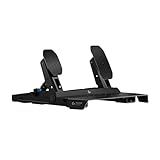


Before you spend your hard-earned money, you need to understand how to match pedal mechanics to your physical environment, your physical biomechanics, and your budget.
Decide These 3 Things First
Before diving into spec sheets and brand names, you must establish three fundamental constraints of your home environment and racing style:
- Your Mounting Rigidity: Do you have a dedicated aluminum extrusion profile rig, a wheel stand, or are you sitting in an office chair on a carpet? High-force load cell pedals (requiring 75 kg to 100 kg of force) require a rock-solid, bolted connection. If your pedals are not bolted down to a frame that is physically connected to your seat, you cannot run a true load cell brake. You will need to stick to lower-force potentiometer/Hall effect sensors, or invest in a wheel stand first.
- Your Primary Racing Discipline: If you primarily race Formula 1 or modern GT3 cars, a two-pedal setup (throttle and brake) is all you need. You will shift using steering wheel paddles. If you enjoy vintage racing, rallying, or drifting, a three-pedal set (adding a physical clutch with a biting-point simulation) is mandatory.
- Your Footwear Preference: Some pedals are designed with wide, smooth faces meant for barefoot or sock-clad home racers. Others feature aggressive, grip-taped, or CNC-machined metal faces with sharp edges designed strictly for karting or racing shoes. Using the latter in socks will cause foot fatigue or pain within fifteen minutes.
Pedal Sensor Technology and Resistance Force
The method by which your pedals measure your inputs determines how intuitive they feel. Throttle and clutch pedals measure distance (travel), while brake pedals should ideally measure pressure (force).
In budget systems (typically under $100), you will find potentiometers. These measure the physical angle of the pedal arm. They are cheap to manufacture but prone to wear over time as dust and pet hair enter the housing, causing signal flicker. A step up is the Hall Effect sensor, which uses magnets to measure distance without physical contact. These are virtually wear-free and are excellent for throttles and clutches where travel distance is what matters.
For the brake pedal, you should look for a Load Cell. Instead of measuring how far you push the pedal, a load cell measures how hard you press it, mimicking a real car’s hydraulic brake caliper. This taps into your brain’s muscle memory (which is incredibly accurate at remembering pressure) rather than visual memory of pedal distance. Entry-level load cells offer around 75 kg (165 lbs) of maximum force sensor capability, while professional-grade systems scale up to 150 kg or 200 kg. For most home users, a real-world operating force of 40 kg to 60 kg is the sweet spot for consistency without physical exhaustion.
Material, Construction, and Structural Flex
If you press a brake pedal with 50 kg of force, that same 50 kg of force pushes back against the pedal frame. Any flex in the pedal arm, the baseplate, or the upright brackets is wasted energy that dulls your braking precision.
Cheap pedals (weighing 3 to 5 lbs total) rely on injection-molded plastics. Under hard braking, you can physically see the plastic arms bend. Mid-range options ($130 to $300) transition to folded sheet steel, usually 3mm thick, which offers excellent structural rigidity for a fraction of the cost of premium manufacturing. The premium sector ($300 to $1,000+) uses CNC-machined aircraft-grade 6061 aluminum or cast iron, weighing anywhere from 12 to 25 lbs. These industrial-grade materials ensure zero structural deflection and can easily survive decades of high-force cycling.
Physical Dimensions, Footprint, and Adjustability
A major design consideration is how the pedals fit your body. We all have different hip widths, leg lengths, and ankle flexibilities. A non-adjustable pedal set forces your body into a static posture, which can lead to lower back pain or knee strain over long sessions.
When evaluating dimensions, look for a pedal plate footprint of at least 12 inches in width and 14 inches in depth to ensure stability. More importantly, look for modularity. Can you adjust the lateral spacing between the pedals? Premium sets allow you to slide individual pedal assemblies left or right along a rail by 1 to 3 inches, allowing you to align the brake directly with your left leg if you are a left-foot braker.
Look also for pedal face adjustability. You should be able to tilt the pedal face angle by 0 to 20 degrees. If you sit in an upright office chair, you need the pedals tilted forward; if you sit in a low, reclined Formula-style cockpit, you need them tilted back to prevent your ankles from being over-extended.
Haptic Feedback and Customization Potential
As we look at the landscape of sim racing in 2026, the technology has democratized to the point where active haptic feedback is no longer restricted to professional motorsport simulators. Haptic feedback involves mounting small, high-frequency vibration motors or linear resonant actuators directly to the back of the pedal arms.
These actuators translate telemetry data from the simulation software into physical sensations in your feet. For example, when your front tires lock up under braking, the brake pedal vibrates to simulate ABS kicking in. When your rear wheels spin under heavy acceleration, the throttle pedal buzzes to warn you of traction loss. Look for pedals that feature native haptic mounts or come pre-equipped with haptic reactors. This feedback loop bypasses your eyes and ears, allowing you to react to traction loss milliseconds faster.
Price Tiers and Real-World Budgets
Your budget will dictate the mechanical architecture of your pedal set. Here is what you can realistically expect at different price points:
- The Budget Tier ($50 – $120): Primarily plastic or thin steel construction. These sets typically feature potentiometer or entry-level Hall effect sensors on all pedals. They are lightweight (3 to 6 lbs) and designed to sit loose on a carpet or be mounted to entry-level folding wheel stands. They offer soft spring resistance with very little adjustability.
- The Mid-Range Tier ($130 – $300): This is the sweet spot for the majority of enthusiasts. Here, you get robust steel construction, Hall effect sensors on the throttle/clutch, and a dedicated 75 kg to 100 kg load cell brake. These sets weigh 10 to 15 lbs, offer swappable rubber elastomers to adjust brake stiffness, and require a rigid mounting solution.
- The Premium & Professional Tier ($300 – $1,000+): Constructed from CNC-machined aluminum or heavy tool steel. These sets offer modular pedal placement, hydraulic dampers for a fluid-smooth pedal sweep, high-end 150 kg+ load cells, industrial-grade software calibration, and built-in haptic vibration systems. These require a dedicated, zero-flex aluminum cockpit.
Rig Requirements, Assembly, and Desktop Usability
Before buying, look at the mounting hardware. Most mid-to-high-end pedals do not come with a floor baseplate; they are meant to be bolted individually to an aluminum profile rig using M6 or M8 bolts. If you do not have a rig, you must ensure the pedal set includes, or offers as an accessory, a heavy steel baseplate to keep them from tipping forward under heavy braking.
Furthermore, check the power and connectivity. Some pedals connect directly to your PC via a dedicated USB cable (acting as a standalone input device), while others must plug directly into a steering wheel base of the same brand. If you mix and match brands (e.g., a wheel from one brand and pedals from another), you must ensure the pedals have a direct USB connection capability.
Spec Checklist
Use this table to quickly compare the technical specifications across different market segments before making your final selection.
| Technical Specification | Budget ($50 – $120) | Mid-Range ($130 – $300) | Premium ($300 – $1,000+) |
|---|---|---|---|
| Brake Sensor Type | Potentiometer or Low-end Hall Effect | 75 kg – 100 kg Load Cell | 100 kg – 200 kg Load Cell or Hydraulic Cylinder |
| Chassis Material | Molded Plastic / Thin Sheet Metal | 3mm Folded Steel | CNC Machined 6061 Aluminum / Cast Iron |
| Adjustment Options | None (Fixed angles and spacing) | Adjustable face height, spring preload | Modular spacing, angle, travel, and bite-points |
| Haptic Feedback Support | None | Optional DIY brackets or basic motors | Integrated active haptic reactors / telemetry software |
| Connection Interface | Proprietary RJ-connector to wheel base | USB Direct to PC / RJ-connector option | Direct High-speed USB / Standalone Controller Box |
| Average Weight | 3 lbs – 5 lbs | 10 lbs – 14 lbs | 15 lbs – 25 lbs+ |
Red Flags to Avoid When Shopping
- No Calibration Software: Avoid pedal sets that do not have dedicated calibration software. Because load cells and hydraulic sensors wear in and vary based on temperature, you need a utility to set deadzones and output curves. Without this, your brakes may drag or fail to reach 100% input.
- Fixed, Ultra-Narrow Spacing: If a pedal set has the clutch, brake, and throttle permanently mounted closely together on a narrow plastic base, avoid it unless you are a small child. For adults, narrow spacing forces your hips inward, causing groin and lower back pain over long-term use.
- Proprietary RJ12-Only Connections (With No USB Adapter): Some brands lock you into their ecosystem by using telephone-style RJ12 cables that only plug into their specific wheel bases. If you want to change wheel brands later, you will have to buy an expensive third-party adapter or replace your pedals entirely. Look for pedals that offer native USB connectivity.
- “Load Cell” Pedals with Plastic Arms: Some manufacturers market “load cell” brakes on cheap plastic pedal frames. This is a design contradiction. A load cell requires high physical pressure to operate correctly; putting one on a plastic arm will simply cause the arm to snap or bend before the sensor can register maximum force.
FAQ
Do I need a clutch pedal for modern sim racing?
For most modern GT3, Formula, and prototype sports car racing, a clutch pedal is not necessary because these cars use paddle shifters on the steering wheel and automatic clutches. However, if you enjoy driving historic racing cars, manual road cars, drifting, or rally racing, a physical clutch pedal with a mechanical “bite-point” simulator is essential for immersion and proper vehicle control.
Can I use load cell pedals on a carpeted floor without a rig?
Generally, no. A proper load cell brake requires significant physical force (usually starting around 30 kg to 40 kg of pressure) to register full braking power. If you place these pedals loose on a carpet, the base will tilt forward, and your office chair will roll backward. If you must use them without a rig, you will need a wheel stand that physically anchors your office chair wheels to the pedal frame, or you must construct a DIY wooden frame to brace the pedals against a wall.
What is the difference between a Hall effect sensor and a potentiometer?
A potentiometer uses a physical wiper that slides along a resistive track to measure pedal distance. Over time, friction, dust, and moisture degrade this track, leading to signal spikes and inaccurate inputs. A Hall effect sensor uses a magnet and a non-contact chip to measure distance. Because there are no physical contacting parts to wear out, Hall effect sensors maintain perfect precision indefinitely.
How do haptic feedback motors on pedals actually help you drive faster?
Haptic motors translate digital physics data directly to your feet. When your tires begin to slide or lock up, the vibration tells you immediately that you have exceeded the limit of grip. This physical sensation reaches your brain faster than visual cues on a monitor or audio cues from your speakers, allowing you to modulate your inputs instantly and prevent spins or missed braking markers.


