
Key takeaways
- Reclining vs. Fixed-Back Bucket: Reclining seats (like the Next Level Racing ERS3 Elite Series) offer the convenience of quick angle adjustments, making them ideal for multi-driver households or casual gaming. However, the reclining hinge introduces a small amount of mechanical play. Fixed-back bucket seats (like the NRG Innovations NRG-FRP-301) are molded from a single piece of fiberglass or carbon fiber. They offer zero flex and maximum rigidity, which is essential for heavy load-cell braking, though they are harder to get in and out of.
- Your Pedal Type (Braking Force): If you are using standard potentiometer pedals (which measure how far you push the pedal), a lightweight, breathable seat like the FANATEC Sim Racing CSL Cockpit Seat is perfect. If you are using load-cell or hydraulic pedals (which measure how hard you press), you need a highly rigid frame with robust mounting brackets to prevent the seat back from flexing away from the pedals.
- Bottom Mount vs. Side Mount: How does the seat attach to your rig? Reclining seats and casual gaming seats typically use bottom mounting points, which easily bolt onto flat plate cockpits or sliders. Dedicated racing buckets use side-mounting points, requiring metal side brackets (often called side plates) that allow you to tilt the seat to your preferred angle.
What's inside
The single biggest mistake rookie sim racers make when building a home cockpit is prioritizing the wheel base and pedals while treating the seat as an afterthought. It is incredibly common to see a driver spend $1,000 on a high-end direct-drive wheel and load-cell pedals, only to bolt them to a cheap, flexing office chair or a generic gaming seat.
Here is the reality: your seat is the foundation of your entire simulator. When you press a high-end load-cell brake pedal, you are often exerting between 110 and 200 pounds of force with your left leg. If your seat flexes, bends backward, or slides even half an inch under that pressure, you lose the precise muscle memory required to hit your braking zones consistently. In 2026, as high-fidelity haptic feedback systems and ultra-stiff active pedals become the standard for home cockpits, choosing the right sim racing seat is no longer just about comfort—it is a critical performance decision.
As an Amazon Associate we earn from qualifying purchases at no extra cost to you. Product prices and availability are accurate as of the date shown and are subject to change.

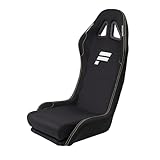


Decide These 3 Things First
Before you begin browsing upholstery patterns or measuring your room, you must make three fundamental decisions that will instantly narrow your search. Trying to shop without settling these three parameters is a recipe for buying a seat that is physically incompatible with your body, your rig, or your racing style.
- Reclining vs. Fixed-Back Bucket: Reclining seats (like the Next Level Racing ERS3 Elite Series) offer the convenience of quick angle adjustments, making them ideal for multi-driver households or casual gaming. However, the reclining hinge introduces a small amount of mechanical play. Fixed-back bucket seats (like the NRG Innovations NRG-FRP-301) are molded from a single piece of fiberglass or carbon fiber. They offer zero flex and maximum rigidity, which is essential for heavy load-cell braking, though they are harder to get in and out of.
- Your Pedal Type (Braking Force): If you are using standard potentiometer pedals (which measure how far you push the pedal), a lightweight, breathable seat like the FANATEC Sim Racing CSL Cockpit Seat is perfect. If you are using load-cell or hydraulic pedals (which measure how hard you press), you need a highly rigid frame with robust mounting brackets to prevent the seat back from flexing away from the pedals.
- Bottom Mount vs. Side Mount: How does the seat attach to your rig? Reclining seats and casual gaming seats typically use bottom mounting points, which easily bolt onto flat plate cockpits or sliders. Dedicated racing buckets use side-mounting points, requiring metal side brackets (often called side plates) that allow you to tilt the seat to your preferred angle.
1. Sizing and Seat Dimensions: The Fit is Everything
Unlike office chairs, which are highly adjustable, a sim racing seat—especially a fixed bucket—is designed to hug your body tightly to distribute pressure evenly. If a seat is too narrow, it will pinch your hips and cause sciatic nerve pain within thirty minutes. If it is too wide, you will slide around during heavy steering inputs, ruining your ergonomics.
Always look at the internal hip and shoulder dimensions before buying. For example, the NRG Innovations NRG-FRP-301 (Large) features an overall outer width of 23 inches and a height of 35 inches, which comfortably accommodates drivers with up to a 36- to 38-inch waist. If you have a larger frame, buying a seat designed for a medium or small racing chassis will make driving unbearable. Conversely, compact options like the Supllueer Racing Seat are designed to keep smaller-to-medium-framed drivers locked in place, but will pinch the shoulders of broader users. Measure your favorite, most comfortable chair at home as a baseline before comparing it to manufacturer spec sheets.
2. Frame Construction and Flex Resistance
The structural skeleton of a sim racing seat determines how much energy is lost when you interact with your rig. When you push down on a heavy brake, that force travels through your leg, into your back, and directly into the seat frame. If the frame flexes, your inputs become muddy.
There are three primary frame constructions used in the industry:
- Steel Tube Frames: Common in entry-to-mid-range seats like the Supllueer Racing Seat or the Next Level Racing ERS3. These feature a welded steel skeleton padded with foam. They are incredibly durable and highly adjustable, but they are heavier and can exhibit slight flexing under extreme braking forces (above 150 pounds of pedal pressure).
- Fiberglass Shells (FRP): Found in mid-to-high-end seats like the NRG Innovations NRG-FRP-301. Fiberglass is molded into a single, seamless bucket shape. This construction is incredibly rigid, lightweight (often weighing under 18 pounds), and completely eliminates flex along the spine.
- Minimalist Tension Frames: Used in specialized cockpits like the FANATEC Sim Racing CSL Cockpit Seat. These seats utilize high-strength fabric stretched over a minimalist steel frame. This design radically reduces weight and bulk while maintaining surprising structural integrity, making them excellent for space-saving setups.
3. Cover Materials: Breathability and Longevity
Sim racing is a surprisingly physical activity. During an intense online race, your heart rate can easily exceed 120 beats per minute, and your body will generate significant heat. The material covering your seat dictates how comfortable you will remain during a long endurance stint.
Breathable Fabric and Mesh: Materials like those found on the FANATEC CSL Cockpit Seat or the Supllueer Racing Seat allow air to circulate behind your back and under your thighs. This prevents sweat buildup and keeps you cool. Fabric is also highly durable and resistant to cracking, though it can stain if you spill a drink.
Synthetic Leather (PU/PVC): Synthetic leathers look premium and are incredibly easy to wipe clean after a sweaty race. However, they trap heat against your body. If your racing space does not have dedicated air conditioning or a fan blowing directly on you, a PU leather seat can become uncomfortably hot and sticky within an hour of driving.
Alcantara and Suede: Often found on high-end or replica racing seats. These materials offer incredible grip, preventing your body from sliding around under high lateral force. However, they require regular maintenance (brushing and specialized cleaning) to prevent the fabric from matting down from sweat and body oils.
4. Adjustability and Ergonomic Performance
In a real race car, the seat is often bolted permanently to the floor because there is only one driver. In home sim racing, you need to consider who else might use your rig. If you share your cockpit with friends or family members of different heights, quick-adjust mechanisms are a necessity.
A double-locking slide rail system, such as the one included with the Supllueer Racing Seat, is the gold standard for quick adjustments. Single-locking sliders can twist and bind over time under heavy pedal pressure, but a double-locking mechanism secures both sides of the seat simultaneously, preventing uneven twisting.
For fixed bucket seats, adjustability comes from the side brackets. High-quality side brackets feature multiple hook points, allowing you to recline the entire bucket seat backward. Tilting a bucket seat back slightly relieves pressure on your lower back and transfers your body weight to your thighs, which is crucial for preventing lumbar fatigue during long sessions.
5. Assembly, Packaging, and Delivery Realities
A sim racing seat is a bulky, heavy item. Shipping weights typically range from 25 to 55 pounds depending on whether the seat uses a fiberglass shell or a heavy steel reclining mechanism. When shopping, factor in the delivery and assembly process.
Reclining seats like the Next Level Racing ERS3 Elite Series (NLR-E050) are highly engineered but require more assembly out of the box, as you must bolt the backrest to the seat base and install the reclining brackets. Conversely, a fiberglass bucket seat arrives as a single solid piece, requiring you only to bolt on the side brackets and sliders. Make sure your package includes the correct mounting hardware—typically high-tensile M8 bolts and washers—as using cheap hardware from a local hardware store can lead to sheared bolts under heavy braking forces.
Spec Checklist
Use this quick-reference table to understand what features and specifications you should expect at different price points.
| Specification / Feature | Budget Tier ($100 – $200) | Mid-Range Tier ($200 – $400) | Premium Tier ($400+) |
|---|---|---|---|
| Typical Products | FANATEC CSL Seat ($149.99), Supllueer Racing Seat ($164.49) | Next Level Racing ERS3 ($241.51), NRG FRP-301 ($311.04) | FIA-Approved Buckets, Carbon Fiber Shells |
| Frame Type | Tension frame or basic steel tube | Reinforced steel reclining or Fiberglass shell | Carbon fiber or Kevlar composite shell |
| Flex Rating | Moderate (noticeable under heavy load) | Minimal to None | Absolute Zero Flex |
| Upholstery | Mesh fabric or basic PU leather | High-density foam, premium fabric, or suede | Genuine Alcantara, fire-retardant fabric |
| Mounting Style | Bottom mount only | Bottom mount or basic side brackets | Heavy-duty multi-angle side brackets |
Red Flags to Avoid
When shopping for a sim racing seat, keep an eye out for these warning signs that indicate a product might not hold up to the rigors of modern sim racing:
- Office Chair Star-Bases: Avoid any “racing style” seat that is designed to sit on caster wheels. If the seat can spin or roll, it is entirely useless for load-cell braking.
- Single-Locking Sliders: If a seat advertisement mentions a slider but does not specify “double-locking,” walk away. Single-locking sliders will develop play on one side, causing the seat to twist slightly to the left or right every time you hit the brakes.
- Vague Sizing Charts: If a manufacturer does not provide exact measurements for hip width, shoulder width, and overall height, it is likely a generic, mass-produced seat that may not fit standard cockpits or human bodies comfortably.
- Paper-Thin Fiberglass: Cheap, unbranded bucket seats often skimp on the fiberglass layups to save money. If the seat shell can be visibly flexed or twisted simply by squeezing the shoulder bolsters with your hands, it will flex dramatically under the force of your legs.
FAQ
Can I bolt a real car seat from a junkyard to my sim rig?
Yes, you can. Real car seats are designed for automotive safety standards and are incredibly comfortable for long periods. However, passenger car seats are often very heavy (sometimes weighing over 50 pounds due to internal motors and airbags) and require custom fabrication or adapter plates to align with the standard 8020 aluminum extrusion profiles used on most modern sim rigs.
Do I need an FIA-approved racing seat for home sim racing?
No. FIA certification is a safety rating required for real-world motorsport to ensure a seat can withstand high-speed impacts and fire. Since there are no G-forces or crash impacts in sim racing, you do not need to pay the premium price associated with FIA-certified seats. A non-FIA version of the same seat model will perform identically on a simulator.
Will a reclining seat squeak or creak over time?
Reclining seats use mechanical hinges and springs to adjust the backrest angle. Over time, under the repetitive force of heavy braking, these moving parts can develop minor play and start to squeak. You can minimize this by choosing a high-quality reclining seat like the Next Level Racing ERS3, which uses heavy-duty steel locking gears, and by occasionally lubricating the hinge mechanism with a dry PTFE spray.
How do I prevent lower back pain during long sim racing sessions?
Lower back pain is usually caused by a seat that is mounted too flat or has inadequate lumbar support. To fix this, tilt the front of your seat upward by 3 to 5 degrees using your mounting brackets. This transfers your weight off your lower spine and onto your thighs. Additionally, look for seats with removable lumbar cushions, or add a high-density memory foam lumbar insert to support the natural curve of your spine.


