Key takeaways
- Step 1: Measure Your Desk Thickness and Clearance: Use a tape measure to find the thickness of your desktop. Most clamps accommodate up to 2.5 inches. Crucially, look underneath your desk: ensure there is at least 3 inches of flat, unobstructed depth behind the desk lip. Metal support bars or cable trays running close to the edge can block the clamp’s pressure plate.
- Step 2: Find Your Seated Elbow Height: Sit in your primary gaming chair with your shoulders completely relaxed and your upper arms hanging naturally. Bend your elbows at a 90-degree angle, parallel to the floor. Have someone measure the distance from the floor to the underside of your elbows, or measure it yourself against a nearby wall.
- Step 3: Calculate Your Target Vertical Drop: Measure the distance from the floor to the top of your desktop. Subtract your seated elbow height (from Step 2) from your desktop height. For example, if your desk is 30 inches high and your elbow height is 24 inches, you need a vertical drop of 6 inches. This is where the top of your joystick grip should rest.
- Step 4: Account for Controller Stack Height: Remember that joysticks and throttles have their own height (the distance from the bottom of their base to the top of the grip). This “stack height” is typically 6 to 9 inches. Therefore, your metal mounting plate must sit even lower than your target hand height to compensate for the controller’s physical height.
- Step 5: Measure Your Thigh Clearance: While seated, measure the distance from the top of your thighs to the underside of your desk. Your desk mount’s bottom bracket and clamping mechanism must not pinch or rub against your legs when you pull your chair up to your flight station. Ensure you have at least 2 to 3 inches of safety clearance.
What's inside
The Short Answer
For the ultimate ergonomic flight simulation setup, your flight stick desk mount height and distance specs must prioritize comfort, joint alignment, and muscle memory. The golden rule is to position your hands so your elbows rest at a 90- to 100-degree angle. This means your mounting plates should drop 4 to 10 inches (10 to 25 cm) below your desktop surface, depending on your height and chair configuration.
In terms of horizontal distance, your throttle and joystick should be spaced 18 to 28 inches (45 to 71 cm) apart for side-mounted HOTAS (Hands On Throttle-And-Stick) systems, aligning roughly with your shoulders. For center-mounted joysticks, the base should sit 10 to 14 inches (25 to 35 cm) forward from your chest. High-quality adjustable aluminum desk mounts typically retail in the $55 to $75 price range per pair, offering the modularity needed to lock in these exact dimensions.
As an Amazon Associate we earn from qualifying purchases at no extra cost to you. Product prices and availability are accurate as of the date shown and are subject to change.


Standard Sizes
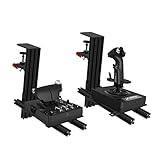
When selecting a flight stick desk mount, understanding the physical limits of the mounting hardware is crucial. Most modern mounting brackets utilize heavy-duty aluminum extrusion profiles that allow for precise vertical and horizontal adjustments. Below are the standard sizing specifications you will encounter across popular mounting systems designed for controllers like the Logitech X56, Thrustmaster T.16000M, and VKB Gladiator.
| Mount Specification | Measurement (Inches) | Measurement (Metric) | Ergonomic & Setup Purpose |
|---|---|---|---|
| Maximum Vertical Drop | 8.0″ to 12.0″ | 20.3 cm to 30.5 cm | Allows controllers to sit low enough to clear high desk surfaces and align with resting elbow height. |
| Horizontal Adjustment Profile | 4.5″ to 7.5″ | 11.4 cm to 19.1 cm | Controls how far forward or backward the joystick sits from the edge of your desk. |
| Desk Clamp Opening Capacity | 0.5″ to 2.5″ | 1.3 cm to 6.4 cm | Ensures compatibility with thin metal frames up to thick solid-wood desktop slabs. | Standard Mounting Plate Width | 5.5″ x 6.5″ | 14.0 cm x 16.5 cm | Pre-drilled footprint to support standard HOTAS bases without overhang. |
| Max Recommended Weight Capacity | 15 to 22 lbs | 6.8 kg to 10.0 kg | Prevents structural flexing or slipping during high-G maneuvers and heavy pitch inputs. |
How to Measure Your Space
To find the ideal flight stick desk mount height and distance specs for your unique body shape and furniture, follow this step-by-step measurement guide before purchasing your hardware.
- Step 1: Measure Your Desk Thickness and Clearance: Use a tape measure to find the thickness of your desktop. Most clamps accommodate up to 2.5 inches. Crucially, look underneath your desk: ensure there is at least 3 inches of flat, unobstructed depth behind the desk lip. Metal support bars or cable trays running close to the edge can block the clamp’s pressure plate.
- Step 2: Find Your Seated Elbow Height: Sit in your primary gaming chair with your shoulders completely relaxed and your upper arms hanging naturally. Bend your elbows at a 90-degree angle, parallel to the floor. Have someone measure the distance from the floor to the underside of your elbows, or measure it yourself against a nearby wall.
- Step 3: Calculate Your Target Vertical Drop: Measure the distance from the floor to the top of your desktop. Subtract your seated elbow height (from Step 2) from your desktop height. For example, if your desk is 30 inches high and your elbow height is 24 inches, you need a vertical drop of 6 inches. This is where the top of your joystick grip should rest.
- Step 4: Account for Controller Stack Height: Remember that joysticks and throttles have their own height (the distance from the bottom of their base to the top of the grip). This “stack height” is typically 6 to 9 inches. Therefore, your metal mounting plate must sit even lower than your target hand height to compensate for the controller’s physical height.
- Step 5: Measure Your Thigh Clearance: While seated, measure the distance from the top of your thighs to the underside of your desk. Your desk mount’s bottom bracket and clamping mechanism must not pinch or rub against your legs when you pull your chair up to your flight station. Ensure you have at least 2 to 3 inches of safety clearance.
By Room or Use Case
Every pilot’s virtual cockpit is different. Depending on whether you use your space solely for flight simulation or as a multi-purpose home office, your height and distance specifications will shift.
Compact & Shared Office Desks
If you use your desk for remote work during the day and flight simulation at night, flexibility is key. You need mounts with quick-release clamp mechanisms that can be attached and removed in under thirty seconds. For these setups, keep the horizontal distance minimal—positioning your mounts roughly 18 to 22 inches apart allows them to clear standard office chair armrests while keeping the center of your desk open for your keyboard. Opt for mounts that offer a shallower vertical drop (4 to 6 inches) so they can be easily stored in a desk drawer or hung on a wall hook when not in use.
Dedicated Flight Simulator Rigs
For dedicated cockpits, ergonomics take precedence over quick storage. Here, you should aim for a center-mounted joystick configuration, mimicking a real fighter jet or helicopter. This setup requires a deep vertical drop of 8 to 12 inches to allow the joystick to sit comfortably between your knees. The horizontal distance from your torso to the stick should be close—roughly 10 inches—requiring a mount with a recessed horizontal bracket. Side-mounted throttles in dedicated rigs should be positioned slightly lower than your elbow height (a drop of 8 inches) to recreate the natural resting position of an aircraft cockpit collective or throttle quadrant.
VR Flight Sim Setups
When flying in Virtual Reality, you cannot see your physical hands or controllers. Therefore, muscle memory and exact physical-to-virtual alignment are critical. Your physical mounts must match the exact placement of the virtual controls in your favorite aircraft. In 2026, advanced VR cockpits demand that your throttle and stick be placed exactly 24 to 26 inches apart. This specific width matches the default rendering of most flight simulator cockpits, ensuring that when you reach out in the virtual world, your hands land perfectly on your physical HOTAS system without searching blind.
Common Sizing Mistakes
Avoiding these frequent installation errors will save you from wrist fatigue, shoulder strain, and potential damage to your furniture:
- Overlooking the “Under-Desk” Lip: Many modern desks feature a metal support frame running around the perimeter just under the desktop. If your desk has a lip that is less than 3 inches deep before hitting this frame, standard C-clamps will not sit flush. You may need to insert a wooden spacer block to level the clamping surface.
- Setting the Mounts Too High: Placing your flight stick too high forces you to shrug your shoulders and raise your wrists. Over long gaming sessions, this causes shoulder fatigue and can lead to carpal tunnel syndrome. Always err on the side of mounting your controllers slightly lower rather than higher.
- Ignoring Chair Armrest Interference: If your chair has fixed, non-adjustable armrests, they will often collide with your desk mounts when you try to pull your chair close to the desk. Measure the width and height of your armrests before deciding on the horizontal spacing of your mounts. Highly adjustable 3D or 4D chair armrests are highly recommended for flight sim enthusiasts.
- Underestimating Cable Clearance: Joysticks and throttles have cables exiting their bases (often from the back or front). When calculating your horizontal distance specs, leave at least 1.5 inches of clearance behind the controller base so you do not pinch or crimp your USB cables against the vertical aluminum struts of the mount.
FAQ
How low should my flight stick sit below my desk?
For standard side-mounted setups, your flight stick mounting plate should sit 5 to 8 inches below the top of your desk. This height ensures that your hand rests on the grip with your wrist straight and your elbow bent at a comfortable, ergonomic 90-degree angle. Center-mounted setups with extensions can drop as low as 10 to 12 inches.
What is the ideal horizontal distance between a throttle and a flight stick?
The ideal horizontal distance for a side-mounted HOTAS setup is between 20 and 26 inches. This spacing aligns the controllers with your natural shoulder width, preventing you from reaching too far outward (which causes shoulder fatigue) or clamping your elbows too close to your ribs (which restricts movement).
Can these mounts clamp onto glass or standing desks?
While most heavy-duty clamps can physically attach to glass desks, it is highly discouraged. The concentrated clamping force and the sudden leverage forces applied during intense flight maneuvers can easily shatter tempered glass. For standing desks, mounts work exceptionally well, but you must ensure your desk’s motor can handle the additional 10 to 15 lbs of mounting hardware and controllers.
Do I need different mount plates for different joystick brands?
Most premium desk mounts in the $55 to $70 range feature universal, multi-drilled top plates. These plates are pre-configured with hole patterns that natively fit major brands, including Logitech (X52, X56), Thrustmaster (T.16000M, Warthog, TCA Airbus), VKB (Gladiator series), and Winwing. Always check the manufacturer’s compatibility list before purchasing.