Our Top Picks
 New! Sceptre 24-inch Prime Gaming Monitor DisplayPort x224 inches6.7 x 21.3 x 15.6 inchesCheck on Amazon
 Acer Nitro 27in QHD 2560x1440 IPS 180Hz Gaming27-inch8.28 x 24.2 x 18.14 inches12.1 poundsCheck on Amazon
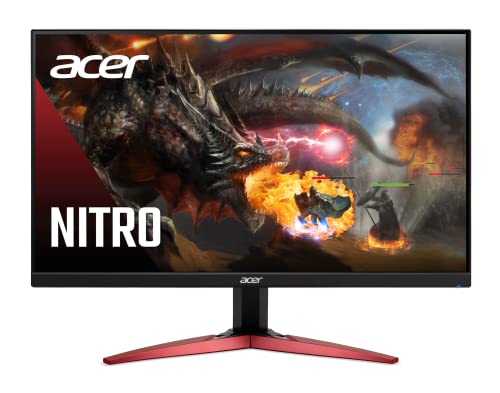 Acer Nitro 23.8in FHD 1920x1080 180Hz Gaming Monitor23.8-inch21.27 x 7.44 x 16.3 inches8.4 poundsCheck on Amazon
For most PC gamers, a 27-inch 1440p IPS monitor at 165 or 180Hz, such as the ASUS ROG Strix XG27ACS, is the best all-round choice in 2026; buyers who care more about contrast and HDR should look at a mini-LED VA like the AOC Q27G40XMN, and ultrawide fans can step up to a 34-inch panel. The gap between 165Hz and 180Hz is small enough that panel type, response behaviour and ports matter far more than the number on the box.
165Hz or 180Hz: Does the Difference Matter?
Going from 165Hz to 180Hz shortens the time between refreshes by a fraction of a millisecond, which almost nobody can perceive on its own. LoadedRig argues that 180Hz has become the market standard in 2026 because of manufacturing efficiency rather than a performance advantage that matters to most players. The practical split is simpler: choose IPS if motion clarity is the priority, or mini-LED VA if contrast and HDR matter more. Also note that 1440p at 165 to 180Hz needs a capable graphics card to reach those frame rates in demanding games, though adaptive sync keeps lower frame rates smooth.
New! Sceptre 24-inch Prime Gaming Monitor DisplayPort x2 165Hz HDMI x2 165Hz Build-in Speakers, Machine Black 2027 (E248B-FW165T Series)
Chosen because it specifies Machine Black 2027 (E248B-FW165T Series).
View on AmazonAcer Nitro 27in QHD 2560x1440 IPS 180Hz Gaming Monitor KG271U N3bmiipx | 0.5ms, AMD FreeSync, DCI-P3 95%, 2xHDMI, DisplayPort, Speaker, VESA Mountable, Bluelight Filter, Flickerless Technology
Chosen because it specifies 0.5ms and AMD FreeSync.
View on AmazonAcer Nitro 23.8in FHD 1920x1080 180Hz Gaming Monitor KG241Y Sbiip | 1ms, AMD FreeSync Premium, 2xHDMI, DisplayPort, VESA Mountable, Bluelight Filter, Flickerless Technology
Chosen because it specifies 1ms and AMD FreeSync Premium.
View on Amazon
Samsung 27" Odyssey G5 (G51F) Series QHD (1440P) Gaming Monitor | 180Hz, 1ms, AMD FreeSync, HDR10, Height Adj Stand, Black Equalizer, Virtual Aim Point, Auto Source Switch+ (LS27FG512ENXZA)
Chosen because it specifies 180Hz and 1ms.
View on AmazonComparison Table
| Model | Best for | Key stated specs | Limits |
|---|---|---|---|
| ASUS ROG Strix XG27ACS | Best overall budget 1440p IPS | 27-inch Fast IPS, 2560 x 1440, 180Hz, 1ms GTG, 350 nits (400 HDR peak), DisplayHDR 400, 97% DCI-P3, DP 1.4, HDMI 2.0, USB-C, G-Sync compatible | 180Hz over DP and USB-C only; HDMI limited to 144Hz; USB-C charging reported as 7.5W |
| AOC Q27G40XMN | HDR and contrast | 27-inch VA, 1440p, 180Hz, 1,152-zone mini-LED, HDR1000, 450 nits, 5,000:1, DP 1.4, HDMI 2.0 | Tilt-only stand; 8-bit at 180Hz; some HDR setting bugs reported by RTINGS; sold in limited regions |
| MSI MAG 275QF | Value IPS | 27-inch 1440p IPS, 180Hz (TechSpot pick) | Confirm ports on the maker page |
| Gigabyte M27QA ICE | White-themed 1440p IPS | 27-inch 1440p IPS, 180Hz (Tom’s Hardware list) | Stand and port details vary by region |
| Dell G2724D | 165Hz IPS from a major brand | 27-inch 1440p IPS, 165Hz (Bottleneck PC) | Entry HDR |
| LG UltraGear 27GS60QC | Curved VA at 180Hz | 27-inch 1440p VA, 1000R, 180Hz, 1ms GtG, 3000:1, 300 nits, FreeSync, DP and HDMI | HDMI version not confirmed; VA smearing possible |
| ViewSonic VX2728J-2K | Budget Fast IPS | 27-inch 1440p IPS, 180Hz, 0.5ms MPRT, 250 nits, FreeSync Premium | Dim for bright rooms |
| Alienware AW3423DWF | Premium ultrawide | 34-inch QD-OLED ultrawide at 165Hz (Tom’s Hardware list) | Premium tier |
| Xiaomi G34WQi | Budget ultrawide | 34-inch VA, 3440 x 1440, 180Hz, 1500R, 2x DP 1.4 | VA ghosting reported |
The Best-Rated Picks, Explained
ASUS ROG Strix XG27ACS
Bottleneck PC and LoadedRig both name it as best overall. ASUS lists a 27-inch Fast IPS panel at 2560 x 1440 and 180Hz with 1ms response, ELMB Sync, USB-C, and G-Sync compatibility, and FreeSync support. Rated brightness is 350 nits SDR with a 400-nit HDR peak under DisplayHDR 400, and colour is listed at 97% DCI-P3. Reviewers note that 180Hz needs DisplayPort or USB-C, because HDMI caps at 144Hz, and that its USB-C offers only light power delivery. It is available in black and white.
AOC Q27G40XMN
TechSpot’s pick in its segment is a 27-inch 1440p VA with a 1,152-zone full-array local dimming backlight, quantum-dot film, HDR1000 and 180Hz. AOC lists 450 nits and 5,000:1 contrast. Tom’s Hardware calls the monitor excellent with precise overdrive and low input lag, DisplayNinja calls it the best HDR gaming monitor in its price range, and RTINGS praises the local dimming while noting HDR setting bugs and a DisplayPort 1.2 bandwidth limit that stops NVIDIA cards from running full-range 8-bit RGB at 180Hz. TechSpot reports average response of 7.32ms and says dimming zones rose from 336 on the older Q27G3XMN to 1,152. It has no USB hub and no speakers, and the stand only tilts.
Other 1440p IPS choices
TechSpot also likes the MSI MAG 275QF at 180Hz, Tom’s Hardware lists the Gigabyte M27QA ICE, and DisplayNinja calls the Koorui 27E6QCA one of the most affordable 1440p 180Hz gaming monitors. LoadedRig’s other picks include the Alienware AW2725DM (Fast IPS) and the AOC Q27G3XMN, a mini-LED VA that is the older sibling of the Q27G40XMN. These names show how crowded this tier is; read the maker page for ports and stand details.
IPS vs VA vs OLED at 165 to 180Hz
| Panel | Pros | Cons |
|---|---|---|
| Fast IPS | Quick transitions, wide viewing angles, strong colour | Limited contrast, glow in dark rooms |
| VA | High native contrast | Dark-scene smearing, narrower angles |
| Mini-LED VA | HDR highlights from local dimming | Blooming; software quirks |
| QD-OLED | Deep blacks, near-instant response | Premium tier, panel care |
Ultrawide at 165 or 180Hz
The Xiaomi G34WQi (34-inch VA, 3440 x 1440, 1500R, 180Hz) and the KTC H34S18S (165Hz, from DisplayNinja’s list) cover the budget tier, while the Alienware AW3423DWF QD-OLED covers premium. On ultrawides, remember that DisplayPort is usually the way to reach the maximum refresh rate, and that the graphics card has to push about 34 percent more pixels than standard 16:9 1440p.
Fit and Compatibility Notes
- Cable choice: use DisplayPort for the full refresh rate on most models; several HDMI 2.0 ports cap lower.
- NVIDIA and AMD: most listed panels support FreeSync, and many are G-Sync compatible.
- Consoles: these 1440p monitors mostly use HDMI 2.0, so 4K 120Hz is not offered; 1440p modes depend on the console.
- Stands: some models tilt only; use a VESA arm if you need height adjustment.
- Room lighting: 250 to 350 nit monitors are fine in moderate light; brighter rooms favour the 450 nit mini-LED.
Pick X If…
| If you want… | Choose |
|---|---|
| One safe 1440p IPS pick | ASUS ROG Strix XG27ACS |
| Best HDR and contrast under premium | AOC Q27G40XMN |
| Cheapest 180Hz Fast IPS from a known brand | ViewSonic VX2728J-2K or MSI MAG 275QF |
| A big-brand 165Hz option | Dell G2724D |
| Curved 27-inch | LG 27GS60QC |
| Ultrawide on a budget | Xiaomi G34WQi |
| Ultrawide with the best contrast | Alienware AW3423DWF |
Alternatives
- 240Hz 1440p IPS: LG 27GR83Q at 240Hz offers higher refresh for similar resolution.
- 4K 144Hz: LG 27GR93U for those who want 4K and a pair of HDMI 2.1 ports.
- Budget 27-inch curved 180Hz: Several makers sell 180Hz 27-inch curved and flat panels at entry-level budgets.
How to Set Up a 165 or 180Hz Monitor
Connect the monitor with the DisplayPort cable in the box, then open the operating system display settings and choose the highest refresh rate from the advanced display options; many monitors default to 60Hz until this step is done. Next, enable adaptive sync in the monitor menu and in the graphics driver control panel, and cap in-game frame rates a few frames below the refresh rate if tearing or latency appears. Overdrive and any motion-blur-reduction features are best left at the maker default or a middle level until you have compared them in a real game.
Features Worth Paying Attention To
Beyond refresh rate, a few features separate similar-looking models. A well-tuned overdrive setting reduces trailing without adding overshoot, and reviewers mention overshoot at the highest overdrive setting on the AOC mini-LED, so a middle setting is the safer default. Adaptive sync range matters when frame rates dip, and a USB hub saves cable runs, though the AOC has none. Stand adjustment matters for comfort: the AOC stand only tilts, and a VESA arm solves the problem on almost any model.
Colour and HDR Reality Check
A DisplayHDR 400 badge, such as the ASUS XG27ACS carries, mainly means the monitor accepts an HDR signal and reaches a modest peak brightness. It does not provide the highlights and dark areas that a local-dimming or OLED panel produces. The AOC Q27G40XMN, with its 1,152 zones and HDR1000 rating, is the monitor in this guide that reviewers say comes closest to real HDR, though bloom around bright objects is a known trait of local dimming. For colour-critical creative work, look for a reviewer’s measured accuracy rather than relying on the gamut percentage alone.
Budget Tiers
Budget: Koorui 27E6QCA, MSI MAG 275QF, ViewSonic VX2728J-2K and similar 180Hz IPS panels. Mid-range: ASUS XG27ACS, Dell G2724D, Gigabyte M27QA ICE and the AOC mini-LED. Premium: QD-OLED ultrawides such as the Alienware AW3423DWF and 4K OLEDs. Offers move often, so compare the same model number and region rather than assuming the order holds.
Frequently Asked Questions
Is 180Hz better than 165Hz?
Marginally. The difference is small and most players will not notice it, so panel type, response and ports should drive the decision.
Can I run 180Hz over HDMI?
Often not. The ASUS XG27ACS, for example, reaches 180Hz over DisplayPort or USB-C but is limited to 144Hz over HDMI, so DisplayPort is the safer connection.
Is a 1440p 165Hz monitor good for esports?
Yes. High refresh and adaptive sync cover most competitive needs, though dedicated esports players sometimes choose 240Hz or higher IPS panels.
IPS or VA for a 180Hz monitor?
IPS suits clean motion and colour, while VA suits dark rooms and contrast. Mini-LED VA models add stronger HDR but can show blooming.
Do I need a powerful GPU for 1440p 180Hz?
To reach 180fps in demanding games, yes. A mid-range card still benefits from adaptive sync even when frame rates sit below the ceiling.
FAQ
165Hz or 180Hz: Does the Difference Matter?
Is 180Hz better than 165Hz?
Can I run 180Hz over HDMI?
Is a 1440p 165Hz monitor good for esports?
IPS or VA for a 180Hz monitor?
Do I need a powerful GPU for 1440p 180Hz?
More from Amazon
Programs that pair well with the guide above. Offers and eligibility are set by Amazon and may change.
Free shipping on eligible items, Prime Video and more. Eligible new members can start with a free trial.
Start a Prime free trialAd-free music streaming. Eligible new subscribers can start with a free trial.
Try Music Unlimited freeA Prime membership for ages 18-24 with a trial period. Eligibility is set by Amazon.
See Prime for Young AdultsAudiobooks and podcasts to listen to on the go. Eligible new members can start with a free trial.
Try Audible freeAs an Amazon Associate we earn from qualifying purchases.