
Key takeaways
- Portable productivity: extra screens that fold flat for travel.
- Slim and light: the best panels add minimal bulk to your bag.
- Plug and play: USB-C models often need no driver on Windows or Mac.
- Flexible viewing: rotation and kickstands aid different tasks.
What's inside
A folding screen for your laptop is the neatest way to carry extra display real estate without hauling a second monitor. These panels attach to your laptop lid and fold flat for transport, then swing open to give you a dual or triple-screen workspace wherever you land. For remote workers, students, and anyone who lives out of a backpack, they turn a single cramped screen into a genuine productivity station in seconds.
This review looks at a range of folding laptop screen extenders, from ultra-thin single-panel models to triple-screen setups from KYY, KEFEYA, and others. Here is how to pick one that boosts your output without weighing you down.
As an Amazon Associate we earn from qualifying purchases at no extra cost to you. Product prices and availability are accurate as of the date shown and are subject to change.





🎮 Get More From Your Setup — Free
Prime Gaming gives you free PC games every month, in-game loot, and a free Twitch channel sub — plus fast free shipping on all the gear above. New members get a 30-day free trial.
Watch: Folding Screen For Laptop: Review & Buyer’s Guide — Video Review
Design & Build
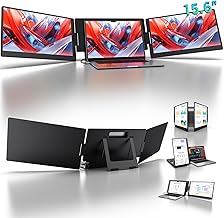
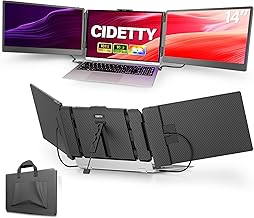
These extenders mount to the back of your laptop lid and fold out one, two, or three additional panels. Single and dual designs like the KEFEYA 14-inch keep weight down, while triple-panel models such as the KYY X90D deliver maximum screen area at the cost of more heft. Most target the 13 to 17.3-inch laptop range, and the best emphasize an ultra-thin, lightweight profile so they barely change your carry weight. Materials matter: sturdier builds hold their viewing angle reliably, while flimsier plastic units can sag, so a solid clamp and rigid panels are worth prioritizing.
Performance
Image quality is consistently good, with 1080P FHD IPS panels the norm, and some like the 16:10 ultra-thin model offering a slightly taller aspect ratio for more vertical workspace. Connectivity is the crucial factor. Single-cable USB-C models are the most convenient, carrying video and power together for a true plug-and-play setup, provided your laptop’s USB-C port outputs video. Some triple-screen units, including certain KYY configurations, require a driver or a second cable. Auto-rotation and kickstands appear on several models, adding flexibility for portrait reading or angled viewing when you need it.
Pros & Cons
- Portable productivity: extra screens that fold flat for travel.
- Slim and light: the best panels add minimal bulk to your bag.
- Plug and play: USB-C models often need no driver on Windows or Mac.
- Flexible viewing: rotation and kickstands aid different tasks.
- Hinge load: triple-panel models add real weight to the laptop lid.
- Port dependency: single-cable use requires a video-capable USB-C port.
Alternatives to Consider
If you want the lightest setup, a single or dual-panel extender like the KEFEYA 14-inch or the ultra-thin 16:10 model gives a big productivity lift with minimal weight and hinge strain. Those who need the most screen area should look at triple-panel options such as the KYY X90D or the ultra-thin upgraded triple model, accepting the extra heft and possible driver requirement. Anyone whose laptop lacks a video-capable USB-C port should confirm compatibility or choose a model with HDMI plus separate power, otherwise the panels will not display anything.
Frequently Asked Questions
Will a folding screen work with my laptop?
Single-cable USB-C models need a USB-C port that supports video output. If yours does not, choose a model with HDMI connectivity, and check the size range matches your laptop, typically 13 to 17.3 inches.
Do these need a driver?
Many USB-C plug-and-play models work without a driver on Windows and Mac, but some triple-panel units, including certain KYY configurations, require one. The listing will specify.
How much do they weigh?
Single and dual panels are lightest, often around or under a kilogram, while triple-screen models weigh more. The best are ultra-thin to keep your overall carry manageable.
Can I use them at different angles?
Yes. Many include rotation and kickstands, letting you angle the panels for sharing, switch to portrait for reading, or adjust for comfortable viewing at your desk.
Verdict
A folding laptop screen is a productivity game-changer for mobile workers who need more than one display. Choose a dual-panel KEFEYA or ultra-thin 16:10 model for the best balance of weight and workspace, or a triple KYY X90D when you want maximum real estate. Confirm your USB-C port outputs video first, and you will never miss a desktop monitor on the road.


