Key takeaways
- Eccentric Rotating Mass (ERM) Motors: These are traditional rumble motors with asymmetric weights. They are cheap to manufacture but suffer from latency because the weight takes a fraction of a second to spin up and spin down. The sensation feels “mushy” and continuous.
- Linear Resonant Actuators (LRAs) / Haptic Reactors: These utilize a magnetic coil to drive a suspended weight back and forth rapidly along a single axis. They respond instantly (with less than 5 milliseconds of latency) and can deliver sharp, distinct taps, sharp buzzes, or heavy thuds. Systems like the SIMSONN Plus X series support these advanced haptic reactors to deliver crisp, isolated sensations.
What's inside
The Short Answer
Yes, haptic rumble pedals are absolutely worth it for sim racing—under the single condition that you already own a load-cell brake pedal and are willing to spend 30 minutes configuring telemetry software like SimHub.
If you are still racing on cheap, potentiometer-based plastic pedals, your money is better spent upgrading to a load-cell kit first. However, if you already have a solid pedal deck, adding haptic feedback is the single most cost-effective immersion upgrade you can make. In 2026, with the market flooded with high-quality, plug-and-play haptic reactors costing between $75 and $250, you no longer need to spend $1,000+ on active hydraulic pedals to feel the exact moment your tires lose grip.
As an Amazon Associate we earn from qualifying purchases at no extra cost to you. Product prices and availability are accurate as of the date shown and are subject to change.


What You Actually Get
To understand if they are worth your money, you must understand what haptic rumble pedals actually do. They are not merely controller vibration motors glued to your feet. Instead, they are precision transducers that translate real-time physics data from your sim of choice (such as iRacing, Assetto Corsa Competizione, or rFactor 2) into physical sensations.
There are two primary technologies used in these systems:
- Eccentric Rotating Mass (ERM) Motors: These are traditional rumble motors with asymmetric weights. They are cheap to manufacture but suffer from latency because the weight takes a fraction of a second to spin up and spin down. The sensation feels “mushy” and continuous.
- Linear Resonant Actuators (LRAs) / Haptic Reactors: These utilize a magnetic coil to drive a suspended weight back and forth rapidly along a single axis. They respond instantly (with less than 5 milliseconds of latency) and can deliver sharp, distinct taps, sharp buzzes, or heavy thuds. Systems like the SIMSONN Plus X series support these advanced haptic reactors to deliver crisp, isolated sensations.
When configured correctly, these actuators operate at frequencies ranging from 10Hz to 80Hz. They draw power from an external 12V DC power supply (typically pulling 1.5 to 3 amps, or roughly 18 to 36 watts of power). This ensures the vibrations are strong enough to penetrate thick-soled racing shoes and heavy aluminum pedal faces.
The system works by isolating specific telemetry channels. On your brake pedal, the haptic motor fires to simulate ABS (Anti-lock Braking System) chatter when you exceed your tires’ braking grip. On your throttle pedal, the motor vibrates to signal wheel slip or traction control activation when you apply too much power on a corner exit. You can also configure them to transmit engine RPM vibrations, road texture, and gear shift clunks directly through your feet.
Pros
- Immediate Telemetry Feedback: Instead of waiting to see your car spin or hearing the squeal of tires through your headphones, your feet instantly feel the loss of traction. This physical pre-warning allows you to make micro-corrections to your steering and pedal inputs much faster.
- Enhanced Muscle Memory: A load-cell pedal tells you how hard you are pressing, but a haptic pedal tells you exactly what that pressure is doing to the car. This combination bridges the gap between static pressure and dynamic car physics, leading to more consistent lap times over long racing stints.
- High Cost-to-Performance Value: True motion platforms or active pedal setups can easily cost between $1,500 and $3,000. A standalone haptic upgrade kit (like the SIMSONN Plus X Baseplate and reactor mount) can be added to your existing rig for around $75 to $100, delivering 80% of the pedal-specific immersion at a fraction of the cost.
- Deep Customization: Using software like SimHub, you can customize the exact frequency, threshold, and volume of every effect. If you want a violent 40Hz thud for ABS but a gentle, high-frequency 75Hz buzz for engine idle, you can program it in minutes.
Cons
- Vibration and Structural Noise: Actuators vibrating at high frequencies will transfer energy directly into your pedal deck and down through your entire rig. If your rig is placed on a wooden floor or in an upstairs apartment, this low-frequency hum can travel through walls and disturb others. You will likely need to invest in 10mm to 20mm thick rubber isolation pads under your rig.
- Cable Management Complexity: Adding haptics means adding more wires. Each pedal actuator requires a signal cable going to a control box, a USB cable going to your PC, and a power cable going to a wall outlet. It turns a clean pedal deck into a potential cable rat’s nest without careful zip-tying.
- Software and Configuration Overhead: These systems are rarely plug-and-play out of the box. They rely heavily on third-party software. If SimHub fails to start, or if a game update changes the telemetry output, you may find yourself troubleshooting software profiles instead of racing.
- Decreasing Returns on Throttle: While haptic feedback on the brake pedal is universally praised for its utility, feedback on the throttle pedal (like engine rumble or traction control) can sometimes feel distracting or muddy during long races, leading many drivers to eventually turn down or disable throttle effects entirely.
Who Should Buy It
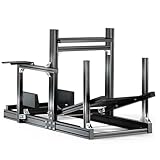
You should buy haptic rumble pedals if you are a dedicated PC sim racer who already owns a rigid aluminum profile cockpit (such as an 8020 rig) and a solid set of load-cell pedals. If you regularly drive cars with heavy electronic driver aids—like GT3 cars, Formula cars, or modern sports cars—the ABS and traction control feedback will genuinely make you a more consistent, confident driver. It is also an excellent purchase for VR (Virtual Reality) racers, as physical feedback in the feet compensates beautifully for the lack of real-world g-forces.
Who Should Skip It
You should skip this upgrade if you race primarily on a console (PlayStation 5 or Xbox Series X). Because consoles do not easily export raw telemetry data to external USB controllers, setting up haptic reactors requires expensive, complex translation hardware, and the results are often disappointing. You should also skip haptics if your wheel and pedals are clamped to a standard office desk or a lightweight folding wheel stand. The vibrations will resonate through your desk, shaking your monitors, rattling your keyboard, and creating an incredibly noisy, unpleasant environment.
Cheaper Alternatives
If you are not ready to buy a complete, premium hydraulic pedal set with integrated haptics, there are several entry-level paths and DIY workarounds available to get vibration feedback under your feet.
| Option | Approximate Cost | Major Trade-off |
|---|---|---|
| DIY Xbox Controller Motors | $15 – $30 | Weak rotational vibration; requires soldering, 3D-printing custom brackets, and an Arduino board. |
| Single Bass Shaker (e.g., Dayton TT25) | $40 – $80 | Mounts to the entire pedal plate. It vibrates both feet at once, meaning you cannot separate brake ABS from throttle slip. |
| SIMSONN Plus X Baseplate / Standalone Haptic Mounts | $75 – $100 | Requires manual mounting alignment and custom software configuration; must be bolted to compatible third-party pedal arms. |
| Integrated Hydraulic/Haptic Sets (e.g., SIMSONN Plus X P3-H3) | $220 – $250 | Higher upfront cost; requires replacing your current pedal set entirely, though it offers the best out-of-the-box performance. |
FAQ
Do haptic pedals work on all racing games?
Haptic pedals work on almost any PC racing game that outputs telemetry data. This includes popular titles like iRacing, Assetto Corsa, Assetto Corsa Competizione, Automobilista 2, Dirt Rally 2.0, and the F1 series. If you are using SimHub, the software reads the game’s internal data feed and translates it into physical vibrations automatically.
Do I need to wear shoes to use haptic pedals?
While you can use them barefoot or in socks, it is highly recommended to wear thin-soled racing shoes or karting shoes. High-quality haptic reactors (drawing 12V of power) hit hard enough that raw metal pedal plates vibrating directly against bare skin can become uncomfortable or itchy over a long racing session. A thin shoe dampens the harshness while preserving the precise “thump” of the telemetry.
Can I mount haptic reactors to my existing pedals?
Yes. Many manufacturers sell universal mounting brackets, and the 3D-printing community has created thousands of free mounting designs for popular pedal sets like the Fanatec CSL/ClubSport, Thrustmaster T-LCM, and Heusinkveld Sprints. As long as you can securely bolt or clamp the actuator to the back of the pedal arm, the vibrations will transfer effectively.
Will haptic pedals actually make me faster?
They will not instantly shave a full second off your hotlap time, but they will make you much more consistent. By feeling the exact threshold where your tires begin to slide or lock up, you will make fewer catastrophic mistakes, spin out less frequently, and save your virtual tires from flat-spotting or overheating over the course of a long race.