Key takeaways
- Zero Flex and Maximum Rigidity: The primary benefit is structural integrity. When you stomp on a load-cell brake pedal requiring 80 kg (176 lbs) of physical force, the pedal plate does not budge. When a direct-drive motor delivers a sudden torque spike, the wheel deck remains perfectly still.
- Infinite Adjustability: Every single component can be adjusted along multiple axes. This is crucial for preventing lower back pain, knee fatigue, and wrist strain during long sessions.
- Lifetime Durability: Anodized aluminum does not rust, bend, or fatigue over time. A profile rig purchased today will easily last a lifetime; you will swap out your wheel, pedals, monitors, and seat multiple times before you ever need to replace the frame.
- Unmatched Customization: The modular T-slot design means you can easily bolt on shifters, handbrakes, keyboard trays, cup holders, tactile transducers (bass shakers), and triple-monitor mounts without proprietary adapters.
- High Resale Value: Because these frames are essentially industrial building blocks, they retain their value incredibly well on the secondhand market compared to proprietary steel tube cockpits.
What's inside
Sim racing has evolved from a niche hobby into a highly sophisticated home simulation experience. As direct-drive wheelbases and load-cell pedals become the standard for enthusiasts, the physical demands on your setup increase dramatically. If your steering wheel is shaking your desk to pieces or your brake pedal is lifting your office chair off the ground, you have likely looked into dedicated cockpits. But with prices starting in the mid-hundreds and quickly climbing past a thousand dollars once you add a seat, you have to ask: is an aluminum profile sim rig worth the cost?
As a home and furniture editor who has spent years evaluating ergonomics, build quality, and spatial design, I have analyzed these industrial-grade frames from both a functional and practical home-integration standpoint. Here is an honest, fluff-free breakdown of what you actually get for your money, the pros and cons, and whether you should make the investment.
As an Amazon Associate we earn from qualifying purchases at no extra cost to you. Product prices and availability are accurate as of the date shown and are subject to change.

The Short Answer
Yes, an aluminum profile sim rig is absolutely worth the cost, provided you are using or plan to upgrade to a direct-drive (DD) wheelbase with at least 8 Nm of torque, or load-cell pedals.
If you are using a budget, entry-level wheel (such as a gear- or belt-driven system under 5 Nm) and standard potentiometer-based pedals, an aluminum profile rig is overkill. However, the moment you introduce high-force peripherals, any lesser mount will flex, squeak, and absorb the vibrations that are supposed to go into your hands and feet. The absolute rigidity of aluminum extrusion ensures that 100% of the force feedback from your wheelbase and the pressure on your brake pedal are transmitted directly to you, drastically improving both immersion and muscle memory.
What You Actually Get
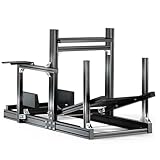
Aluminum profile rigs—often referred to as “8020” rigs due to the classic fraction-based profiling, though modern rigs typically use metric dimensions—are constructed from extruded aluminum beams with T-slots running along their entire length. This structural design is the same material used in industrial automation, cleanrooms, and heavy-duty framing.
When you purchase an entry-level profile rig, such as the Anman GT/F1 Sim Racing Cockpit 8040 Aluminium Profile Adjustable Stand ($399.99), you are buying a modular chassis. The “8040” designation refers to the profile dimensions: 80mm by 40mm. This is the sweet spot for home sim racing. It provides an incredibly rigid base that can support direct-drive wheelbases up to 15 Nm of torque without a millimeter of flex, while keeping the weight and cost relatively manageable.
What makes these rigs unique is their absolute adjustability. Because the metal beams feature continuous T-slots, you are not locked into pre-drilled holes. You can slide your wheel deck, pedal tray, and seat mount back and forth, up and down, or tilt them to any angle down to the millimeter. This allows you to recreate the exact driving position of a GT3 car, an F1 monocoque, or a standard street car.
Furthermore, you get an ecosystem of modularity. If you want to add an accessory, you do not need to drill into steel plates. You simply drop a sliding T-nut into the slot and bolt the accessory directly to the frame. For example, adding a dedicated Phone Holder for Sim Rig Aluminum Profile Cockpit ($19.99) to display your digital dashboard telemetry takes less than two minutes and can be positioned exactly where your eyes naturally fall behind the steering wheel.
Pros
- Zero Flex and Maximum Rigidity: The primary benefit is structural integrity. When you stomp on a load-cell brake pedal requiring 80 kg (176 lbs) of physical force, the pedal plate does not budge. When a direct-drive motor delivers a sudden torque spike, the wheel deck remains perfectly still.
- Infinite Adjustability: Every single component can be adjusted along multiple axes. This is crucial for preventing lower back pain, knee fatigue, and wrist strain during long sessions.
- Lifetime Durability: Anodized aluminum does not rust, bend, or fatigue over time. A profile rig purchased today will easily last a lifetime; you will swap out your wheel, pedals, monitors, and seat multiple times before you ever need to replace the frame.
- Unmatched Customization: The modular T-slot design means you can easily bolt on shifters, handbrakes, keyboard trays, cup holders, tactile transducers (bass shakers), and triple-monitor mounts without proprietary adapters.
- High Resale Value: Because these frames are essentially industrial building blocks, they retain their value incredibly well on the secondhand market compared to proprietary steel tube cockpits.
Cons
- High Upfront Cost: At $300 to $600 for a bare frame (like the $399.99 Anman GT/F1), you still have to source a seat. A compatible reclining sports seat or fiberglass bucket seat will add another $150 to $400 to your total bill.
- Tedious Assembly Process: Building an aluminum profile rig is a serious project. It involves aligning dozens of corner brackets, sliding hundreds of tiny T-nuts into channels, and tightening heavy-duty bolts. Expect to spend 4 to 8 hours building and fine-tuning your frame.
- Heavy and Semi-Permanent Footprint: A fully built aluminum rig with a seat, wheel, and pedals easily weighs 80 to 120 lbs. It is not something you can easily fold up and slide under a bed. It requires a dedicated floor footprint of roughly 55 inches long by 22 inches wide.
- Industrial Aesthetic: While sleek in black anodized finishes, these rigs look like industrial machinery. They do not blend seamlessly into a traditional living room decor unless you have a dedicated game room or office.
Who Should Buy It
You should invest in an aluminum profile rig if you are a committed hobbyist who plans to spend several hours a week sim racing. If you already own a direct-drive wheelbase (such as a Fanatec ClubSport DD, Simagic Alpha, or Moza R9) or are using load-cell pedals, this upgrade is not optional—it is a necessity to get the full performance out of your gear. It is also the ideal choice for taller or shorter drivers who struggle to find comfortable seating positions on standard, non-adjustable steel tube cockpits.
Who Should Skip It
You should skip it if you are a casual racer who plays occasionally on a console with a clamp-on desk wheel. If you live in a small apartment where your gaming setup must be packed away after every session, the permanent footprint of a profile rig is highly impractical. In these scenarios, a high-quality folding wheel stand or a lightweight, wheel-on-lockable-castors office setup is a much better fit for both your space and your wallet.
Cheaper Alternatives
If you are not ready to spend $400+ on a bare frame plus the cost of a seat, there are other routes to secure your racing hardware. Here is how they compare:
| Option | Estimated Cost | Trade-off |
|---|---|---|
| Folding Metal Wheel Stand | $100 – $180 | Noticeable vertical and lateral flex under heavy braking or force feedback. Your office chair can still slide backward unless strapped down. |
| Pre-Welded Steel Tube Cockpit | $200 – $350 | Limited adjustability (constrained by pre-drilled locking pin holes). Tends to develop creaks and flex over time at the joints. Hard to mount custom accessories. |
| DIY Wood Rig (2×4 Lumber) | $80 – $150 | Extremely heavy and bulky. It is difficult to adjust once screwed together, and the aesthetic is crude unless you spend significant time sanding and painting. |
FAQ
Do I need a special seat for an aluminum profile rig?
No, you do not need a proprietary brand name seat. Most aluminum profile rigs use standard side-mounting brackets or bottom-mounting rails. This means you can mount a real racing bucket seat, a reclining sports seat, or even a seat pulled from a real car at a local salvage yard, which is a popular budget-friendly hack for sim racers.
Is an 8040 (4080) profile strong enough, or do I need a 40120 or 40160 rig?
As we look at the state of sim racing hardware heading into 2026, direct-drive motor technology has become more affordable and incredibly powerful. An 8040 profile rig (like the Anman GT/F1) is more than strong enough to handle wheelbases up to 15 Nm of torque and load-cell pedals up to 100 kg of force. You only need to step up to 40120 or 40160 profiles if you plan to mount massive motion actuator systems that physically lift and shake the entire cockpit.
How much space does a full aluminum sim rig take up?
On average, a fully assembled aluminum profile rig with a seat attached occupies a footprint of approximately 50 to 55 inches in length and 22 to 26 inches in width. You should also account for another 6 to 12 inches of clearance behind the seat if you prefer a reclined driving position.
Does an aluminum profile rig scratch hardwood floors?
Because the bare aluminum profiles have sharp metal corners and edges at the base, they can easily scratch hardwood, laminate, or vinyl floors. It is highly recommended to install heavy-duty rubber feet on the bottom corners of the frame or place the entire cockpit on a thick, high-density rubber equipment mat (such as a treadmill mat) to protect your flooring and absorb sound vibrations.