Key takeaways
- Wi-Fi generation: Wi-Fi 6 is a sensible baseline for most offices. Wi-Fi 6E adds access to the 6 GHz band for compatible devices, which can mean less congestion nearby, though its range through walls is limited. Wi-Fi 7 can offer higher capacity and newer features, but it is worthwhile only if your broadband, devices, and budget can use them.
- Wired ports: Check both the number and speed of WAN and LAN ports. A fast Wi-Fi rating does not make a 1 Gbps Ethernet port faster.
- Traffic management: QoS or device prioritization can help keep calls responsive when the network is busy. Prefer controls that let you identify or prioritize work devices; simplistic prioritization may not improve every connection.
- Security: Look for WPA3 support, automatic firmware updates, a supported manufacturer, guest-network controls, and the ability to separate smart-home devices from work equipment. Security subscriptions and advanced features vary by model, so check what is included and what requires a fee.
- Mesh compatibility: For a larger home, check whether additional nodes are available and whether they can use Ethernet backhaul. A wired backhaul preserves more wireless capacity for devices.
Best Routers for a Home Office: Match the Router to Your Space
The best router for a home office is the one that delivers a stable connection where you work, has enough Ethernet ports for your fixed equipment, and includes security and traffic-management features that fit your household—not simply the highest advertised Wi-Fi speed.
For a small office near the router, a reliable Wi-Fi 6 model with gigabit Ethernet is often sufficient. Larger or multi-floor homes may benefit more from a mesh system or a wired access point than from a faster single router. Before buying, check your internet plan, floor layout, work devices, and whether you can run Ethernet.
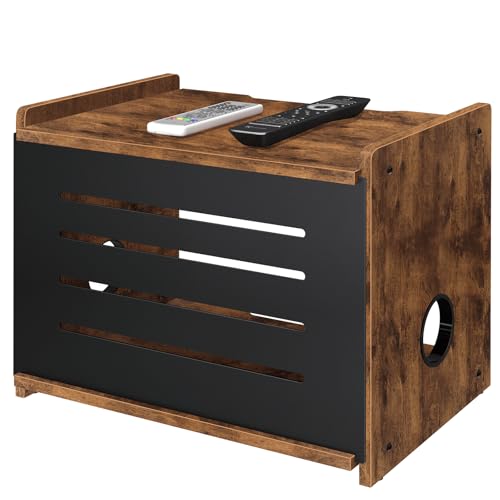
Homode Router Shelf, Wood Wifi Box Hider, Projector Shelf Stand, Router Modem Storage Box Power Strip Cable Management Hider Rack, Routers Cover Organizer for Office Home, Rustic Brown
Included for 'Best Routers for a Home Office' because the listing specifies Wood Wifi Box Hider and Projector Shelf Stand, details this guide uses to compare options.
View on Amazon
Mikrotik RouterBoard RB951Ui-2nD hAP Homes or Offices 2.4GHz Access Point 5-Ports PoE OSL4 USB for 3G/4G
Included for 'Best Routers for a Home Office' as a relevant option in this category; details come from the product listing.
View on AmazonChoose by Office Size and Connection Needs
| Home-office situation | Good-fit router class | What to prioritize | Typical planning range |
|---|---|---|---|
| One or two rooms, router nearby | Wi-Fi 6 or Wi-Fi 6E single router | Stable 5 GHz coverage, gigabit WAN and LAN, WPA3 | About 1,000–2,000 sq. ft. of practical coverage |
| Several rooms or a distant office | Strong Wi-Fi 6E or Wi-Fi 7 router | Good placement, multiple bands, Ethernet backhaul support | One router may work across roughly 1,500–2,500 sq. ft.; walls can reduce this substantially |
| Large or multi-floor home with dead zones | Two- or three-node mesh system | Reliable node-to-node link; wired backhaul if possible | Plan node placement by floors and obstacles, not just advertised area |
| Video calls and large file transfers are business-critical | Router with QoS or traffic prioritization, plus wired connections | Ethernet for the work computer; configurable guest and IoT networks | Choose WAN and LAN ports that match your internet plan and local transfers |
Coverage figures are manufacturer estimates, not guarantees. Brick, concrete, foil-backed insulation, neighboring networks, and router placement can make a smaller home harder to cover than a larger open-plan one. If your office is separated by several walls, a mesh node or wired access point near the room can help more than paying for a higher top-line speed.
How Much Speed Does a Home Office Need?
Estimate your actual simultaneous use rather than adding up every device’s maximum advertised speed. A typical HD video call may use about 2–4 Mbps in each direction; a 4K stream can use around 15–25 Mbps downstream, depending on the service. Cloud backup, screen sharing, and other household users add to the load. Upload capacity matters: an internet plan with fast downloads but limited upload speed can still struggle when several people are on calls or sending large files.
Worked example: Suppose two people each have an HD call using 3 Mbps up and down, while one person uploads a large file at 10 Mbps and another device streams video at 20 Mbps. That is approximately 16 Mbps of planned upload use (2 × 3 + 10) and 26 Mbps of download use (2 × 3 + 20), before overhead and other devices. Allowing about 30% headroom brings the planning targets to roughly 21 Mbps up and 34 Mbps down. A plan and router should comfortably support those figures, but a congested Wi-Fi link can still cause lag.
For a work desktop, dock, or VoIP phone, Ethernet is usually the simplest way to reduce wireless interference and latency variation. Confirm the router has enough LAN ports: many models provide three or four, and a port may be needed for a wired mesh node. A gigabit Ethernet port supports up to 1 Gbps under ideal conditions; if your broadband exceeds that, look for multi-gig WAN and LAN ports rated at 2.5 Gbps or faster where they match your service and devices.
What to Look For in the Router
- Wi-Fi generation: Wi-Fi 6 is a sensible baseline for most offices. Wi-Fi 6E adds access to the 6 GHz band for compatible devices, which can mean less congestion nearby, though its range through walls is limited. Wi-Fi 7 can offer higher capacity and newer features, but it is worthwhile only if your broadband, devices, and budget can use them.
- Wired ports: Check both the number and speed of WAN and LAN ports. A fast Wi-Fi rating does not make a 1 Gbps Ethernet port faster.
- Traffic management: QoS or device prioritization can help keep calls responsive when the network is busy. Prefer controls that let you identify or prioritize work devices; simplistic prioritization may not improve every connection.
- Security: Look for WPA3 support, automatic firmware updates, a supported manufacturer, guest-network controls, and the ability to separate smart-home devices from work equipment. Security subscriptions and advanced features vary by model, so check what is included and what requires a fee.
- Mesh compatibility: For a larger home, check whether additional nodes are available and whether they can use Ethernet backhaul. A wired backhaul preserves more wireless capacity for devices.
Models Worth Comparing
These established product families illustrate different buying priorities; exact ports, features, and regional versions can differ, so verify the specific model before purchase.
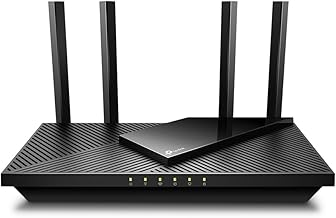
- TP-Link Archer AX55: A Wi-Fi 6 option to consider for a modest home office that needs a mainstream router rather than mesh coverage. Check its port count and management features against your setup.
- ASUS RT-AX86U Pro: A Wi-Fi 6 router with gaming-oriented traffic controls that can also suit a busy home office. Compare its wired ports and software support with your requirements.
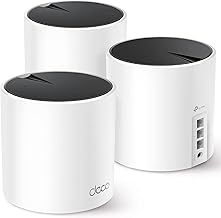
- TP-Link Deco XE75: A Wi-Fi 6E mesh system for homes where a single router has trouble reaching the office. Place its nodes so they maintain a strong connection to one another; mesh cannot fix a poor broadband connection.
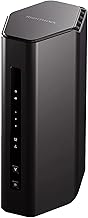
- ASUS RT-BE88U: A Wi-Fi 7 router aimed at users who want newer wireless capability and faster wired networking. It is a more sensible upgrade when compatible devices or multi-gig internet can take advantage of those features.
Prices vary by configuration and sales; as a broad guide, single Wi-Fi 6 routers often fall around $80–$200, Wi-Fi 6E routers around $150–$350, and multi-node mesh kits around $200–$600. Higher-end Wi-Fi 7 models can cost more. Treat these as market ranges, not fixed prices.
Set Up for More Reliable Video Calls
- Place the router in the open. Put it near the center of the area it serves, elevated and away from cabinets, metal objects, and dense electronics. This improves the signal path before you adjust any settings.
- Connect the work computer by Ethernet if practical. If you need Wi-Fi, use the 5 GHz band for a nearby office; choose 2.4 GHz only when distance or walls make the faster band unreliable. Use 6 GHz when both the router and device support it and the room is close enough.
- Keep firmware current and enable WPA3. If an older device cannot connect with WPA3, check whether the router offers a mixed WPA2/WPA3 mode rather than weakening security for the entire network unnecessarily.
- Use QoS selectively. Prioritize the work computer or calling application during busy hours. If the setting causes slower transfers or no improvement, disable it and compare call stability; prioritization is not a substitute for enough upload bandwidth.
- Separate guests and smart-home devices. Put visitors on a guest network, and use an IoT network if the router supports one. This limits unnecessary access to work devices.
- Test at the desk, not beside the router. Check upload speed and latency during a call or busy household period. If results are poor only in the office, try repositioning the router, adding a well-placed mesh node, or installing a wired access point before replacing all your equipment.
Make the Purchase Decision
For a compact office near the router, start with a dependable Wi-Fi 6 model, WPA3, and enough gigabit ports. For a distant room, prioritize coverage and consider mesh with wired backhaul over a premium single-router speed rating. For multi-gig broadband or fast local file transfers, verify that the router and connected devices have matching multi-gig ports. In every case, a suitable internet plan, sensible placement, and a wired work computer where possible will usually matter more to video-call reliability than the biggest number on the box.