
Key takeaways
- Measure the Absolute Floor Footprint: Use a steel tape measure to map out the width and depth of the floor space where the rig will sit. Ensure you have at least 24 inches of additional clearance behind the seat to allow you to slide back and exit the rig comfortably.
- Calculate Monitor Swing and Width: If you plan on running a triple-monitor configuration, measure the total width of the screens when angled. A triple 32-inch monitor array set at a 45-degree angle requires approximately 62 to 66 inches of horizontal desk space.
- Check Vertical and Overhead Clearance: Measure the ceiling height. While standard 8-foot (96 inches) ceilings are perfectly fine for static rigs, motion platforms can lift a pilot up to 12 inches during pitch changes. Additionally, overhead panels like the AltMot Flight Simulator Instrument Panel Six Pack (typically retailing in the $380 to $410 range) require overhead mounting structures that must clear your head when standing up.
- Factor in Elbow and Peripheral Room: Flight controls are wider than standard gaming setups. A side-mounted throttle, such as the Logitech G X56 H.O.T.A.S Throttle and Joystick (usually priced between $180 and $210), requires an extra 8 to 10 inches of lateral space on either side of your seat for comfortable, ergonomic arm movement.
- Map Out Power and Ventilation Zones: High-performance PCs, multiple monitors, and tactile transducers generate significant heat. Ensure there is at least 6 to 12 inches of open air space between your PC exhaust fans and the nearest wall to prevent thermal throttling.
What's inside
The Short Answer
When planning your home aviation sanctuary, the absolute minimum footprint required for a basic desktop flight simulator setup is 4 feet wide by 4 feet deep (16 square feet). However, for a dedicated, immersive experience with a physical cockpit frame, the standard flight simulator setup room size requirements dictate a minimum space of 6 feet wide by 8 feet deep (48 square feet).
As home aviation hardware and immersive cockpit systems reach unprecedented levels of realism in 2026, spatial planning has become a critical first step. While a simple desk setup can squeeze into a small corner, a full-scale static cockpit or a dynamic motion platform requires careful consideration of structural clearance, electrical access, and ventilation to ensure both safety and comfort during long-haul virtual flights.
As an Amazon Associate we earn from qualifying purchases at no extra cost to you. Product prices and availability are accurate as of the date shown and are subject to change.



Standard Sizes
Different tiers of flight simulation hardware demand vastly different physical footprints. The table below outlines the realistic physical dimensions of the equipment and the recommended room clear space required for a comfortable, functional layout.
| Setup Type | Equipment Footprint (Inches) | Equipment Footprint (cm) | Recommended Room Area |
|---|---|---|---|
| Compact Desktop Setup (Yoke/Joystick + Throttle on existing desk) |
36″ W x 30″ D x 30″ H | 91 cm x 76 cm x 76 cm | 5′ x 5′ (25 sq. ft.) / 1.5m x 1.5m |
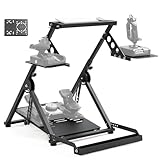
| Foldable Stand Setup (e.g., Anman Foldable Stand with flight mounts) |
22″ W x 31″ D x 28″ H (Unfolded) | 56 cm x 79 cm x 71 cm (Unfolded) | 6′ x 5′ (30 sq. ft.) / 1.8m x 1.5m |
| Dedicated Static Cockpit Rig (Fixed metal chassis, seat, triple monitors) |
65″ W x 60″ D x 55″ H | 165 cm x 152 cm x 140 cm | 8′ x 8′ (64 sq. ft.) / 2.4m x 2.4m |
| Full Motion Platform Rig (Actuator-driven motion platform + safety zone) |
84″ W x 84″ D x 72″ H (with clearance) | 213 cm x 213 cm x 183 cm | 10′ x 10′ (100 sq. ft.) / 3.0m x 3.0m |
How to Measure Your Space
To avoid purchasing high-end gear only to find it crowds your living space or blocks essential walkways, follow this systematic measuring process:
- Measure the Absolute Floor Footprint: Use a steel tape measure to map out the width and depth of the floor space where the rig will sit. Ensure you have at least 24 inches of additional clearance behind the seat to allow you to slide back and exit the rig comfortably.
- Calculate Monitor Swing and Width: If you plan on running a triple-monitor configuration, measure the total width of the screens when angled. A triple 32-inch monitor array set at a 45-degree angle requires approximately 62 to 66 inches of horizontal desk space.
- Check Vertical and Overhead Clearance: Measure the ceiling height. While standard 8-foot (96 inches) ceilings are perfectly fine for static rigs, motion platforms can lift a pilot up to 12 inches during pitch changes. Additionally, overhead panels like the AltMot Flight Simulator Instrument Panel Six Pack (typically retailing in the $380 to $410 range) require overhead mounting structures that must clear your head when standing up.
- Factor in Elbow and Peripheral Room: Flight controls are wider than standard gaming setups. A side-mounted throttle, such as the Logitech G X56 H.O.T.A.S Throttle and Joystick (usually priced between $180 and $210), requires an extra 8 to 10 inches of lateral space on either side of your seat for comfortable, ergonomic arm movement.
- Map Out Power and Ventilation Zones: High-performance PCs, multiple monitors, and tactile transducers generate significant heat. Ensure there is at least 6 to 12 inches of open air space between your PC exhaust fans and the nearest wall to prevent thermal throttling.
By Room or Use Case
The Compact Office Corner (Desk-Based)
If you are sharing your home office with your flight hobby, a desk-based setup is the most efficient configuration. Using a standard 48-inch to 60-inch wide office desk, you can easily clamp on temporary controls. A joystick and throttle system like the Logitech G X56 H.O.T.A.S can sit on either side of your keyboard, requiring only about 18 inches of desk depth. For space-conscious pilots, software-focused training tools like the RealFlight Evolution RC Flight Simulator (priced around $150 to $175) offer a highly compact way to practice aerodynamics and controller muscle memory with a single handheld controller, requiring zero extra desk real estate.
The Dedicated Spare Bedroom (Full Static Rig)
A standard 10′ x 10′ spare bedroom is the gold standard for a dedicated flight simulator setup. This space allows you to move away from a multi-purpose desk and install a dedicated chassis. A rigid setup like the Anman Foldable Racing Flight Simulator Stand (ranging from $110 to $130) provides a stable frame for your rudder pedals, wheel, and flight yoke, while still allowing you to fold and tuck the unit into a closet if the room needs to serve as a guest bedroom. With a dedicated room, you also have the physical space to mount advanced instrumentation, such as the AltMot Flight Simulator Instrument Panel Six Pack, which integrates its own software and monitor to mimic a true steam-gauge Cessna cockpit without cluttering your primary display.
The Garage or Basement Outpost (Motion Platform / VR)
If you are upgrading to a full-motion platform that pitches, rolls, and heaves to simulate G-forces, you must move your setup to a garage, basement, or large bonus room. These systems require a minimum of an 8′ x 8′ dedicated floor footprint, surrounded by a 2-foot safety perimeter to prevent the moving chair from striking walls, pets, or family members. Furthermore, motion platforms and heavy-duty cockpits can weigh anywhere from 150 to 450 pounds (excluding the pilot). Ensure your flooring can handle this concentrated load; concrete basement floors or sturdy subfloors with joist reinforcement are ideal.
Common Sizing Mistakes
Even experienced builders run into spatial bottlenecks when assembling their flight decks. Watch out for these common layout errors:
- Neglecting Cable Management Depth: Many pilots measure the exact depth of their desk or chassis but forget that heavy-duty DisplayPort, USB, and power cables protrude 2 to 4 inches from the back of monitors and computer towers. Forcing a rig flush against a wall can bend and damage these connectors.
- Underestimating Rudder Pedal Travel: Rudder pedals do not just sit flat; they slide forward and backward. If your rig is placed too close to a wall, your toes or the pedal arms may strike the drywall during full rudder deflection, limiting your control authority during crosswind landings.
- Poor Ergonomic Screen Distance: Placing a massive 49-inch ultrawide monitor too close to your face can cause severe eye strain. For optimal field of view (FOV) and comfort, your eyes should be positioned between 28 and 36 inches away from the screen, which requires a deeper desk or a standalone monitor mount.
- Ignoring Room Temperature Dynamics: A high-end flight simulator setup—running a powerful graphics card, triple screens, a motion platform, and flight panels—can pull between 800 and 1,200 watts of power. In a small, closed 8′ x 8′ room without dedicated AC venting or a ceiling fan, the ambient temperature can rise by 5 to 10 degrees Fahrenheit within an hour of flying.
FAQ
How much space do I need for a triple-monitor flight simulator setup?
A triple-monitor configuration using three 27-inch displays requires a minimum horizontal width of 60 inches. If you upgrade to triple 32-inch displays, you will need at least 68 to 72 inches of lateral space, depending on how aggressively you angle the side monitors to wrap around your peripheral vision.
Can I fit a full flight simulator cockpit in a standard 10×10 bedroom?
Yes. A 10′ x 10′ room (100 square feet) is highly accommodating. It comfortably fits a full static cockpit rig, a dedicated computer desk, shelving for your physical flight manuals, and still leaves enough clearance to easily walk around the perimeter of the simulator chassis.
How much vertical clearance does a motion simulator platform require?
You should have a minimum ceiling height of 8 feet (96 inches). While the motion platform itself may only raise the seat by 6 to 12 inches, you must account for the height of the tallest pilot sitting in the rig with their hands raised. Low basement ceilings (under 7 feet) can pose a head-strike hazard during violent turbulence simulations.
Is VR a viable way to save physical room space for flight simulation?
Absolutely. Opting for a Virtual Reality (VR) headset completely eliminates the need for bulky triple-monitor stands and large desks. By using VR, you can shrink your overall room size requirement down to the exact footprint of your flight seat and control mounts, saving roughly 15 to 20 square feet of physical floor space.


