Key takeaways
- Hall Effect Flight Stick (Upfront Investment): A high-quality Hall Effect stick and throttle system typically costs between $150 and $350. Because the sensors suffer zero physical degradation, your maintenance cost over five years is $0. The stick will not need to be replaced. Total 5-Year Cost: $150 – $350.
- Potentiometer Flight Stick (Budget Path): You buy an entry-level stick like the PXN 2113PRO for $49.99. Within 18 to 24 months of regular use, the internal carbon tracks begin to wear, causing stick drift. You spend $10 on a can of specialized electrical contact cleaner to spray inside the housing to temporarily fix the issue. By year three, the drift becomes unmanageable, requiring you to buy a replacement stick (another $50 to $70). By year five, you may be on your third budget stick. Total 5-Year Cost: $110 – $160, plus the frustration of troubleshooting drift.
What's inside
Integrating a flight simulation setup into your home is no longer just about choosing the right software; it is about how the hardware fits into your physical living space. For home office workers, design enthusiasts, and dedicated gamers alike, a flight stick is a prominent piece of desk furniture. It occupies valuable desktop real estate, collects household dust, and undergoes thousands of physical repetitions. The core decision a buyer faces when selecting a flight stick comes down to the underlying sensor technology: Hall Effect sensors versus potentiometers.
This choice directly impacts your home environment. A cheaper, potentiometer-based stick might save you money upfront but can quickly become a squeaky, drifting piece of plastic clutter that requires constant maintenance or early replacement. On the other hand, a Hall Effect flight stick offers frictionless, magnetic precision that lasts for years, but it demands a higher initial investment. As we look ahead to home office trends in 2026, the integration of entertainment and productivity spaces requires hardware that is both durable and aesthetically clean. Balancing the dust-resistance, noise levels, and spatial footprints of these two technologies is essential to choosing the right controller for your home.
As an Amazon Associate we earn from qualifying purchases at no extra cost to you. Product prices and availability are accurate as of the date shown and are subject to change.



Quick Verdict
For most modern homes, Hall Effect sensor flight sticks are the superior choice. Because they rely on non-contact magnetic fields rather than physical friction, they do not wear down, do not develop “drift,” and are completely immune to the household dust, pet hair, and humidity that typically ruin budget controllers. If you have the budget to spare, investing in a Hall Effect stick ensures a quiet, maintenance-free, and long-lasting addition to your desk.
However, if you are setting up a temporary gaming corner, buying for a child who might lose interest, or working with a strict budget under $80, a potentiometer flight stick is a practical entry point. Just be prepared for potential sensor degradation over a couple of years of active use.
Side by Side
To help you visualize how these two technologies compare when integrated into a home office or living room setup, here is a breakdown of their key characteristics:
| Feature | Hall Effect Sensors | Potentiometer Flight Sticks |
|---|---|---|
| Durability & Lifespan | Virtually infinite; no physical contact or wear on the sensors. | Limited; internal resistive strips wear down over time. |
| Price Range | Typically $120 to $450+ for complete setups. | Typically $40 to $90 for entry-level models. |
| Maintenance Required | None. Completely sealed against dust and pet dander. | Moderate; requires occasional contact cleaner sprays. |
| Desk Space Needed | Often larger footprints (approx. 8×8 inches to 12×12 inches per unit). | Often compact, highly integrated single-unit designs. |
| Aesthetics & Build | Premium; usually features metal gimbals, heavy bases, and clean designs. | Budget-focused; primarily lightweight molded plastic. |
| Acoustic Profile (Noise) | Very quiet; smooth magnetic transitions with minimal mechanical squeaking. | Can become squeaky or clicky as internal parts dry out. |
| Resale Value | High; retains value well due to lack of wear and tear. | Low; used units are prone to drift, making them hard to resell. |
| Best For | Dedicated home offices, permanent setups, and pet-friendly homes. | Casual gaming, temporary setups, and budget-conscious buyers. |
Where Hall Effect Sensors Wins
The primary advantage of Hall Effect technology lies in its physics. Instead of physical components rubbing together to measure movement, Hall Effect sensors use a magnet and a semiconductor to detect changes in magnetic fields. Because there is no physical contact, there is zero friction within the sensor itself. This makes Hall Effect flight sticks incredibly resilient against the natural elements of a home: dust, pet hair, and humidity.
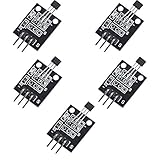
In a typical household, microscopic dust and pet dander settle into every open crevice of your desk. For DIY enthusiasts who like to build or repair their own gear, small components like the ALLECIN 20Pcs A3144 3144 Hall Effect Sensor OH3144 AH3144E 3Pins Magnetic Detector ($6.99) or the HiLetgo 5pcs Hall Effect Magnetic Sensor Module 3144E A3144 Hall Effect Sensor DC 5V for Arduino PIC AVR Smart Cars ($5.99) highlight just how simple and solid-state this technology is. With no moving parts inside the sensor capsule, there is nothing for dust to interfere with.
Furthermore, Hall Effect sticks maintain perfect precision over years of use. They do not develop “deadzones” (the area in the center of the stick’s movement where no action is registered) or stick drift. This means your flight stick will feel exactly the same on day 1,000 as it did on day 1. For a beautifully styled home study, this translates to a reliable piece of technology that won’t need to be dismantled, cleaned, or thrown into a landfill prematurely.
Where Potentiometer Flight Stick Wins
Potentiometer flight sticks rely on a traditional wiper brushing against a resistive strip to determine the stick’s position. While this mechanical design eventually wears out, it has one massive advantage: affordability. If you are looking for an accessible way to enjoy flight simulators without a major financial commitment, potentiometer-based sticks are highly attractive.
For example, the PXN 2113PRO PC Joystick USB Gaming Flight Simulator Controller Flight Stick ($49.99) offers a complete, functional flight control experience for less than fifty dollars. Similarly, the Thrustmaster T-Flight Hotas X USB Flight Sim Stick & Throttle – PC ($71.63) provides a full hands-on throttle and stick (HOTAS) configuration at a fraction of the cost of a premium Hall Effect system.
Beyond price, potentiometer sticks are often lighter and more compact. Because they use simpler internal plastic gimbals, they are easy to lift, unplug, and shove into a drawer or closet when your gaming session is over. If your home desk doubles as your professional workspace, the ability to quickly clear away your gaming gear is a major spatial benefit. Additionally, some users prefer the slight natural mechanical resistance of a potentiometer over the ultra-smooth, almost weightless sweep of a magnetic sensor.
Cost Over 5 Years
When buying furniture or electronics for the home, smart shoppers look at the total cost of ownership rather than just the retail price. Here is how the costs break down over a five-year period of moderate use (approx. 5-10 hours of gaming per week):
- Hall Effect Flight Stick (Upfront Investment): A high-quality Hall Effect stick and throttle system typically costs between $150 and $350. Because the sensors suffer zero physical degradation, your maintenance cost over five years is $0. The stick will not need to be replaced. Total 5-Year Cost: $150 – $350.
- Potentiometer Flight Stick (Budget Path): You buy an entry-level stick like the PXN 2113PRO for $49.99. Within 18 to 24 months of regular use, the internal carbon tracks begin to wear, causing stick drift. You spend $10 on a can of specialized electrical contact cleaner to spray inside the housing to temporarily fix the issue. By year three, the drift becomes unmanageable, requiring you to buy a replacement stick (another $50 to $70). By year five, you may be on your third budget stick. Total 5-Year Cost: $110 – $160, plus the frustration of troubleshooting drift.
While the potentiometer stick remains cheaper overall in the short term, the gap narrows significantly over time. When you factor in the time spent cleaning or calibrating a degrading sensor, the Hall Effect sensor represents a much better value-per-year ratio.
Which One for Your Home
Every living space has its own unique demands. Here is how to choose the right sensor technology based on your specific home environment.
Small Apartment
In a compact apartment or studio, space is at a premium. Your desk is likely small, or perhaps you use your dining table as a temporary workspace. A large, heavy Hall Effect HOTAS setup can easily overwhelm a small room. In this scenario, a compact, single-unit potentiometer stick like the PXN 2113PRO is incredibly convenient. It has a small footprint (approx. 8.8 x 7.5 inches) and can be easily tucked away in a cabinet, keeping your living space clean and clutter-free.
Family with Kids and Pets
If you share your home with children or pets, durability is your top priority. Pet hair, dander, and spilled crumbs are the natural enemies of potentiometer sensors, as they slip into the casing and disrupt the electrical contacts. Kids can also be rough on mechanical joints. A Hall Effect stick is sealed and robust enough to survive these household hazards. It will withstand heavy-handed movements and won’t fail just because a dog shed near the desk.
Rental Home
Renters often face limitations on mounting hardware or modifying desks. Many high-end Hall Effect sticks are heavy and require dedicated desk clamps to stay stable, which can scratch or dent rental furniture. Potentiometer sticks are generally lighter and feature suction cups on the base. They stay secure on cheap laminate or glass desks without requiring heavy-duty metal mounts, protecting your security deposit.
Long-Term Home
If you own your home or have a dedicated office space where you can build a permanent setup, go with Hall Effect sensors. You can securely mount them to your desk or a dedicated sim rig. Because you don’t need to pack them away, their heavier weight (often 4 to 8 pounds) becomes an asset, providing a premium, realistic feel. They act as a permanent fixture of your study, matching the high-end aesthetic of quality office furniture.
FAQ
Do Hall Effect sensors suffer from drift over time?
No. Hall Effect sensors do not suffer from mechanical drift because they use non-contact magnetic measurements. Any drift experienced on a Hall Effect stick is usually a software calibration issue or a physical failure of the centering spring, both of which are easy to resolve compared to a worn-out physical sensor.
Can I convert a potentiometer flight stick to Hall Effect?
Yes, if you enjoy DIY electronics. Many hobbyists use modules like the HiLetgo 5pcs Hall Effect Magnetic Sensor Module ($5.99) or the ALLECIN 20Pcs A3144 ($6.99) to replace worn-out potentiometers in older sticks. However, this requires soldering, 3D printing custom mounts, and calibrating the new signals, which may not be practical for the average user.
How do household dust and pet dander affect these sticks?
Dust and pet hair act as abrasives. In a potentiometer stick, these particles get trapped between the physical wiper and the resistive strip, causing erratic signals, spikes, or dead zones. Hall Effect sensors are completely solid-state and sealed, meaning dust and pet dander have zero impact on their performance.
Which type is quieter for a shared living space?
Hall Effect sticks are generally much quieter. Because the internal gimbals are engineered to higher standards and do not rely on scraping plastic contacts, they move smoothly and silently. Potentiometer sticks often use cheaper plastic-on-plastic joints that can develop squeaks and clicks over time, which can be distracting to others in a shared room.