Key takeaways
- Initial Purchase Price: Entry-level H-pattern shifters cost around $45 to $80, while mid-to-high-end H-pattern and sequential shifters range from $150 to $300.
- Mounting Hardware and Adaptors: Depending on your desk or rig, you may need custom clamps or plates. Budget $20 to $50 for mounting accessories over five years, especially if you change your desk or room layout.
- Maintenance and Replacement Parts: H-pattern shifters have more moving parts and contact points. Cheap plastic models may wear out within two to three years of heavy use, requiring a complete replacement. High-quality metal units (like the MOZA HGP or YESHMA models) only require occasional lubrication (a $10 tube of lithium grease will last five years) and spring tension adjustments.
- The Upgrade Path: If you start with a budget shifter, you will likely feel the urge to upgrade to a load-cell or magnetic-sensor shifter within two years as your driving skills improve. Buying a mid-range, metal-constructed shifter initially often saves money over a five-year window by eliminating the need for a secondary upgrade.
What's inside
Integrating a sim racing rig into a residential space is a balancing act between high-octane immersion and domestic harmony. While much attention is paid to the size of the cockpit or the force feedback of the wheel, the choice of gear shifter is often the make-or-break factor for your room’s layout, noise levels, and aesthetic appeal. When choosing between an h pattern shifter vs sequential sim racing shifter, you are not just selecting a driving style; you are deciding how a physical piece of mechanical hardware integrates into your daily living environment.
The real decision a buyer faces goes far beyond virtual lap times. It is about spatial footprint, mounting stability, and acoustic impact. An H-pattern shifter replicates the classic manual transmission of a road car, requiring a clutch pedal and physical gates for each gear. A sequential shifter, on the other hand, uses a simple push-pull motion to cycle up and down through gears, mimicking modern race cars. For a home setup, this choice dictates how much desk or rig space you must sacrifice, how much noise your household will endure during a late-night race, and how seamlessly the equipment blends into your home office or living room decor.
As an Amazon Associate we earn from qualifying purchases at no extra cost to you. Product prices and availability are accurate as of the date shown and are subject to change.


Quick Verdict
If your priority is classic car immersion, mechanical nostalgia, and casual driving variety, the H-pattern shifter is the ideal choice, provided you have the lateral space to mount it and do not mind a slightly wider footprint. However, if you live in a compact space, focus on modern GT or rally racing, or need a streamlined setup that is easy to clamp and unclamp from a standard desk, the sequential shifter wins for its narrow profile, rapid-fire shifting, and sheer mechanical efficiency.
Side by Side
Understanding the physical and practical differences between these two styles of shifters is essential before mounting one to your home furniture or dedicated rig. Below is a direct comparison of how they perform across key domestic and performance metrics.
| Feature | H-Pattern Shifter | Sequential Sim Racing Shifter |
|---|---|---|
| Comfort & Ergonomics | Highly engaging; requires muscle memory to find gates; mimics real-world street cars. | Instinctive push/pull motion; requires less arm movement; highly repeatable. |
| Durability & Build | Complex internal gates; entry-level models use plastic gears, while premium models use steel. | Simple, robust spring-and-detent mechanisms; highly resistant to aggressive shifting. |
| Price Range | $45 to $350+ | $60 to $250+ |
| Maintenance | Requires occasional internal dust cleaning and regreasing of the shifting gates. | Low maintenance; simple spring tension adjustments and occasional pivot lubrication. |
| Space Needed | Wider footprint (typically 5 to 7 inches wide) to accommodate side-to-side gate travel. | Narrow footprint (typically 3 to 4 inches wide); easier to tuck next to a wheel base. |
| Aesthetic Look | Classic look; often features leather boots and round shift knobs that resemble road cars. | Industrial, motorsport-inspired aesthetic; frequently features tall, exposed metal shafts. |
| Resale Value | High; highly sought after by casual sim racers and vintage flight/driving enthusiasts. | Moderate to high; popular among dedicated competitive racers and rally fans. |
| Best For | Street car simulations, vintage racing, and learning real-world manual driving. | Rally cross, drift setups, modern GT racing, and compact desk environments. |
Where H Pattern Shifter Wins
The H-pattern shifter is the undisputed champion of tactile immersion. If your goal is to escape into the virtual cockpit of a 1990s Japanese sports car or a classic American muscle car, nothing replaces the physical sensation of clutching, finding the gate, and slotting the lever into gear. It engages your entire body, requiring coordinated footwork on a three-pedal set.
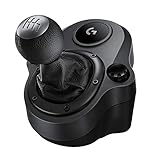
From a home styling perspective, H-pattern shifters often boast a more organic, traditional look. Many models feature premium leather boots, polished chrome shafts, and spherical shift knobs that look right at home next to a high-end wooden desk or in a cozy study. For budget-conscious homeowners, options like the entry-level Logitech G Driving Force Shifter Compatible with G29 G920 & G923 – PC ($44.99) offer an incredibly lightweight and easy-to-store entry point. For those who want a more permanent, premium fixture, the all-metal MOZA HGP Shifter Car Driving Simulator Racing Stick PC, Black ($149) provides a clean, automotive-grade aesthetic with a dust-proof cover that keeps the internal mechanics hidden from sight, preventing pet hair and dust from clogging the gates.
Furthermore, H-pattern shifters are incredibly versatile. Many of them can be configured via software or simple physical block-offs to run as sequential shifters if you want to switch up your racing style, making them a great “do-it-all” centerpiece for a multi-genre gaming room.
Where Sequential Sim Racing Shifter Wins
Where the sequential shifter dominates is in raw speed, spatial efficiency, and modern racing accuracy. In sports like rally racing (WRC) or drift competitions, you cannot afford the time it takes to search for a gear in an H-pattern gate. A sequential shifter allows you to pull back to shift up and push forward to downshift, keeping your focus entirely on the track.
For compact homes, the narrow physical footprint of a sequential shifter is a massive advantage. Because the lever only moves along a single vertical axis, these units do not require wide housing. This allows you to mount them much closer to your steering wheel, saving precious inches of lateral space on a desk or wheel stand. A rugged option like the YESHMA USB Sequential Shifter For PC Windows Sequential Shifter Sim Racing Compatible With Logitech G25 G27 G29 G920 T300 T500 Sim Racing Wheel ($75.99) utilizes a heavy-duty steel and aluminum construction with a tiny mounting footprint, making it incredibly easy to clamp onto a temporary metal stand without causing it to tilt.
Additionally, modern engineering has brought incredible versatility to this category. The Logitech G RS Sim Racing Shifter & Handbrake (With Mode Switching) ($149.99) showcases the cutting edge of sim gear in 2026, allowing users to switch between a sequential shifter and a handbrake with a simple physical toggle. This dual-purpose design is a major space-saver, eliminating the need to mount two separate, bulky metal levers to your home rig.
Cost Over 5 Years
When planning a home gaming setup, it is wise to look at the total cost of ownership over a five-year horizon. Sim racing hardware is subject to repetitive, high-force physical impacts, meaning wear and tear is inevitable.
- Initial Purchase Price: Entry-level H-pattern shifters cost around $45 to $80, while mid-to-high-end H-pattern and sequential shifters range from $150 to $300.
- Mounting Hardware and Adaptors: Depending on your desk or rig, you may need custom clamps or plates. Budget $20 to $50 for mounting accessories over five years, especially if you change your desk or room layout.
- Maintenance and Replacement Parts: H-pattern shifters have more moving parts and contact points. Cheap plastic models may wear out within two to three years of heavy use, requiring a complete replacement. High-quality metal units (like the MOZA HGP or YESHMA models) only require occasional lubrication (a $10 tube of lithium grease will last five years) and spring tension adjustments.
- The Upgrade Path: If you start with a budget shifter, you will likely feel the urge to upgrade to a load-cell or magnetic-sensor shifter within two years as your driving skills improve. Buying a mid-range, metal-constructed shifter initially often saves money over a five-year window by eliminating the need for a secondary upgrade.
Which One for Your Home
Small Apartment
If you are operating out of a studio apartment or a dual-purpose bedroom, space and ease of storage are your primary concerns. A sequential shifter is the superior choice here. Its narrow profile (often under 4 inches wide) fits easily alongside your keyboard on a standard desk. Because sequential shifters do not require a clutch pedal to operate realistically, you can also save floor space by opting for a simpler two-pedal set under your desk, keeping the footwell clear and tidy.
Family with Kids or Pets
In a bustling family home, safety, durability, and noise pollution are the key factors. Sequential shifters, particularly heavy-duty metal ones, can produce a loud, sharp metallic “clack” with every gear change that easily penetrates drywall and disturbs sleeping children. For this environment, a dampener-equipped H-pattern shifter or a quieter hybrid shifter is preferred. Additionally, H-pattern shifters like the MOZA HGP, which feature enclosed gates, prevent curious toddlers from pinching their fingers or dropping small toys and pet dander into the internal gear mechanics.
Rental Home
Renters must avoid drilling holes into walls or heavy wooden furniture. If you rely on temporary clamp-on solutions, weight and leverage are critical. A heavy, tall sequential shifter can exert immense rotational torque on a desk clamp, potentially scratching or warping thin laminate rental desks. A lightweight, low-profile H-pattern shifter, such as the Logitech G Driving Force Shifter, is highly recommended for rentals. It uses non-marring plastic clamps that distribute pressure evenly without leaving permanent indentations on your tabletop.
Long-Term Home with a Dedicated Rig
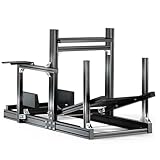
If you have a dedicated room or a permanent cockpit in your basement or den, go for the setup that offers maximum immersion. In a permanent space, you are not constrained by clamp limitations or tight dimensions. A high-end H-pattern shifter mounted to a rigid steel chassis provides an unmatched center-console aesthetic. If budget and space allow, many dedicated home racers mount both: an H-pattern shifter on the console for vintage cruising, and a sequential shifter closer to the wheel for modern racing sessions.
FAQ
Can I use an H-pattern shifter as a sequential shifter?
Yes, some premium H-pattern shifters feature physical switches, internal sliders, or rubber tension bands that lock out the side-to-side gates, converting the shifter into a spring-loaded push-pull sequential. However, dedicated sequential shifters generally offer a much stiffer, more satisfying mechanical throw than hybrid units.
Which type of shifter is quieter for late-night gaming?
Generally, H-pattern shifters with plastic internal housings or leather-booted designs are much quieter. Many sequential shifters use heavy metal detent springs to mimic the violent snap of a race car gear change, which can create a loud clicking noise that vibrates through your desk and floorboards.
Do I need a clutch pedal to use a sim racing shifter?
For an H-pattern shifter, a clutch pedal is highly recommended for realistic immersion, though most modern racing games allow you to map “auto-clutch” assists in the settings. For sequential shifters, a clutch is rarely used except to launch the car from a complete standstill, making them perfect for simple two-pedal setups.
Is it hard to mount these shifters to a standard home office desk?
It depends on the model. Shifters designed with built-in desk clamps (like the Logitech G series) can be mounted or removed in seconds. Industrial-grade shifters (like the YESHMA or MOZA models) are designed primarily for hard-mounting via bolts onto steel sim rigs, meaning you may need to purchase an aftermarket table clamp to use them on a standard desk without drilling holes.