Key takeaways
- Match your resolution: 1080p needs less muscle, while 1440p and 4K demand progressively stronger cards to maintain high frame rates.
- VRAM matters: 12-16GB of memory future-proofs you for modern texture-heavy games and higher resolutions.
- Upscaling tech: NVIDIA’s DLSS and AMD’s FSR boost frame rates dramatically, so factor in each brand’s software features.
- Ray tracing: If you value cutting-edge lighting, NVIDIA generally leads, though AMD has closed the gap considerably.
- Power and cooling: Higher-end cards draw more power and run hotter, so ensure your PSU and case airflow can keep up.
What's inside
The graphics card is the beating heart of any gaming PC, the component that ultimately decides your resolution, frame rate, and visual fidelity. In 2026, the GPU market offers a genuinely competitive spread across NVIDIA’s Blackwell lineup and AMD’s Radeon RX 9000 series, giving gamers real choice at every price point.
Choosing the right card means matching it to your target resolution and the games you play, while weighing features like upscaling, ray tracing, and VRAM. Below we round up the best GPUs across budgets, from efficient 1080p performers to 4K flagships.
As an Amazon Associate we earn from qualifying purchases at no extra cost to you. Product prices and availability are accurate as of the date shown and are subject to change.


🎮 Get More From Your Setup — Free
Prime Gaming gives you free PC games every month, in-game loot, and a free Twitch channel sub — plus fast free shipping on all the gear above. New members get a 30-day free trial.
Watch: Best Gpus For Gaming — Video Review
How to Choose a Gaming GPU
- Match your resolution: 1080p needs less muscle, while 1440p and 4K demand progressively stronger cards to maintain high frame rates.
- VRAM matters: 12-16GB of memory future-proofs you for modern texture-heavy games and higher resolutions.
- Upscaling tech: NVIDIA’s DLSS and AMD’s FSR boost frame rates dramatically, so factor in each brand’s software features.
- Ray tracing: If you value cutting-edge lighting, NVIDIA generally leads, though AMD has closed the gap considerably.
- Power and cooling: Higher-end cards draw more power and run hotter, so ensure your PSU and case airflow can keep up.
The Best Gaming GPUs Reviewed
ASUS TUF Gaming RTX 5080 OC
The 4K flagship pick here, this RTX 5080 with 16GB of GDDR7 delivers blistering high-refresh 4K performance and top-tier DLSS 4 support for the ultimate experience.
ASUS Prime Radeon RX 9070 XT OC
AMD’s standout, this 16GB RX 9070 XT offers excellent 1440p and 4K performance with modern PCIe 5.0 and strong value against NVIDIA rivals.
GIGABYTE Radeon RX 9070 XT Gaming OC
Another superb RX 9070 XT variant, this Gaming OC model pairs 16GB of GDDR6 with robust cooling, making it a great high-refresh 1440p choice.
MSI RTX 5060 Ti 16G Shadow 2X OC
A smart mid-range option, this 16GB RTX 5060 Ti brings Blackwell architecture and DLSS 4 to 1080p and entry 1440p gaming at a sensible price.
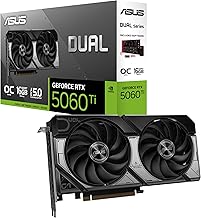
ASUS Dual RTX 5060 OC
The efficient value entry, this 8GB RTX 5060 with DLSS 4 and quiet 0dB cooling is ideal for high-frame-rate 1080p gaming on a budget.
Frequently Asked Questions
What GPU do I need for 1440p gaming?
An RX 9070 XT or RTX 5060 Ti-class card handles 1440p well, delivering high frame rates in most modern titles with upscaling enabled.
How much VRAM do I need?
8GB suffices for 1080p, but 12-16GB is recommended for 1440p and 4K, where texture-heavy games demand more memory headroom.
Is DLSS or FSR better?
Both boost frame rates effectively. NVIDIA’s DLSS generally has an image-quality edge, while AMD’s FSR works across a wider range of hardware.
Do I need ray tracing?
It’s a visual bonus, not a necessity. If you prioritize cutting-edge lighting, choose a card with strong ray-tracing performance and upscaling.
Final Thoughts
For no-compromise 4K, the ASUS TUF RTX 5080 is our top pick, while the RX 9070 XT cards offer outstanding 1440p value. Budget gamers targeting 1080p should grab the ASUS Dual RTX 5060 for its efficiency and DLSS 4 support.