Key takeaways
- Target frame rate: For 60fps single-player, a mid-range card suffices; for 144fps in competitive titles you want stronger raster performance.
- VRAM: Aim for at least 12GB at 1440p so high-resolution textures and future titles do not run short of memory.
- Upscaling and ray tracing: DLSS and FSR boost frame rates significantly at 1440p; NVIDIA cards lead in ray tracing, which matters if you value visual effects.
- PCIe and power: Newer cards use PCIe 5.0 and specific power connectors, so check your motherboard and PSU support before buying.
- System versus card: If you lack a full PC, a prebuilt with the GPU installed can be simpler than buying the card alone and building around it.
What's inside
1440p has become the enthusiast sweet spot for PC gaming, offering a big jump in sharpness over 1080p without the steep hardware demands of 4K. The catch is that hitting high, stable frame rates at 2560×1440 requires a genuinely capable graphics card, and in 2026 the RTX 50-series and competing Radeon cards have reshaped what good value looks like at this resolution.
This roundup centers on GPUs that deliver a smooth 1440p experience, whether you target 60fps in demanding single-player titles or 144fps-plus in esports. We looked at raw rasterization, ray tracing and upscaling support, and VRAM, since 12GB or more is increasingly the comfortable floor for high-resolution textures. A couple of the entries here are complete systems or monitors from the product feed, which we note where relevant.
As an Amazon Associate we earn from qualifying purchases at no extra cost to you.


⚡ Save on Your Next PC — Amazon Prime
Prime members get fast free shipping on the systems above, plus early access to Prime Day & Black Friday PC deals. New members get a 30-day free trial.
Watch: Best GPU for 1440p Gaming — Video Review
How to Choose
- Target frame rate: For 60fps single-player, a mid-range card suffices; for 144fps in competitive titles you want stronger raster performance.
- VRAM: Aim for at least 12GB at 1440p so high-resolution textures and future titles do not run short of memory.
- Upscaling and ray tracing: DLSS and FSR boost frame rates significantly at 1440p; NVIDIA cards lead in ray tracing, which matters if you value visual effects.
- PCIe and power: Newer cards use PCIe 5.0 and specific power connectors, so check your motherboard and PSU support before buying.
- System versus card: If you lack a full PC, a prebuilt with the GPU installed can be simpler than buying the card alone and building around it.
The Best Picks Reviewed
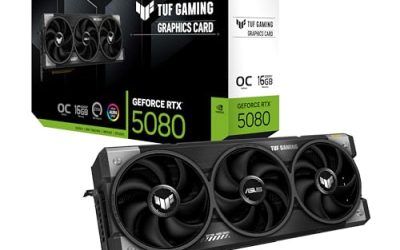
ASUS TUF Gaming NVIDIA GeForce RTX 5070 12GB GDDR7 OC Edition
The RTX 5070 is the natural 1440p champion of this generation, and ASUS’s TUF Gaming OC model adds robust cooling and a factory overclock. With 12GB of fast GDDR7, DLSS support, and PCIe 5.0, it drives high frame rates at 1440p with ray tracing enabled, making it the standout pick here.
MSI GeForce RTX 4070 Super 12G Ventus 2X OC
The RTX 4070 Super remains an excellent 1440p card, offering strong rasterization, 12GB of GDDR6X, and mature DLSS support. MSI’s Ventus 2X cooler keeps it quiet, and it is a great choice if you find one at a good price against the newer generation.
KOTIN Prebuilt Gaming PC with RTX 5070, Ryzen 7 9700X, 32GB DDR5
If you would rather not build, this KOTIN prebuilt pairs the RTX 5070 with a capable Ryzen 7 9700X and 32GB of DDR5, a well-matched 1440p gaming machine out of the box. It is the easiest path to RTX 5070 performance for those who want to skip assembly.
ASUS ROG XG Mobile (2025) External GPU, RTX 5070 Ti
For laptop owners, the ROG XG Mobile external graphics enclosure brings desktop-class RTX 5070 Ti power to a compatible notebook. It is a niche but clever option for those who game on a laptop at their desk and want a big 1440p uplift.
ASUS TUF Gaming 27″ 1440P Monitor (VG27AQ3A), 180Hz
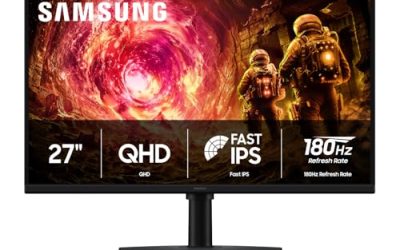
To pair with your new GPU, this 27-inch 1440p 180Hz fast-IPS monitor is a natural companion, showing off the high frame rates a capable card produces. A great GPU deserves a matching high-refresh 1440p display to actually see the benefit.
Frequently Asked Questions
How much VRAM do I need for 1440p?
12GB is the comfortable target at 1440p in 2026, giving room for high-resolution textures and newer titles. 8GB can still work but increasingly limits texture settings in demanding games.
Is the RTX 5070 enough for 1440p high refresh?
Yes. The RTX 5070 delivers high frame rates at 1440p, and with DLSS it can push well past 144fps in many titles. It is one of the best-balanced cards for this resolution.
Do I need ray tracing at 1440p?
It is optional. Ray tracing improves lighting and reflections at a performance cost, and NVIDIA cards handle it best. If you value visual fidelity, it is a nice bonus; competitive players often turn it off for maximum frames.
Should I buy a card or a prebuilt?
If you already have a compatible PC, a standalone card is the cheaper upgrade. If you are starting fresh or prefer convenience, a prebuilt with the GPU installed and a matched CPU saves the hassle of building.
Final Thoughts
The ASUS TUF RTX 5070 is the pick to beat for 1440p, combining strong performance, 12GB of GDDR7, and modern features, while the RTX 4070 Super is a great alternative at the right price. If you want a complete solution, the KOTIN prebuilt delivers the same GPU ready to game, and a matching 180Hz 1440p monitor lets you actually enjoy the frames. Choose based on whether you are upgrading or building fresh, and 1440p will look and feel superb.