Key takeaways
- Refresh rate: Aim for at least 144Hz; 240Hz is the current competitive sweet spot, and only pursue 300Hz+ if your GPU can consistently push those frame rates in your games.
- Response time: Look for 1ms GtG on a fast IPS or TN panel to avoid smearing on fast flick shots; the number on the box is a best case, so read reviews.
- Resolution versus frames: 1080p is easiest to drive at extreme refresh rates, while 1440p looks sharper but demands a stronger GPU to hit the same frames.
- Panel type: Modern fast IPS panels give better viewing angles and color than old TN screens with little latency penalty, making them the default choice.
- Adaptive sync: FreeSync or G-Sync Compatible eliminates tearing when your frame rate dips, keeping the image clean during hectic firefights.
What's inside
In competitive first-person shooters, the monitor is arguably more important than any other component. A high refresh rate and low response time translate directly into seeing enemies sooner and reacting faster, and in 2026 the price of fast 1080p and 1440p panels has dropped to the point where 240Hz is affordable for mainstream players rather than a pro-only luxury.
This roundup targets FPS players specifically, which means we prioritized refresh rate, response time, and input latency over color accuracy or size. Whether you are grinding ranked on Valorant, CS2, or Apex, the goal is the smoothest, most responsive image your GPU can push, and these picks span budget 144Hz all the way to blistering 300Hz panels.
As an Amazon Associate we earn from qualifying purchases at no extra cost to you.






⚡ Save on Your Next PC — Amazon Prime
Prime members get fast free shipping on the systems above, plus early access to Prime Day & Black Friday PC deals. New members get a 30-day free trial.
Watch: Best Gaming Monitor for FPS — Video Review
How to Choose
- Refresh rate: Aim for at least 144Hz; 240Hz is the current competitive sweet spot, and only pursue 300Hz+ if your GPU can consistently push those frame rates in your games.
- Response time: Look for 1ms GtG on a fast IPS or TN panel to avoid smearing on fast flick shots; the number on the box is a best case, so read reviews.
- Resolution versus frames: 1080p is easiest to drive at extreme refresh rates, while 1440p looks sharper but demands a stronger GPU to hit the same frames.
- Panel type: Modern fast IPS panels give better viewing angles and color than old TN screens with little latency penalty, making them the default choice.
- Adaptive sync: FreeSync or G-Sync Compatible eliminates tearing when your frame rate dips, keeping the image clean during hectic firefights.
The Best Picks Reviewed
SANSUI 24.5 Inch 300Hz/240Hz FHD 1080P Gaming Monitor for FPS
Built explicitly for shooters, this SANSUI pushes up to 300Hz at 1080p, the resolution most competitive players still prefer for maximum frames. At 24.5 inches you can keep the whole screen in your field of view, and the fast panel keeps motion crisp during rapid tracking.
Dell 27 240Hz Gaming Monitor SE2726HG
Dell’s SE2726HG delivers a proven 240Hz FHD experience on a 27-inch IPS panel with solid build quality and reliable support. It is a great pick if you want a trusted brand and a slightly larger screen without giving up the high refresh rate FPS players need.
SANSUI 27 Inch Curved 240Hz Gaming Monitor FHD 1080P
This curved 240Hz option wraps the image slightly toward you, which some players find more immersive in single-monitor setups. With a 1500R curve and 130% sRGB coverage, it balances competitive speed with a more engaging picture for mixed use.
GIGABYTE GS25F2A 24.5″ SuperSpeed FHD IPS Gaming Monitor
Gigabyte’s 24.5-inch fast IPS panel is a strong all-rounder, pairing a high refresh rate with the cleaner colors and viewing angles of IPS. The 24.5-inch size is the classic esports standard, keeping your eyes on the action without excessive head movement.
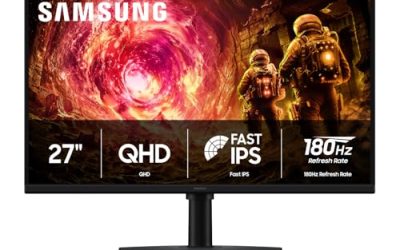
Samsung 27″ Odyssey G5 (G51F) QHD 1440P Gaming Monitor
If you have a capable GPU and want sharper visuals, the Odyssey G5 steps up to 1440p while retaining a high refresh rate. It is the pick for players who want a monitor that handles both competitive shooters and more visually rich single-player games well.
Frequently Asked Questions
Is 240Hz worth it over 144Hz for FPS?
If your GPU can sustain the frames, yes. The jump from 144Hz to 240Hz produces noticeably smoother motion and lower input latency, which competitive players feel in tracking and flick accuracy. On a weaker GPU, though, a solid 144Hz panel is the better value.
Should I choose 1080p or 1440p for shooters?
1080p is easier to drive at extreme refresh rates and is still standard in esports. Choose 1440p only if your graphics card can hit high frames at that resolution; otherwise you sacrifice the frame rate that matters most.
Does response time really matter?
Yes. A 1ms panel minimizes ghosting and smearing behind fast-moving targets, keeping enemies sharp during flicks. Pair a low response time with a high refresh rate for the cleanest competitive image.
Do I need a curved monitor for FPS?
Not necessarily. Flat panels are the competitive norm at 24-25 inches, while a gentle curve can add immersion on larger screens. It comes down to personal preference rather than a performance requirement.
Final Thoughts
For pure FPS performance the SANSUI 300Hz panel gives you the most frames for the money, while the Dell 240Hz and Gigabyte IPS options add brand reliability and cleaner colors. If your rig is strong enough, the Samsung Odyssey G5 at 1440p is the most versatile all-rounder. Match the monitor to what your GPU can actually push, and you will gain the reaction-time edge that decides close rounds.