
Key takeaways
- Your Available Footprint: Aluminum profile cockpits are not easily folded and tucked away. A standard full-size cockpit requires a dedicated floor space of approximately 55 to 60 inches in length and 20 to 26 inches in width. If you do not have a permanent 5-foot by 2.5-foot space to dedicate to a rig, you may need to look at a smaller wheel stand or a chassis equipped with heavy-duty lockable caster wheels so it can be rolled into a corner when not in use.
- Your Wheel Base Torque: The strength of your direct drive (DD) wheel base dictates how robust your cockpit needs to be. If you are using an entry-level wheel base (5 Nm to 8 Nm of torque), an 8040 (80mm x 40mm) profile chassis is more than adequate. If you are running a high-end commercial wheel base (15 Nm to 25+ Nm of torque), you will want a chassis with at least 120mm x 40mm side rails and a heavy-duty, reinforced wheel mount to eliminate high-frequency vibrations and flex.
- Your Seat Strategy: Many aluminum profile frames are sold as “chassis-only,” meaning you must source your own seat. You must decide whether you want a fiberglass bucket seat (highly rigid, excellent for heavy load-cell braking, but difficult to climb in and out of) or a reclining sports seat (more comfortable for long sessions, easier to adjust, but prone to slight backrest flex under heavy braking). Alternatively, you can save money by sourcing a real passenger car seat from a local auto salvage yard, as the flat mounting channels of aluminum profiles make DIY mounting incredibly straightforward.
What's inside
For the uninitiated, shopping for an aluminum profile cockpit—often referred to as an “8020 rig”—can feel like browsing an industrial supply catalog. It is easy to get lost in a sea of numbers like 4080, 40120, and 40160, or to get overwhelmed by the sheer volume of brackets, gussets, and T-nuts. As a home and furniture editor, I look at these rigs not just as gaming peripherals, but as substantial pieces of semi-permanent furniture that will occupy a significant footprint in your living room, office, or dedicated game room.
The most common mistake buyers make is over-speccing the metal while under-speccing the ergonomics. They purchase a massive, heavy-duty industrial frame capable of withstanding industrial vibration, only to pair it with a flex-prone, unsupportive seat or a pedal plate that bends under heavy braking. Conversely, some buy ultra-budget, thin-walled aluminum stands that shake violently under the force of a modern direct drive wheel base. To get the most out of your investment, you must balance the rigidity of the aluminum extrusion with the physical realities of your home, your body, and your peripheral hardware.
As an Amazon Associate we earn from qualifying purchases at no extra cost to you. Product prices and availability are accurate as of the date shown and are subject to change.
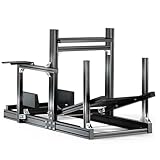


Decide These 3 Things First
Before you start comparing wall thicknesses and bracket designs, you must establish three baseline parameters for your home setup:
- Your Available Footprint: Aluminum profile cockpits are not easily folded and tucked away. A standard full-size cockpit requires a dedicated floor space of approximately 55 to 60 inches in length and 20 to 26 inches in width. If you do not have a permanent 5-foot by 2.5-foot space to dedicate to a rig, you may need to look at a smaller wheel stand or a chassis equipped with heavy-duty lockable caster wheels so it can be rolled into a corner when not in use.
- Your Wheel Base Torque: The strength of your direct drive (DD) wheel base dictates how robust your cockpit needs to be. If you are using an entry-level wheel base (5 Nm to 8 Nm of torque), an 8040 (80mm x 40mm) profile chassis is more than adequate. If you are running a high-end commercial wheel base (15 Nm to 25+ Nm of torque), you will want a chassis with at least 120mm x 40mm side rails and a heavy-duty, reinforced wheel mount to eliminate high-frequency vibrations and flex.
- Your Seat Strategy: Many aluminum profile frames are sold as “chassis-only,” meaning you must source your own seat. You must decide whether you want a fiberglass bucket seat (highly rigid, excellent for heavy load-cell braking, but difficult to climb in and out of) or a reclining sports seat (more comfortable for long sessions, easier to adjust, but prone to slight backrest flex under heavy braking). Alternatively, you can save money by sourcing a real passenger car seat from a local auto salvage yard, as the flat mounting channels of aluminum profiles make DIY mounting incredibly straightforward.
Extrusion Size and Profile Type
The core of any profile cockpit is the aluminum extrusion itself. These profiles are categorized by their cross-sectional dimensions in millimeters. The standard unit of measure in this space is the “40 series,” where the base dimension is 40mm.
An 8040 profile (measuring 80mm by 40mm) is the industry sweet spot for mainstream enthusiasts. It offers an exceptional balance of structural rigidity, weight, and cost. For the vast majority of users, an 8040 base frame will handle direct drive wheels up to 12 Nm and load-cell brake pedals requiring up to 80 kg (176 lbs) of force without a millimeter of visible flex.
For those running high-end, professional-grade peripherals, upgraded profiles such as 40120 (120mm x 40mm) or 40160 (160mm x 40mm) are used for the main base rails. While these thicker profiles look incredibly robust and premium, they also add substantial weight. An 8040 empty frame typically weighs between 50 and 70 pounds, whereas a 40160 frame can easily exceed 110 pounds before you even mount the seat, wheel, and pedals. Unless you are mounting a motion actuator system that physically throws the rig around, a 40160 profile is often an aesthetic choice rather than a structural necessity.
Rig Footprint and Room Dimensions
When planning your room layout, you must account for the total operational footprint of the cockpit, which is always larger than the metal frame itself. While the bare aluminum frame of a standard 8040 cockpit measures roughly 53 inches long by 22 inches wide, the addition of a reclining seat will extend the length to around 58 to 62 inches. If you mount triple monitors directly to the integrated mounts of the frame, your width can easily expand to 55 inches or more.
Height is another critical dimension. The upright pillars that hold your wheel deck typically stand 26 to 30 inches tall. Once a steering wheel is mounted, the top of the wheel rim will sit roughly 32 to 36 inches off the floor. Ensure you have at least 2 feet of clearance around the entry side of the rig so you do not have to perform gymnastics to climb into the cockpit. If space is tight, look for frames that utilize a “front-mount” or “side-mount” wheel bracket rather than a bulky overhead bridge, as this can shave a few inches off the visual mass of the rig in a room.
Pedal Deck and Wheel Deck Construction
A chain is only as strong as its weakest link, and in an aluminum profile cockpit, those links are the wheel deck and the pedal plate. These are the two zones where you exert physical force. If these plates are made of thin, stamped steel (less than 4mm thick), they will flex under heavy inputs, completely defeating the purpose of buying a rigid aluminum frame.
For the wheel deck, look for multi-point mounting systems. The best designs use thick, laser-cut steel plates (typically 5mm to 8mm thick) or dedicated aluminum side brackets that clamp directly to the upright profiles with multiple T-nuts. This design eliminates “pivoting flex” when you pull or push on the steering wheel during intense driving.
The pedal deck is subjected to even greater forces, especially if you use a hydraulic or load-cell brake pedal that requires 100 kg (220 lbs) of leg force to depress. A quality pedal deck should be constructed from thick, reinforced steel plates or, even better, constructed from aluminum profiles themselves. An aluminum profile pedal deck allows you to mount individual pedals directly to the slots, offering infinite adjustability in terms of pedal spacing, angle, and height while remaining completely impervious to bending.
Ergonomics, Adjustability, and Seat Options
The primary advantage of an aluminum profile cockpit is its near-infinite adjustability. Because the profiles have continuous slots along their entire length, you can slide, tilt, and raise every single component to fit your exact body proportions. However, adjusting these components requires loosening multiple hex bolts, sliding the heavy metal pieces, and re-tightening them. This is not a process you want to repeat daily if multiple people of different heights use the rig.
If you share your cockpit with others, look for a rig that includes a seat slider (similar to the manual seat rail in a real car) and a quick-adjust pedal tray. This allows you to alter the distance between the seat and the pedals in seconds. For solo drivers, once you find your perfect driving position—whether it is a upright GT style or a heavily reclined Formula style—you will likely lock the bolts down and never touch them again. Pay close attention to the seat brackets; heavy-duty steel side-mounting brackets with multiple hole configurations are essential for dialling in the perfect seat tilt and height.
Price Tiers: What Actually Changes?
As we evaluate the landscape of home sim setups in 2026, the market for aluminum profile cockpits has matured to the point where prices are highly competitive, though the hardware quality varies significantly across price brackets.
- Budget ($300 to $450): In this price range, you are typically buying an 8040 profile frame without a seat, or a highly simplified wheel stand that can be expanded later. The aluminum extrusion walls are thinner (typically 1.5mm to 2mm), and the hardware kit may include basic slide-in T-nuts instead of spring-loaded roll-in nuts. Adjustability may be slightly limited by simpler bracket designs, but the structural integrity remains vastly superior to any folding steel tube stand.
- Mid-Range ($500 to $800): This is the sweet spot for most enthusiasts. Rigs in this category feature heavy-wall 8040 or 40120 aluminum extrusions, robust laser-cut steel wheel and pedal plates, and often include a seat (either a reclining sports seat or a fiberglass bucket seat). The hardware kits are comprehensive, featuring high-grade, black-anodized bolts, spring-loaded T-nuts, and plastic end caps for a clean, finished look in your home.
- Premium ($900 to $1,500+): At this level, you are purchasing professional-grade 40160 frames with massive upright pillars, integrated monitor mounts, and premium carbon-fiber or customized racing seats. These rigs are designed to handle high-end motion platforms, active pedal systems, and direct drive bases exceeding 25 Nm of torque. They also feature premium aesthetics, such as deep black anodization, custom machined aluminum brackets, and integrated cable management channels to hide unsightly wires.
Assembly, Hardware Quality, and Delivery
Do not underestimate the physical effort required to receive and assemble an aluminum profile cockpit. Because aluminum and steel are incredibly heavy, these rigs are typically delivered in two to three large, flat boxes weighing between 40 and 80 pounds each. Make sure you have a clear workspace and a helper to assist in carrying the boxes inside.
The assembly process is essentially an adult construction set. It will take anywhere from 3 to 6 hours to fully assemble a mid-range cockpit from scratch. The quality of the included hardware will dictate whether this process is a joy or a nightmare. Look for kits that use roll-in T-nuts with spring-loaded ball bearings. These nuts can be popped directly into the slot at any point, whereas cheaper slide-in T-nuts must be fed from the very end of the profile, meaning if you forget one nut during step two of the build, you may have to disassemble half the rig to slide it in later. High-quality kits also include detailed, step-by-step printed manuals and pre-sorted hardware bags.
Spec Checklist
Use this reference table to evaluate how different tiers of aluminum profile cockpits compare across key structural and physical specifications.
| Specification | Budget Tier | Mid-Range Tier | Premium Tier |
|---|---|---|---|
| Base Profile Size | 4040 or 8040 (Light Wall) | 8040 or 40120 (Standard Wall) | 40120 or 40160 (Heavy Wall) |
| Profile Wall Thickness | 1.5 mm to 2.0 mm | 2.2 mm to 3.0 mm | 3.0 mm to 4.0 mm |
| Max Supported DD Torque | Up to 10 Nm | Up to 18 Nm | 25+ Nm (No Limit) |
| Pedal Plate Thickness | 3 mm to 4 mm steel plate | 5 mm to 6 mm steel or profile | 8 mm steel or full profile deck |
| Hardware Nut Type | Standard Slide-in T-Nuts | Spring-loaded Roll-in T-Nuts | Premium Roll-in / Custom Blocks |
| Typical Rig Weight (No Seat) | 35 lbs to 50 lbs | 60 lbs to 85 lbs | 100 lbs to 140+ lbs |
Red Flags
Keep an eye out for these warning signs when shopping for an aluminum profile rig, as they often indicate cost-cutting that will compromise your experience:
- Non-Standard Profile Dimensions: Ensure the rig uses standard metric 40-series profiles (with 8mm slots). Some ultra-budget brands use proprietary imperial sizes or odd metric variations, which makes it incredibly difficult to buy third-party accessories, cup holders, keyboard trays, or shifter mounts later on.
- Lack of Corner Gussets on Key Joints: The upright pillars that hold the steering wheel must be supported by thick, multi-bolt corner gussets or heavy-duty joint plates. If a manufacturer relies solely on simple internal joint connectors or single-bolt connections for these high-stress joints, the uprights will wobble back and forth under steering load.
- Extremely Thin Pedal Brackets: If the brackets connecting the pedal deck to the main frame are made of thin, single-ply sheet metal, they will flex when you stomp on the brakes. Ensure these brackets are either made of heavy-gauge steel (at least 5mm) or utilize standard 8040 profile blocks.
- Unanodized raw aluminum finishes: Raw, untreated aluminum scratches easily, oxidizes over time, and leaves gray metallic residue on your hands during assembly. Insist on clear-anodized (silver) or black-anodized finishes, which harden the surface and protect the metal from wear.
FAQ
What do the numbers like 8040 and 4080 actually mean?
These numbers represent the cross-sectional dimensions of the aluminum extrusion in millimeters. For example, an 8040 (often written as 4080) profile is 80mm tall by 40mm wide. A 40160 profile is 160mm tall by 40mm wide. Because they all share the same 40mm base unit, they are fully compatible with one another, allowing you to easily bolt a smaller 4040 crossmember onto a massive 40120 side rail.
Can I use a real passenger car seat on an aluminum profile cockpit?
Yes, absolutely. This is one of the greatest benefits of the profile system. Because the top slots of the aluminum rails can be spaced at any width, you can easily align them with the slider rails of a real car seat sourced from a junkyard or a sports car. This is often far cheaper and significantly more comfortable for long gaming sessions than buying a specialized racing bucket seat.
Do I need a 16040 profile if I only have a 10 Nm wheel?
No, you do not. A 16040 profile is massive overkill for a 10 Nm wheel base. An 8040 profile is more than strong enough to handle those forces without any flex. You should only consider a 120mm or 160mm profile if you plan to upgrade to a high-power 20+ Nm wheel base in the future, if you weigh over 250 lbs and want maximum frame rigidity, or if you plan to mount a full-motion actuator system.
Is black anodized aluminum better than silver?
Structurally, they are identical. Physically, black anodized profiles tend to show silver scratches more clearly if you drag metal brackets across them during assembly. However, from a home decor perspective, black anodized frames tend to blend much better into modern home interiors, looking more like premium furniture and less like an industrial warehouse shelving unit.


