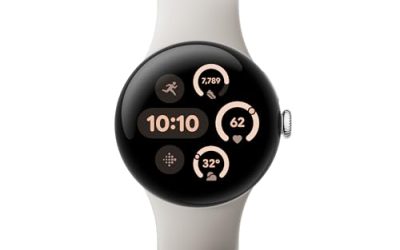
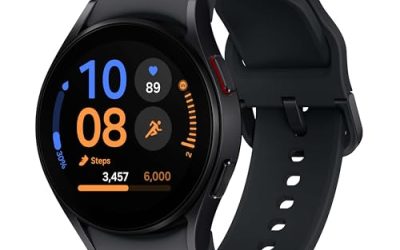
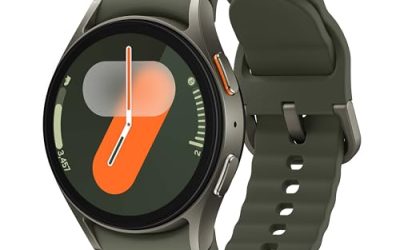
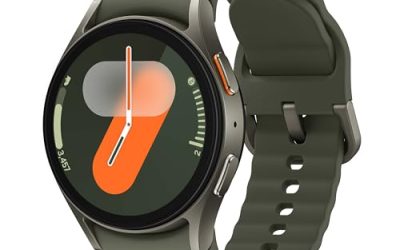
Our Top Picks


An active life asks more of a watch than telling the time. The real decision is whether the watch on your wrist can keep up with the way you actually move: tracking a morning run, counting steps through a busy workday, logging sleep at night, and still having enough battery left to do it all again tomorrow. A watch that needs charging every night or that misses half your workouts becomes a chore instead of a training partner, so the choice comes down to tracking depth, battery life, comfort, and how well it talks to your iPhone.
This guide is for runners, gym regulars, cyclists, and anyone building a more active routine around an iPhone. Apple Watch models pair through the Watch app, while Garmin, Fitbit, and Amazfit models connect through their own companion apps. Every watch below was chosen from the names and specifications shown on its Amazon product page, with the focus on the features that matter when a watch is worn all day, every day.
Quick Picks
As an Amazon Associate we earn from qualifying purchases
| Product | Best for | Key spec from title |
|---|---|---|
| Apple Watch Series 10 GPS + Cellular 46mm | Full iPhone integration and daily training | 46mm Always-On Retina display, ECG app |
| Apple Watch SE (2nd Gen) GPS 44mm | Everyday activity on a budget | 44mm Retina display, crash detection |
| Garmin Vivoactive 5 | Health tracking with long battery life | 1.2-inch AMOLED, up to 11 days of battery |
| Fitbit Charge 6 | A slim tracker for daily movement | Built-in GPS, 7-day battery life |
| Amazfit Active 2 Sport | Long battery and sport modes for less | 44mm, 10-day battery, 160+ sport modes |
How to Choose
Health and workout tracking
The first question is how much data you actually want. A basic tracker counts steps, measures heart rate, and logs a handful of workouts, which is enough for someone starting a walking habit or tracking general activity. A deeper watch adds sleep stages, recovery scores, blood oxygen readings, ECG, and sport-specific metrics like running power or training load, which matter when you follow a training plan or manage a health goal. More sensors do not help if you never open the data, so match the depth to your routine: casual movers do well with a simple tracker, while regular runners and gym users benefit from recovery and readiness scores.
Battery life vs charging habit
Battery life decides whether a watch fits your life or fights it. A watch that lasts a day and a half needs a charging slot in your evening routine, and forgetting it once means a dead watch on a run day. A watch that lasts a week or more can be charged on a quiet Sunday and forgotten until the next one, which suits people who dislike daily charging. The trade-off is that long-battery watches usually have fewer smart features: they show notifications but cannot take calls or run a full app store. Decide which you value more, a watch that does everything for a day or a watch that does the basics for a week.
Comfort and size on the wrist
A watch worn all day and all night has to feel good, and that comes down to size, weight, and the band. A 41mm or 42mm case suits smaller wrists and sleeps better, while a 45mm or 46mm case gives a bigger screen that is easier to read mid-workout. Light cases and soft silicone bands stay comfortable during sweat and sleep, while metal bands look smarter but can pinch during exercise. If you plan to track sleep, try the watch on at night: a case that feels fine at noon can still dig into the wrist by morning, so weight and thickness matter as much as screen size.
Apps, notifications, and iPhone pairing
Every watch here pairs with an iPhone, but the connection is not the same across brands. An Apple Watch gives the fullest link: calls, texts, notifications, Apple Pay, and apps all run from the wrist, and cellular models work without the phone nearby. Garmin, Fitbit, and Amazfit watches sync through their own apps and show call and message alerts, but they cannot answer calls or use Apple Pay. The companion app matters too, since that is where you read sleep trends and training history, so a watch with a clear, readable app is worth more than one with extra sensors and a confusing dashboard.
The 5 Best Options
Apple Watch Series 10 GPS + Cellular 46mm

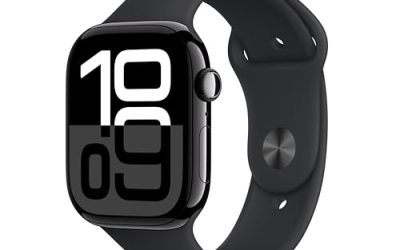
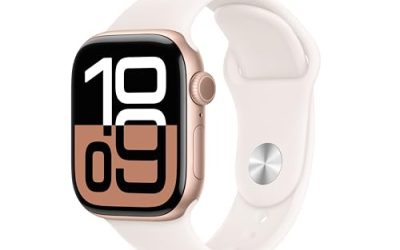
The Series 10 is the most complete iPhone companion in this group, and the cellular model adds real freedom: calls, messages, and music work even when the phone stays at home. The large 46mm Always-On Retina display is easy to read mid-workout, and the S10 chip keeps apps and notifications quick. Health tools include ECG, blood oxygen, sleep tracking, and fall detection, while workout tracking covers running, cycling, swimming, and strength sessions. With up to 18 hours of battery life, it needs nightly charging, but fast charging tops it up in about half an hour, so a shower and breakfast are often enough.
Specs
- 46mm case with Always-On Retina display
- GPS + Cellular connectivity
- S10 SiP chip with 64GB of storage
- ECG app, blood oxygen sensor, and sleep tracking
- Up to 18 hours of battery life
- 50-meter water resistance
- Fall detection and crash detection
Best for: iPhone owners who want the fullest smartwatch experience with calls, apps, and health tracking.
Watch out for: battery life is about a day, so plan a nightly charging routine, and the cellular model needs a mobile plan to use its standalone calling.
Apple Watch SE (2nd Gen) GPS 44mm
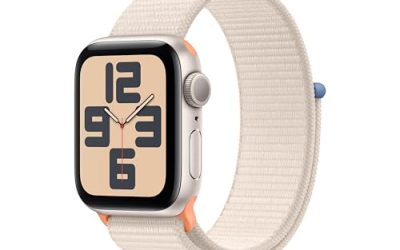
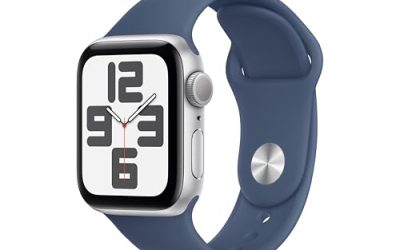
The SE is the sensible entry point into the Apple Watch world, and it covers the basics most active people actually use. It tracks workouts, steps, heart rate, and sleep, shows notifications and calls from the wrist, and includes fall and crash detection for safety. The 44mm Retina display is bright and easy to read, and the S8 chip keeps everything moving smoothly. It skips the ECG app, blood oxygen sensor, and always-on display, but for walking, running, gym sessions, and daily activity, those gaps rarely matter. At a lower cost, it is the easiest Apple Watch to recommend to a first-time buyer.
Specs
- 44mm case with Retina OLED display
- S8 SiP chip with 32GB of storage
- GPS for route tracking without a phone
- Fall detection and crash detection
- Up to 18 hours of battery life
- 50-meter water resistance
- Sleep tracking and heart rate monitoring
Best for: first-time Apple Watch buyers who want core fitness tracking and notifications at a lower cost.
Watch out for: there is no always-on display, no ECG app, and no blood oxygen sensor, so check whether those features matter to you.
Garmin Vivoactive 5
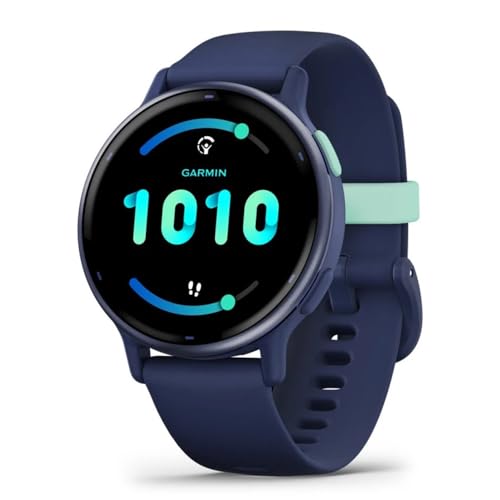
The Vivoactive 5 is for people who want serious health tracking without charging every night. Its 1.2-inch AMOLED display is bright and sharp, and the battery lasts up to 11 days, so sleep tracking works every night without a charging gap. Health tools include sleep coaching, Body Battery energy monitoring, stress tracking, and heart rate variability, while more than 30 built-in sports apps cover running, cycling, swimming, yoga, and strength work. It pairs with an iPhone through Garmin Connect, showing call and message alerts on the wrist. The trade-off is a simpler smartwatch: no cellular, no app store, and no voice assistant on the watch itself.
Specs
- 1.2-inch AMOLED touchscreen display
- Up to 11 days of battery life in smartwatch mode
- Built-in GPS for outdoor workouts
- Sleep coach, Body Battery, and stress tracking
- More than 30 built-in sports apps
- 5 ATM water resistance
- Wrist-based heart rate and Pulse Ox sensing
Best for: people who want deep sleep and health data with a battery that lasts over a week.
Watch out for: it cannot take calls or run third-party apps, so it suits tracking first and smart features second.
Fitbit Charge 6
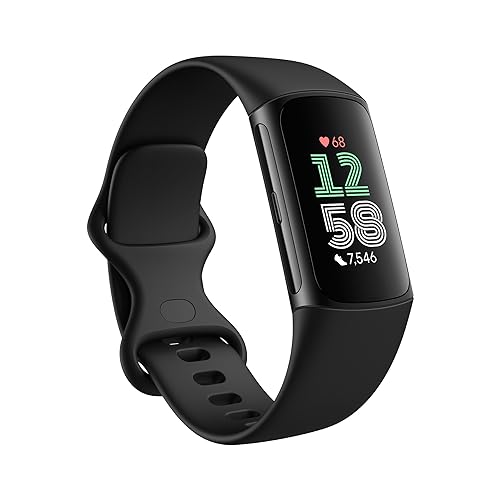
The Charge 6 is the slimmest option here, a band-style tracker that disappears on the wrist and suits people who dislike a big watch face. Built-in GPS tracks runs and rides without a phone, and the heart rate sensor feeds daily readiness, sleep stages, and stress scores into the Fitbit app. Google apps are built in, including Maps, Wallet, and YouTube Music controls, which is handy for Android users and still works well alongside an iPhone. The battery lasts about 7 days, and the band includes both small and large straps in the box. Six months of Fitbit Premium are included, which unlocks deeper sleep and readiness reports.
Specs
- Built-in GPS for route tracking
- Heart rate monitoring on exercise equipment
- Up to 7 days of battery life
- 6 months of Fitbit Premium membership included
- Google apps including Maps, Wallet, and YouTube Music
- 50-meter water resistance
- Small and large bands included in the box
Best for: people who want a light, slim tracker for daily movement, sleep, and runs.
Watch out for: the small screen makes reading maps and messages harder than on a full smartwatch, and some deeper reports sit behind the Premium subscription after the included six months end.
Amazfit Active 2 Sport
The Active 2 Sport is the value pick of this group, offering a big bright screen, long battery life, and many sport modes at a modest cost. The 44mm AMOLED display is easy to read in daylight, and the 10-day battery means a full week of tracking plus sleep with no charger hunt. More than 160 sport modes cover running, cycling, swimming, and gym work, and built-in GPS with offline maps gives directions on the wrist. It pairs with an iPhone through the Zepp app, syncing health data and notifications. It cannot match an Apple Watch for apps and calls, but for tracking alone it punches above its cost.
Specs
- 44mm AMOLED display
- Built-in GPS with offline maps and direction
- Up to 10 days of battery life
- More than 160 sport modes
- 5 ATM water resistance
- Sleep monitoring and heart rate tracking
- Works with Android and Apple iPhone
Best for: active people who want a big screen, long battery, and many sport modes at a modest cost.
Watch out for: the Sport version has a standard glass screen rather than sapphire, so a screen protector is worth adding for rough use.
Which One Fits Your Situation
You train most days and want deep metrics
Pick the Garmin Vivoactive 5. Its sleep coaching, Body Battery, and recovery data help you plan hard days and rest days, and the 11-day battery means the data never has a gap. The Series 10 is the alternative when you also want calls and apps from the wrist, plus a brighter screen.
You want a simple tracker that stays out of the way
Pick the Fitbit Charge 6. Its slim band design is barely noticeable day and night, yet it still tracks runs with GPS, monitors sleep, and nudges you to move. The Amazfit Active 2 Sport is the backup choice when you want a bigger screen for the same kind of light tracking.
You want full iPhone integration and calls
Pick the Apple Watch Series 10 GPS + Cellular 46mm. It is the only watch here that handles calls, texts, and apps without the phone nearby, and its health tools cover ECG, sleep, and fall detection. The SE is the cheaper route to the same ecosystem when cellular is not needed.
You are starting a fitness habit on a budget
Pick the Amazfit Active 2 Sport. It tracks more than 160 activities, monitors sleep and heart rate, and runs for 10 days on a charge, all at a modest cost. The Apple Watch SE is the step up when you want the Apple ecosystem and are willing to charge nightly.
Common Mistakes
- Buying the most expensive watch first, then finding its extra sensors and features go unused while a simpler tracker would have done the job.
- Ignoring battery life and then missing sleep data every night because the watch is on the charger instead of your wrist.
- Choosing a large case for the bigger screen without checking whether it fits a smaller wrist or feels comfortable overnight.
- Assuming every watch that pairs with an iPhone can answer calls or use Apple Pay, when only Apple Watch models offer that full link.
- Letting a free Premium trial run out without checking which sleep and readiness reports move behind a subscription, then losing the data you relied on.
Frequently Asked Questions
Do non-Apple watches work well with an iPhone?
Yes, for tracking. Garmin, Fitbit, and Amazfit watches pair with an iPhone through their own apps and sync workouts, sleep, and health data reliably. You still get call and message alerts on the wrist. What you lose is the deeper link: no answering calls from the watch, no Apple Pay, and no App Store on the wrist.
Can I answer calls from a Garmin or Amazfit watch?
No, not in the way an Apple Watch can. Garmin and Amazfit watches show who is calling and let you decline, but the call itself stays on the phone. Only Apple Watch models, including the Series 10 and the SE, let you talk through the watch, and only cellular models do it when the phone is out of range.
How accurate is wrist heart rate tracking?
Wrist heart rate is accurate enough for steady workouts, daily trends, and sleep tracking, but it can lag during fast interval training or when the band is loose. A snug fit just above the wrist bone gives the best readings, and a chest strap remains the gold standard for high-intensity sessions. Treat wrist data as a trend, not a medical measurement.
Do I need a subscription for health features?
It depends on the brand. Apple Watch and Garmin include their health and training data without a subscription, while Fitbit puts some deeper sleep and readiness reports behind Fitbit Premium after the included six months. Amazfit includes its core health data in the free Zepp app. Check what stays free before you buy.
FAQ
Do non-Apple watches work well with an iPhone?
Can I answer calls from a Garmin or Amazfit watch?
How accurate is wrist heart rate tracking?
Do I need a subscription for health features?
More from Amazon
Programs that pair well with the guide above. Offers and eligibility are set by Amazon and may change.
Free shipping on eligible items, Prime Video and more. Eligible new members can start with a free trial.
Start a Prime free trialAd-free music streaming. Eligible new subscribers can start with a free trial.
Try Music Unlimited freeA Prime membership for ages 18-24 with a trial period. Eligibility is set by Amazon.
See Prime for Young AdultsAudiobooks and podcasts to listen to on the go. Eligible new members can start with a free trial.
Try Audible freeAs an Amazon Associate we earn from qualifying purchases.