Key takeaways
- Response time: TN is fastest historically, but Fast IPS panels now hit 1ms GtG, closing the gap; VA is typically the slowest and can smear in dark scenes.
- Contrast: VA leads dramatically, often 3000:1 or higher, versus roughly 1000:1 for IPS and TN, giving VA the deepest blacks.
- Viewing angles: IPS is best with near-180-degree consistency; TN shifts badly off-axis; VA sits in between.
- Color accuracy: IPS wins for content creation and vibrant games; TN is the weakest; VA is good but can crush shadow detail.
- Price: TN is cheapest, VA offers the most contrast per dollar, and IPS commands a modest premium that keeps shrinking.
- Best use: TN for pure competitive twitch play, VA for single-player and movies, IPS for balanced all-purpose gaming.
What's inside
Choosing a gaming monitor in 2026 means picking a panel technology, and the three that dominate the market are TN, IPS, and VA. Each renders color, contrast, and motion differently, and the “best” one genuinely depends on whether you value speed, image quality, or deep blacks. Getting this choice right matters more than chasing the highest refresh number on the box.
This comparison lays out the real-world strengths and weaknesses of all three, with examples like the KOORUI 180Hz Fast IPS, the Viewedge 240Hz VA panel, and the ViewSonic VA2456A IPS so you can see where each fits. By the end you’ll know which panel type belongs on your desk.
As an Amazon Associate we earn from qualifying purchases at no extra cost to you.


⚡ Save on Your Next PC — Amazon Prime
Prime members get fast free shipping on the systems above, plus early access to Prime Day & Black Friday PC deals. New members get a 30-day free trial.
Watch: TN vs IPS vs VA Monitor Panels — Video Review
Quick Verdict
For the majority of players in 2026, IPS is the best all-rounder. Modern “Fast IPS” panels like the KOORUI G2421V and Sceptre 27-inch 165Hz have closed most of the speed gap with TN while keeping wide viewing angles and accurate color. VA still wins for cinematic contrast and TN survives only in ultra-budget or extreme-esports niches. Unless you have a specific reason to go VA or TN, buy a Fast IPS.
Key Differences
- Response time: TN is fastest historically, but Fast IPS panels now hit 1ms GtG, closing the gap; VA is typically the slowest and can smear in dark scenes.
- Contrast: VA leads dramatically, often 3000:1 or higher, versus roughly 1000:1 for IPS and TN, giving VA the deepest blacks.
- Viewing angles: IPS is best with near-180-degree consistency; TN shifts badly off-axis; VA sits in between.
- Color accuracy: IPS wins for content creation and vibrant games; TN is the weakest; VA is good but can crush shadow detail.
- Price: TN is cheapest, VA offers the most contrast per dollar, and IPS commands a modest premium that keeps shrinking.
- Best use: TN for pure competitive twitch play, VA for single-player and movies, IPS for balanced all-purpose gaming.
IPS Panels
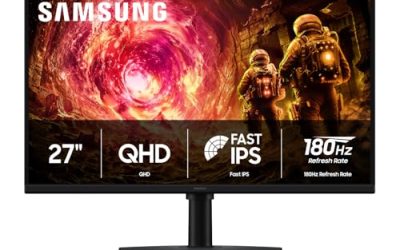
IPS (In-Plane Switching) is the do-everything choice, and 2026’s Fast IPS variants have removed its old weakness. A panel like the KOORUI 24-inch 1440P Fast IPS runs at 180Hz with a 1ms response, so it holds up in competitive shooters while still delivering the wide viewing angles and color consistency IPS is known for. The ViewSonic VA2456A-MHD and Sceptre 27-inch 165Hz show how IPS now spans budget to enthusiast tiers.
The two things to watch are contrast and “IPS glow.” Blacks look more gray than on a VA panel, and dark scenes in a dim room can show a faint corner glow. For most gamers those trade-offs are minor compared to the accurate, punchy image IPS delivers in everyday play.
VA and TN Panels
VA (Vertical Alignment) is the contrast king. A 240Hz VA display like the Viewedge 24-inch delivers blacks that IPS can’t match, which makes horror games, space sims, and movies look far more immersive. The trade-off is dark-scene smearing: fast motion between dark pixels can leave a visible trail, so competitive players sometimes notice ghosting that IPS avoids.
TN (Twisted Nematic) is the old speed champion and the cheapest to produce. It still appears in ultra-low-cost monitors and a shrinking number of extreme-refresh esports panels, but its narrow viewing angles and washed-out color make it hard to recommend in 2026 now that Fast IPS matches its speed. Small utility screens like the LESOWN 5-inch IPS also show how IPS has taken over even the compact secondary-display market TN once owned.
Which Should You Buy?
- Choose IPS if you want one monitor that does competitive play, single-player, and creative work well.
- Choose VA if you mostly play atmospheric single-player games or watch a lot of movies and crave deep blacks.
- Choose TN only if your budget is rock-bottom or you chase the absolute highest refresh at any visual cost.
- Prioritize “Fast IPS” labeling for the best mix of speed and image quality in 2026.
- Match panel to room: VA shines in dark rooms, IPS handles bright rooms and off-angle viewing better.
Frequently Asked Questions
Is IPS good enough for competitive gaming now?
Yes. Fast IPS panels reach 1ms GtG and refresh rates of 180Hz or more, which is fast enough for all but the most extreme esports use where TN once held a tiny edge.
Why do VA monitors look so much better in dark games?
VA panels have contrast ratios around 3000:1 or higher, roughly triple IPS, so blacks appear far deeper and shadow detail more convincing in dim scenes.
Does TN still have any advantage?
Mainly price and, in a few niche panels, ultra-high refresh rates. For most buyers Fast IPS now offers similar speed with far better color and viewing angles.
What causes ghosting on VA panels?
Slow pixel transitions between dark shades create smearing during fast motion. Enabling the monitor’s overdrive setting reduces it, though aggressive overdrive can cause overshoot artifacts.
Final Verdict
The panel wars have a clear 2026 winner for most people: Fast IPS. It combines the speed that used to belong to TN with the color and viewing angles no other panel matches, which is why displays like the KOORUI 180Hz and Sceptre 165Hz are such easy recommendations. Reach for VA if deep cinematic contrast is your priority, and consider TN only when the budget leaves no other option. Match the panel to how you actually play and the picture will look right every time.