Key takeaways
- Ray tracing: NVIDIA holds a clear lead in ray-traced performance, making it the better choice for visually cutting-edge single-player titles.
- Upscaling tech: NVIDIA’s DLSS is widely considered the most refined, while AMD’s FSR is open and works across a broad range of hardware including competitor cards.
- Raw performance per dollar: AMD Radeon cards often deliver more traditional rasterization frames for the money at a given price point.
- Frame generation: Both offer it, with NVIDIA’s multi-frame generation on its latest cards pushing the highest perceived frame rates.
- Content creation: NVIDIA’s ecosystem and encoders tend to have an edge in creative and streaming applications.
- Feature ecosystem: NVIDIA offers a deep software feature set, while AMD emphasizes open standards and value pricing.
What's inside
Your graphics card is the single biggest factor in how your games look and run, which makes the NVIDIA versus AMD GPU choice the most consequential decision in any gaming build. Both brands offer cards across every price tier, from budget 1080p workhorses to flagship 4K monsters, but they differentiate on features. NVIDIA leads on ray tracing and its DLSS upscaling and frame generation suite, while AMD counters with aggressive raw performance per dollar and its open FSR technology.
In 2026 the competition benefits gamers enormously, but the right pick still depends on what you play and value. This comparison breaks down where each brand excels, ray tracing, upscaling, price, and features, so you can decide whether an NVIDIA GeForce RTX card or an AMD Radeon fits your priorities, whether you are buying a standalone GPU or a prebuilt system built around one.
As an Amazon Associate we earn from qualifying purchases at no extra cost to you.




⚡ Save on Your Next PC — Amazon Prime
Prime members get fast free shipping on the systems above, plus early access to Prime Day & Black Friday PC deals. New members get a 30-day free trial.
Watch: NVIDIA vs AMD GPUs in 2026 — Video Review
Quick Verdict
NVIDIA is the pick if you prioritize the best ray tracing, the most mature upscaling with DLSS, and features like superior content-creation acceleration, and you are willing to pay a premium for them. AMD is the value champion, typically offering more raw rasterization performance per dollar, which is ideal if you play mostly traditional (non-ray-traced) games at high frame rates. Choose NVIDIA for feature leadership and ray tracing; choose AMD to stretch your budget further on pure performance.
Key Differences
- Ray tracing: NVIDIA holds a clear lead in ray-traced performance, making it the better choice for visually cutting-edge single-player titles.
- Upscaling tech: NVIDIA’s DLSS is widely considered the most refined, while AMD’s FSR is open and works across a broad range of hardware including competitor cards.
- Raw performance per dollar: AMD Radeon cards often deliver more traditional rasterization frames for the money at a given price point.
- Frame generation: Both offer it, with NVIDIA’s multi-frame generation on its latest cards pushing the highest perceived frame rates.
- Content creation: NVIDIA’s ecosystem and encoders tend to have an edge in creative and streaming applications.
- Feature ecosystem: NVIDIA offers a deep software feature set, while AMD emphasizes open standards and value pricing.
NVIDIA GeForce RTX
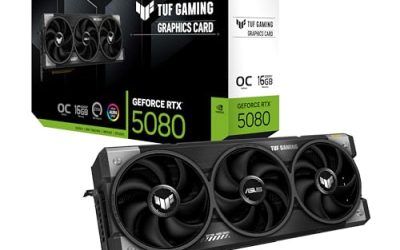
NVIDIA’s GeForce RTX lineup is the feature leader. If you want to crank ray tracing in a blockbuster single-player game and lean on DLSS to keep frame rates high, NVIDIA is the clear choice, and its frame generation tech extends that lead on the newest cards. You will find RTX GPUs powering premium prebuilts like ZOTAC MEK desktops with an RTX 5080 or high-end MSI gaming laptops, where the feature set and ray tracing muscle justify the price.
The trade-off is cost: NVIDIA typically charges more for equivalent raw performance, so you pay a premium for the feature advantage. For gamers who play the latest visually ambitious games, stream, or do creative work, that premium buys real capability. For those who mostly play competitive or traditional titles, some of NVIDIA’s advantages go partially unused, which is where AMD makes its case.
AMD Radeon
AMD Radeon’s pitch is straightforward and compelling: more raw frames per dollar. In traditional rasterized games, which is still most of what people play, a Radeon card often matches or beats a similarly priced GeForce, letting you either save money or buy up a tier for higher performance. AMD-powered prebuilts, from iBUYPOWER Element Ryzen desktops to Ryzen AI gaming laptops, package that value into ready-to-go systems.
Where AMD asks you to compromise is ray tracing, where it trails NVIDIA, and upscaling maturity, though FSR keeps improving and its open nature is a genuine plus. If you are a high-refresh competitive gamer or someone who values traditional performance and budget above bleeding-edge visual effects, AMD’s value proposition is hard to argue with, and you will not feel like you are missing much in day-to-day play.
Which Should You Buy?
- Choose NVIDIA if: ray tracing and the best-in-class DLSS upscaling matter most to you.
- Choose NVIDIA if: you also stream or do content creation and want the strongest feature ecosystem.
- Choose AMD if: you want the most raw gaming performance per dollar in traditional titles.
- Choose AMD if: you are a competitive gamer prioritizing high frame rates over cutting-edge effects.
- Either works if: you match the card’s tier to your monitor’s resolution and refresh rate.
Frequently Asked Questions
Is NVIDIA or AMD better for gaming?
It depends on priorities. NVIDIA leads in ray tracing and upscaling features, while AMD usually offers better raw performance per dollar in traditional games. For cutting-edge visuals pick NVIDIA; for value-focused high frame rates pick AMD.
Does DLSS or FSR matter?
Yes, both upscalers meaningfully boost frame rates by rendering at a lower resolution and reconstructing the image. DLSS is generally regarded as more refined, while FSR’s advantage is that it works across a wider range of GPUs including non-AMD cards.
Do I need ray tracing?
It is a want, not a need. Ray tracing delivers stunning lighting in supported single-player games but costs performance, and many competitive players leave it off. If you love visually rich blockbusters, it is worth prioritizing NVIDIA for it; otherwise it is optional.
Which brand is better value?
AMD generally wins on raw rasterization performance per dollar, making it the value pick for traditional gaming. NVIDIA charges more but bundles a stronger feature set, so the better value depends on whether you will actually use those features.
Final Verdict
Both NVIDIA and AMD make excellent gaming GPUs, and the right one hinges on your priorities. Go NVIDIA GeForce RTX for the best ray tracing, the most mature DLSS upscaling, and a top-tier feature ecosystem if you can pay the premium. Go AMD Radeon for more raw frames per dollar and outstanding value in traditional games. Match the card to your resolution and the games you actually play, and either brand will deliver a great experience.