
Key takeaways
- Table of Contents 7 sections 10 min read 1 Quick Verdict 2 Side by Side Comparison 3 Where Single Screen Wins 4 Where Triple Screen Sim Racing Setup Wins 5 Cost Over 5 Years 6 Which One for Your Home?…
What's inside
Bringing the high-octane world of virtual motorsport into your living space is an exciting design challenge. Beyond choosing the right wheelbases and load-cell pedals, the biggest aesthetic and spatial decision you will face is the battle of the displays: a single screen vs triple screen sim racing setup. For home design enthusiasts and dedicated racers alike, this choice dictates not just how well you drive, but how your room functions on a daily basis.
The real decision comes down to a trade-off between visual minimalism and absolute sensory immersion. A single screen keeps your living space clean, versatile, and uncluttered. A triple-screen array, on the other hand, transforms a corner of your home into a dedicated, commanding flight deck that demands serious square footage, heavy-duty furniture support, and a clever plan for cable management. Let us dive deep into how these setups compare in terms of ergonomics, room aesthetics, physical footprints, and long-term costs.
As an Amazon Associate we earn from qualifying purchases at no extra cost to you. Product prices and availability are accurate as of the date shown and are subject to change.


Quick Verdict
If your simulator must coexist in a multi-purpose space like a living room, bedroom, or home office, the single screen setup is the undisputed champion of interior design. It offers a sleek profile, lower power consumption, and minimal cable clutter. However, if you have a dedicated game room, basement, or spare garage bay where physical footprint is not an issue, the triple screen sim racing setup provides an unmatched, mathematically correct 180-degree field of view that simply cannot be replicated by a single monitor. It is a commitment to a dedicated piece of furniture, but for pure racing physics and spatial awareness, it is the gold standard.
Side by Side Comparison
To help you visualize how these setups integrate into your home, here is a breakdown of their physical, aesthetic, and financial characteristics:
| Feature | Single Screen Setup | Triple Screen Sim Racing Setup |
|---|---|---|
| Physical Footprint | Minimal; fits on a standard 48-inch desk or compact chassis. | Massive; requires 55 to 70 inches of horizontal width and 35+ inches of depth. |
| Visual Clutter | Low; easily hidden or integrated into modern decor. | High; dominating presence with multiple structural arms and mounting brackets. |
| Price Range (Displays & Mounts) | $150 to $1,200 (depending on flat vs. super-ultrawide). | $600 to $2,500 (three monitors plus specialized triple-arm geometry). |
| Weight on Floor/Desk | 15 to 35 lbs; highly compatible with standard furniture. | 50 to 95 lbs (monitors + heavy steel/aluminum stands). |
| Cable Management Difficulty | Easy; typically requires only two main cords (power and display). | Complex; requires routing at least six thick power and display cables cleanly. |
| Power Draw & Heat | Low (40W to 90W); minimal heat footprint in small rooms. | High (150W to 300W+); can noticeably warm up a closed bedroom. |
| Ergonomic Adjustability | High; easy to swing, tilt, or lower on a basic desk arm. | Demanding; requires precise angle alignment (usually 45 to 60 degrees). |
| Resale & Reusability | Excellent; highly versatile for office work or standard gaming. | Moderate; specialized hardware that appeals mostly to hardcore sim racers. |
| Best For | Shared living rooms, apartments, home offices, and clean aesthetics. | Dedicated game rooms, basements, and maximum driver immersion. |
Where Single Screen Wins
The single screen setup is the darling of modern interior design. Whether you opt for a standard 16:9 widescreen or a sprawling 49-inch super-ultrawide, a single display respects the architecture of your home. It does not block natural light from windows, nor does it require you to rearrange your entire floor plan. For those who want to visualize how a clean, wide display sits within a beautifully curated space, planners often utilize digital asset packages like the Single Room Furnished (Widescreen) template for $68.96 to visualize how a panoramic screen impacts the physical balance of a room before making a purchase.
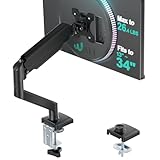
Ergonomically, single screens are incredibly simple to mount and adjust. If you are racing at your everyday work desk, you can use a high-quality articulating mount like the WALI Adjustable Single Monitor Arm for 13-34 inch Screens, up to 26.4 lbs, priced at an affordable $25.49. This allows you to pull the screen forward for an immersive racing session, and then push it completely out of the way when it is time to write emails or host a virtual meeting. There are no alignment headaches, no bezel correction calculations, and no complex display driver configurations to troubleshoot.
Additionally, single screens keep your room cool and quiet. A single modern LED or OLED panel draws very little power, meaning your home office won’t turn into a sauna during a long endurance race. The lack of structural bulk also means you can easily vacuum around your rig, move it to another room if guests arrive, or pack it down in a fraction of the time.
Where Triple Screen Sim Racing Setup Wins
If your goal is absolute realism, nothing compares to a triple screen sim racing setup. In a real race car, your eyes are constantly scanning the apex of a turn, checking your side mirrors, and watching your competitors try to slip past your rear quarter-panel. A single screen acts like a pair of blinders, forcing you to use artificial on-screen spotters or look-left/look-right buttons. Triple screens give you true 180-degree peripheral vision, allowing you to naturally look through the side windows of your virtual cockpit as you slide around a corner.
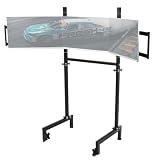
To support this level of engineering, you cannot rely on a standard office desk. You need specialized, heavy-duty furniture that can handle the massive physical load and keep the monitors perfectly aligned. This is where dedicated floor stands come in. Options like the Marada Sim Racing Triple Monitor Stand with Wheels for 24-32 inch Displays ($128) offer the mobility of heavy-duty casters, allowing you to roll the massive array out of the way when cleaning. Alternatively, the Dardoo Sim Racing Triple Monitor Stand with for 24-32 Inch Display 3 Screen ($129.99) provides a highly rigid, static steel frame designed to eliminate any screen wobble caused by high-force direct-drive steering wheels.
The sheer presence of a triple-screen array makes a bold statement. It turns your simulator into a striking focal point of engineering and technology. For those who take pride in showing off their hobbies, a beautifully aligned triple-screen rig with customized ambient backlighting can look like a high-end commercial installation right in your home.
Cost Over 5 Years
When planning a home addition or buying furniture, it is crucial to look at the total cost of ownership over a five-year lifecycle. The monitors themselves are only part of the equation; you must also factor in mounting hardware, computing power, and electricity consumption.
For a single screen setup, a premium 34-inch to 49-inch display will cost between $300 and $1,000. Because a single screen has fewer pixels to render, you can run it beautifully with a mid-range graphics card (GPU) costing around $350 to $600. Over five years, running a single monitor at an average of 10 hours a week will cost roughly $30 to $50 in electricity. Your total five-year investment for a single-screen display system is approximately $680 to $1,650.
For a triple screen setup, you must purchase three identical monitors to ensure color matching and seamless bezel alignment, costing between $600 and $1,800. You will also need a robust triple-monitor stand ($130 to $300). Rendering three screens simultaneously requires a high-end, enthusiast-grade graphics card, which will run you $800 to $1,600. Running three monitors plus a hardworking, high-end PC will noticeably increase your utility bill, costing around $150 to $250 in electricity over five years. The total five-year investment for a triple-screen system ranges from $1,680 to $3,950.
Which One for Your Home?
As we look at the state of home entertainment in 2026, the lines between professional-grade simulators and home design have officially blurred. Choosing the right configuration depends entirely on your current living situation.
Small Apartment or Studio
In compact living quarters, space is at an absolute premium. A triple screen array will completely swallow a studio apartment, making the space feel cramped and industrial. Go with a single screen setup—ideally a 34-inch ultrawide mounted on a flexible desk arm. This setup keeps your floor space open and preserves the clean, multi-functional nature of your home.
Family with Kids or Pets
If you have toddlers running around or curious cats jumping on furniture, a massive triple-monitor stand can represent a tipping hazard if not properly anchored. The extensive network of exposed cables behind three monitors is also a magnet for pets. A single monitor securely clamped to a heavy desk or integrated low-profile rig is much safer, easier to child-proof, and far less tempting for pets to climb.
Rental Property
If you rent your home, portability is key. Moving a triple-monitor setup is a grueling process that involves disassembling heavy steel frames, carefully packing three fragile screens, and spending hours recalibrating the angles at your new place. A single screen setup can be packed up and moved in a single trip to the car, making it the logical choice for those who move every few years.
Long-Term Home with a Dedicated Room
If you are established in a long-term home with a spare bedroom, a finished basement, or a dedicated game room, do not hesitate: go with the triple screen sim racing setup. You have the space to accommodate the wide footprint, the freedom to route cables permanently, and the ability to close the door to keep the room’s aesthetic separate from the rest of the house. It is an investment in pure, uncompromised joy.
FAQ
Can a single ultrawide match the field of view (FOV) of a triple screen setup?
No. Even the widest 49-inch super-ultrawide monitors only offer a field of view of about 90 to 100 degrees. A properly configured triple screen setup wraps around your head, providing a true 170 to 180-degree field of view, which matches your natural human peripheral vision.
How much electrical power and heat do triple screens add to a room?
Triple screens typically draw between 150 and 300 watts of power on their own, not including the high-end PC required to run them. In a small, closed room, this combined thermal output can raise the ambient temperature by 3 to 5 degrees Fahrenheit over a two-hour racing session, requiring good ventilation or air conditioning.
Are triple monitor stands safe on carpeted floors?
Yes, but you must choose a stand with a wide, heavy base or large caster wheels to distribute the weight. Because a triple-screen setup can easily weigh close to 100 lbs, cheap stands can leave deep indentations in carpet padding or feel wobbly on plush rugs. Premium stands with flat steel feet or lockable wheels are highly recommended for stability.
What is the ideal viewing distance for both setups?
For a single screen, the ideal viewing distance is usually between 20 and 30 inches from your eyes, depending on screen size. For a triple screen setup, the center monitor should be positioned as close to your steering wheel base as possible (typically 22 to 26 inches away), with the side monitors angled inward at 45 to 60 degrees to create a perfect circle around your driving position.


