Key takeaways
- GPU first: The graphics card determines your frame rates more than any other part—prioritize it over CPU speed, RAM size, or RGB lighting.
- RAM capacity: 16GB DDR4 is the practical minimum for modern games in 2026; 32GB gives more headroom for streaming or multitasking.
- Storage type and space: An NVMe SSD (at least 512GB) loads games and your OS far faster than a traditional hard drive or SATA SSD.
- CPU-GPU balance: Don’t pair a high-end GPU with a weak CPU or vice versa—bottlenecks waste money on the stronger component.
- Connectivity and upgrade room: Wi-Fi 6 support and a case with airflow/expansion room let the PC stay relevant as you add parts later.
What's inside
Buying your first gaming PC can feel like a minefield of confusing specs, inflated marketing claims, and prebuilds that skimp on the parts that actually matter for frame rates. Between GPU generations, RAM speeds, and storage types, it’s easy to overspend on the wrong component or underspend on the one that counts most.
This guide breaks down six popular beginner-friendly prebuilt gaming desktops, what makes each one worth considering, and how to match a system to your budget and the games you actually want to play.
As an Amazon Associate we earn from qualifying purchases at no extra cost to you. Product prices and availability are accurate as of the date shown and are subject to change.


🎮 Get More From Your Setup — Free
Prime Gaming gives you free PC games every month, in-game loot, and a free Twitch channel sub — plus fast free shipping on all the gear above. New members get a 30-day free trial.
Watch: Best Beginner Gaming PC — Video Review
How to Choose a Beginner Gaming PC (2026)
- GPU first: The graphics card determines your frame rates more than any other part—prioritize it over CPU speed, RAM size, or RGB lighting.
- RAM capacity: 16GB DDR4 is the practical minimum for modern games in 2026; 32GB gives more headroom for streaming or multitasking.
- Storage type and space: An NVMe SSD (at least 512GB) loads games and your OS far faster than a traditional hard drive or SATA SSD.
- CPU-GPU balance: Don’t pair a high-end GPU with a weak CPU or vice versa—bottlenecks waste money on the stronger component.
- Connectivity and upgrade room: Wi-Fi 6 support and a case with airflow/expansion room let the PC stay relevant as you add parts later.
The Best Beginner Gaming PC (2026)s Reviewed
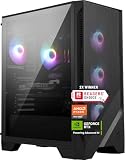
YAWYORE Ryzen 7 5700X / RTX 5060
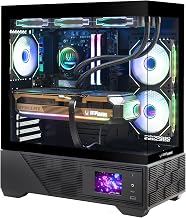
This is the standout pick for anyone who wants real longevity: the Ryzen 7 5700X and RTX 5060 combo handles current AAA titles at solid 1080p-to-1440p frame rates, and 32GB of RAM plus a 1TB NVMe SSD mean you won’t be upgrading again anytime soon.
Prebuilt Ryzen 5 4500 / RTX 3050
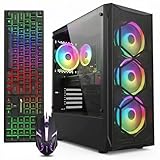
A smart mid-range entry point—the RTX 3050 is a genuine gaming GPU rather than a rebranded office card, and paired with 16GB of RAM and a 512GB NVMe drive, it comfortably handles esports titles and most modern games at 1080p on medium-high settings.
SKYESEV Ryzen 5 5600 / RTX 3050 6GB
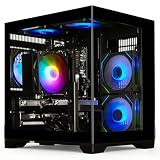
The 32GB of DDR4 RAM here is generous for this price tier, giving beginners extra multitasking headroom for streaming, Discord, and background apps while gaming; the RTX 3050 6GB and Ryzen 5 5600 form a well-balanced, no-bottleneck pairing.
suevery Ryzen 5 5500 / RX 6500 XT
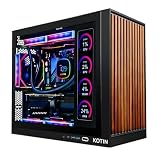
With a 6-core/12-thread Ryzen 5 5500 boosting to 4.2GHz, this build has more CPU headroom than many beginner rigs, though the RX 6500 XT’s 4GB VRAM means you’ll want to stick to 1080p rather than push for 4K despite the “4K Pro” branding.
suevery Ryzen 5 6-Core / Radeon 4G
This is a budget-conscious option best suited to esports titles, older games, and general use—the Radeon 4GB graphics card and 16GB of RAM won’t max out demanding new releases, but it’s a clean, functional starting point for a first gaming PC.
Frequently Asked Questions
Is 16GB of RAM enough for gaming in 2026?
Yes, 16GB remains a workable minimum for most current games, though 32GB is increasingly recommended if you also stream, record, or run multiple apps alongside your game.
Do I need an NVMe SSD, or is a regular SSD fine?
NVMe drives are significantly faster than SATA SSDs for game load times and Windows responsiveness, and most beginner prebuilds now include one as standard—it’s worth prioritizing.
Can these prebuilts handle 1440p or 4K gaming?
Entry-level cards like the RX 560 or Radeon 4G are best kept to 1080p, while the RTX 3050 and RTX 5060 models here can comfortably push 1440p, with the RTX 5060 build being the closest to true 4K-capable performance.
How much should a beginner spend on their first gaming PC?
Focus your budget on the GPU and CPU balance rather than RGB or case aesthetics; a well-matched Ryzen 5 and RTX 3050-class system typically offers the best value-to-performance ratio for newcomers.
Final Thoughts
For most beginners, the YAWYORE Ryzen 7 5700X / RTX 5060 build offers the best long-term value if your budget allows it, while the Prebuilt Ryzen 5 4500 / RTX 3050 and SKYESEV Ryzen 5 5600 / RTX 3050 systems are excellent, well-balanced picks for those wanting strong 1080p performance without overspending.