Key takeaways
- 60Hz to 75Hz: fine for casual and single-player gaming on a tight budget.
- 144Hz to 180Hz: the mainstream competitive standard, offering smooth motion as seen on the Acer Nitro KG271U and Samsung Odyssey G5.
- 240Hz and above: for esports players who want every millisecond, like the Dell 24 240Hz monitor.
- Response time: aim for 1ms to 0.5ms to minimize ghosting in fast-paced shooters.
What's inside
Choosing a gaming monitor in 2026 means balancing resolution, refresh rate, panel type, and price without getting lost in spec-sheet jargon. The right display can make a mid-range PC feel silky smooth, while the wrong one bottlenecks even a powerful rig. Whether you chase competitive frame rates or immersive single-player worlds, understanding a few core specs makes the decision far easier.
This guide breaks down what actually matters when buying a gaming monitor, using real 2026 models to illustrate each choice. By the end you will know exactly which numbers to prioritize for your setup and budget. Here are the displays we reference throughout.
As an Amazon Associate we earn from qualifying purchases at no extra cost to you. Product prices and availability are accurate as of the date shown and are subject to change.


⚡ Save on Your Next PC — Amazon Prime
Prime members get fast free shipping on the systems above, plus early access to Prime Day & Black Friday PC deals. New members get a 30-day free trial.
Watch: How To Choose A Gaming Monitor — Video Review
Resolution: Matching Sharpness to Your GPU
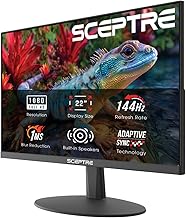
Resolution determines how sharp and spacious your image looks, but higher pixel counts demand more graphics power. A 1080p panel like the Sceptre 22-Inch 144Hz monitor keeps frame rates high on modest hardware, while a 1440p display such as the ASUS TUF Gaming VG27AQ3A hits the modern sweet spot for detail and performance. Ultrawide QHD options like the SANSUI 34-Inch add cinematic width for immersive and productivity use. Choose a resolution your GPU can comfortably drive at your target frame rate.
Refresh Rate and Response Time
- 60Hz to 75Hz: fine for casual and single-player gaming on a tight budget.
- 144Hz to 180Hz: the mainstream competitive standard, offering smooth motion as seen on the Acer Nitro KG271U and Samsung Odyssey G5.
- 240Hz and above: for esports players who want every millisecond, like the Dell 24 240Hz monitor.
- Response time: aim for 1ms to 0.5ms to minimize ghosting in fast-paced shooters.
Panel Type: IPS, VA, or Curved
Panel technology shapes color, contrast, and viewing angles. Fast IPS panels, found in the ASUS TUF and Acer Nitro models, deliver vibrant color and wide angles that suit most gamers. VA and curved panels like the Samsung Odyssey G55C 1000R produce deeper contrast and an enveloping feel that shines in atmospheric games. For competitive play, prioritize an IPS panel’s speed and clarity, while immersion seekers may prefer a curved VA screen.
Sync Technology and Connectivity
Adaptive sync eliminates screen tearing by matching the display to your GPU’s output. Look for AMD FreeSync or G-SYNC Compatible support, both common on modern panels such as the Samsung Odyssey G5 QHD. Check your ports too: HDMI 2.1 and DisplayPort 1.4 are ideal for driving high refresh rates at QHD, and models like the SANSUI ultrawide include the cables you need. Built-in speakers are a convenient bonus, though most gamers still prefer a headset.
Size and Aspect Ratio
Screen size affects both immersion and desk fit. A 24 to 27 inch 16:9 monitor is the versatile default, with 27 inch pairing especially well with 1440p. Ultrawide 34 inch displays like the Samsung Odyssey G5 Ultra-Wide wrap more of your view into the action and double as excellent multitasking screens, but they need more desk space and GPU muscle. Measure your desk and consider your seating distance before committing to a larger panel.
Frequently Asked Questions
What is the best resolution for gaming in 2026?
For most gamers, 1440p offers the ideal balance of sharpness and performance on a mid-range GPU. Competitive players may prefer 1080p for maximum frame rates, while enthusiasts with strong hardware enjoy 4K or ultrawide QHD.
Is a higher refresh rate worth it?
Yes, if your GPU can push the frames. Moving from 60Hz to 144Hz is a dramatic upgrade in smoothness. Jumping to 240Hz mainly benefits dedicated esports players chasing every advantage.
Should I get an IPS or curved monitor?
IPS panels offer the best color and speed for competitive and all-round gaming, while curved VA screens deliver deeper contrast and immersion for single-player titles. Your preferred game genre should guide the choice.
Do I need FreeSync or G-SYNC?
Adaptive sync greatly reduces screen tearing and stutter, so it is well worth having. Most modern monitors support FreeSync and are G-SYNC compatible, making it an easy feature to secure.
Conclusion
Choosing a gaming monitor comes down to matching resolution and refresh rate to your GPU, picking a panel type that suits your games, and confirming it has the sync and ports you need. Start with a 27 inch 1440p 144Hz IPS panel if you want a do-everything display, then adjust toward higher refresh, ultrawide, or curved options based on your priorities. Nail these fundamentals and your monitor will serve you well throughout 2026 and beyond.