Key takeaways
- Prioritize the GPU, then everything else: Your graphics card determines roughly 70% of gaming performance. At this budget, an RTX 5070 is the sweet spot for 1440p; an RTX 5070 Ti is worth stretching for if you plan to keep the system three-plus years. Anything below an RTX 4060-class card should cost well under $700 total.
- Don’t overspend on the CPU: A Ryzen 7 9700X, Ryzen 5 7600, or Core Ultra 7 265F will comfortably feed any GPU in this range. Paying extra for a top-tier chip you’ll never saturate is money that belongs in your graphics card or SSD instead.
- 32GB DDR5 is the new baseline: 16GB still works, but modern titles and background apps eat into it fast. If a $1300 build ships with 16GB, budget another $60–80 for a kit — or pick a system that includes 32GB out of the box.
- Check storage capacity, not just speed: A 512GB SSD holds about six modern AAA installs. Look for 1TB minimum at this price, and confirm it’s NVMe rather than SATA. Bonus points for a free M.2 slot for later expansion.
- Scrutinize the parts nobody advertises: Power supply wattage and certification, case airflow, and whether the motherboard supports a future CPU upgrade are where budget prebuilts cut corners. A 5070-class card wants a quality 650W+ unit — undersized PSUs cause crashes that look like software bugs.
What's inside
Shopping for a gaming PC under $1500 in 2026 is trickier than it looks. The RTX 50-series has settled into the mid-range, DDR5 is standard, and prebuilt pricing swings wildly week to week — which means two systems with nearly identical spec sheets can differ by $400 in real-world value. The hard part isn’t finding a machine with a big GPU sticker on the box; it’s avoiding the builds that pair a strong graphics card with a weak power supply, a bargain-bin motherboard, or a CPU that bottlenecks the whole thing at 1440p.
This guide cuts through that. We’ve focused on prebuilts that actually deliver playable frame rates at 1440p high settings, with enough RAM and storage that you won’t be upgrading in six months. Below you’ll find our top picks across the budget spectrum — from entry-level machines under $600 to near-flagship towers that squeeze every dollar out of a $1500 ceiling — plus the specs that genuinely matter and the ones marketers hope you’ll overpay for.
As an Amazon Associate we earn from qualifying purchases at no extra cost to you. Product prices and availability are accurate as of the date shown and are subject to change.




⚡ Save on Your Next PC — Amazon Prime
Prime members get fast free shipping on the systems above, plus early access to Prime Day & Black Friday PC deals. New members get a 30-day free trial.
Watch: Best Gaming PC Under $1500 — Video Review
How to Choose Gaming PC Under $1500
- Prioritize the GPU, then everything else: Your graphics card determines roughly 70% of gaming performance. At this budget, an RTX 5070 is the sweet spot for 1440p; an RTX 5070 Ti is worth stretching for if you plan to keep the system three-plus years. Anything below an RTX 4060-class card should cost well under $700 total.
- Don’t overspend on the CPU: A Ryzen 7 9700X, Ryzen 5 7600, or Core Ultra 7 265F will comfortably feed any GPU in this range. Paying extra for a top-tier chip you’ll never saturate is money that belongs in your graphics card or SSD instead.
- 32GB DDR5 is the new baseline: 16GB still works, but modern titles and background apps eat into it fast. If a $1300 build ships with 16GB, budget another $60–80 for a kit — or pick a system that includes 32GB out of the box.
- Check storage capacity, not just speed: A 512GB SSD holds about six modern AAA installs. Look for 1TB minimum at this price, and confirm it’s NVMe rather than SATA. Bonus points for a free M.2 slot for later expansion.
- Scrutinize the parts nobody advertises: Power supply wattage and certification, case airflow, and whether the motherboard supports a future CPU upgrade are where budget prebuilts cut corners. A 5070-class card wants a quality 650W+ unit — undersized PSUs cause crashes that look like software bugs.
The Best Picks Reviewed
KOTIN Prebuilt Gaming PC (RTX 5070, Ryzen 7 9700X)
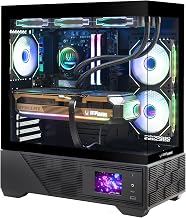
This is the value benchmark for the category: an RTX 5070 paired with a Ryzen 7 9700X, 32GB of DDR5, and a 1TB SSD hits the exact spec sheet most buyers are hunting for, without the brand premium. Expect comfortable 1440p high-settings performance in essentially anything on the market, with enough CPU headroom for streaming or heavily modded games.
MSI Codex Z2 (R7-8700F, RTX 5070)
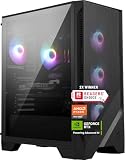
MSI’s Codex Z2 matches the KOTIN on GPU and memory but doubles the storage to 2TB NVMe, which is a genuinely meaningful upgrade if you keep a large library installed. The R7-8700F is slightly behind the 9700X in raw throughput, though the gap is negligible at 1440p where the GPU does the heavy lifting — and MSI’s chassis and support network are a step up.
Lenovo Legion Tower 5i (Core Ultra 7 265F, RTX 5070 Ti)
The Legion Tower 5i is the pick if your budget genuinely reaches the top of this range: the RTX 5070 Ti delivers a meaningful step up over the standard 5070, making 1440p ultra settings and entry-level 4K realistic. Lenovo’s build quality, cooling, and cable management are noticeably better than budget-brand prebuilts, and the included Game Pass months soften the price.
Alienware Aurora (RTX 5070, Core Ultra 7 265F)
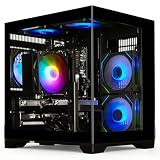
The Aurora brings Dell’s build quality, tool-free interior, and proper warranty support to the same core RTX 5070 hardware — a real advantage if you’d rather not troubleshoot a no-name system yourself. You do pay a brand premium, and configurations vary widely, so check RAM and storage carefully before ordering.
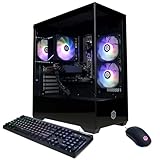
CyberPowerPC Gaming PC (Ryzen 5 5500, RX 6500 XT)
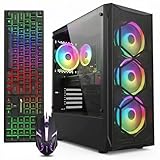
This is the true entry point: a competent 1080p esports machine for CS2, Valorant, Rocket League, and older AAA titles at medium settings. The RX 6500 XT’s 4GB of VRAM is its clear limitation in newer games, so treat this as a starting platform with an obvious GPU upgrade path rather than a long-term build.
Frequently Asked Questions
Is $1500 enough for a good gaming PC in 2026?
Comfortably. At this budget you can get an RTX 5070 or 5070 Ti with a modern eight-core CPU, 32GB of DDR5, and 1TB of NVMe storage — a configuration that handles 1440p high settings in virtually every current title and will stay relevant for several years.
Should I buy a prebuilt or build my own?
Building yourself typically saves $100–250 at this price point and gives you control over the power supply and motherboard. Prebuilts win on warranty coverage, immediate availability, and not having to troubleshoot a system that won’t POST — a fair trade for many buyers.
Is an RTX 5070 enough for 4K gaming?
For 4K at 60fps with upscaling enabled, yes in most titles. For native 4K at high refresh rates, no — that’s still flagship territory. The 5070 is best understood as a 1440p high-refresh card that can stretch to 4K when needed.
What should I upgrade first on a budget prebuilt?
RAM and storage are the cheapest, easiest wins, and both are usually where manufacturers economize. After that, the graphics card — but verify your power supply has the wattage and connectors to support a bigger card before you buy one.
Final Thoughts
For most buyers, the KOTIN RTX 5070 / Ryzen 7 9700X build offers the best raw value under $1500, delivering flagship-adjacent 1440p performance without paying for a badge. If you want more storage and a more established brand behind it, the MSI Codex Z2 is the smarter buy, while the Lenovo Legion Tower 5i and its RTX 5070 Ti earn the top spot for anyone spending right up to the limit and planning to keep the machine for years.