Key takeaways
- Install the latest GPU driver, since fresh drivers frequently fix stutter in specific titles.
- If updating did not help, perform a clean driver install to clear corrupted or leftover files.
- Update your chipset drivers too, which govern how the CPU talks to the rest of the system.
- Keep Windows itself current, as OS-level scheduling fixes can resolve stutter on some CPUs.
Few things ruin a gaming session faster than stutter: those brief, jarring hitches where the image freezes for a fraction of a second even though your frame rate counter says everything is fine. Stutter is different from a low frame rate. You can be averaging 120fps and still get micro-hitches that break immersion and, in competitive games, cost you the fight. The frustrating part is that stutter has many possible causes, from background processes to storage bottlenecks to driver issues.
The good news is that game stuttering on PC is almost always fixable once you work through the usual suspects methodically. This guide walks you through the most common causes in order of likelihood, from quick software toggles to deeper hardware checks, so you can diagnose and eliminate the hitching and get back to smooth gameplay in 2026.
Our top picks


As an Amazon Associate we earn from qualifying purchases at no extra cost to you. Ratings are shown as listed on Amazon.
⚡ Save on Your Next PC — Amazon Prime
Prime members get fast free shipping on the systems above, plus early access to Prime Day & Black Friday PC deals. New members get a 30-day free trial.
Watch: How to Fix Game Stuttering on PC — Video Review
Rule Out Background Processes
The most common cause of stutter is something else stealing CPU cycles or disk bandwidth mid-game. Open Task Manager before launching a game and close aggressive background apps: browser tabs, overlays, cloud sync clients, and auto-updaters. Disable unnecessary startup programs so they are not running in the first place. A single background process spiking your CPU or hammering your drive can produce exactly the periodic hitch you are seeing.
Update and Clean Your Drivers
- Install the latest GPU driver, since fresh drivers frequently fix stutter in specific titles.
- If updating did not help, perform a clean driver install to clear corrupted or leftover files.
- Update your chipset drivers too, which govern how the CPU talks to the rest of the system.
- Keep Windows itself current, as OS-level scheduling fixes can resolve stutter on some CPUs.
Check Your Settings and Sync
Enable adaptive sync, G-Sync or FreeSync, in your GPU control panel and match it with an in-game frame rate cap a few frames below your monitor’s refresh rate. This eliminates the stutter and tearing that come from frame rate exceeding or fighting your display. Also try disabling in-game V-Sync when using adaptive sync, and turn off any background overlays that inject themselves into the game, as those are a frequent hitching culprit.
Investigate Storage and Thermals
Shader compilation stutter, common the first time you play through an area, eases once shaders are cached, so give a new game a session to settle. Games installed on a slow mechanical hard drive stutter far more than those on an NVMe SSD, so move your library to solid-state storage if you can. Finally, monitor CPU and GPU temperatures; a component that overheats and throttles will cause sudden performance drops that feel like stutter.
Tips
- Set your Windows power plan to High Performance so the CPU does not downclock mid-game.
- Cap your frame rate rather than letting it run uncapped; a steady 100fps feels smoother than a spiky 90 to 150.
- Verify game file integrity through your launcher to catch corrupted files causing hitches.
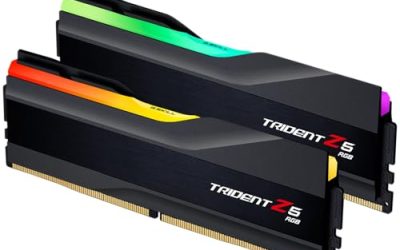
- Make sure your RAM’s XMP or EXPO profile is enabled, as slow default memory can contribute to frame-time inconsistency.
Frequently Asked Questions
Why do I stutter with a high frame rate?
Stutter is about frame-time consistency, not average frame rate. Even at 120fps, a single delayed frame creates a visible hitch. Causes include background processes, shader compilation, storage bottlenecks, or sync mismatches rather than raw GPU power.
Does an SSD reduce stuttering?
Yes, significantly, especially in open-world games that stream assets constantly. Moving a game from a mechanical hard drive to an NVMe SSD eliminates a whole category of streaming and load-related hitches.
Will more RAM stop stutter?
If you are running out of memory, yes. Games swapping to disk because 16GB is full will stutter badly. Upgrading to 32GB or simply closing memory-hungry background apps resolves that specific cause.
Is stutter caused by my CPU or GPU?
Either can cause it. Use an on-screen overlay to watch usage: if the CPU is pegged at 100% during hitches, it is CPU-bound stutter; if the GPU spikes or thermals climb, look there. Frame-time graphs pinpoint the source.
Conclusion
Game stuttering is almost always solvable with a methodical approach: close background processes, update and clean your drivers, enable adaptive sync with a sensible frame cap, and make sure your games live on fast SSD storage with healthy temperatures. Work through these in order and the micro-hitches that plague your sessions will disappear, leaving you with the smooth, consistent gameplay your hardware is capable of.