
Our Top Picks
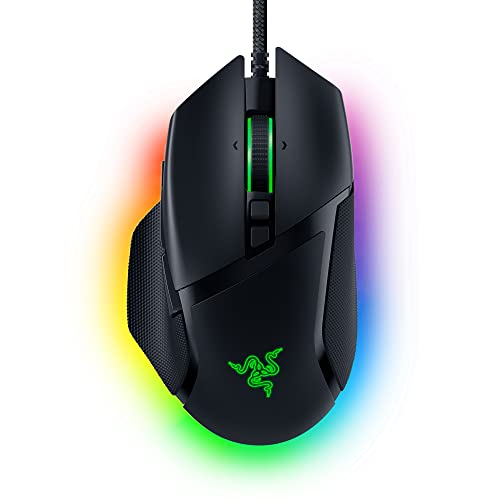 Razer Basilisk V3 Customizable RGB Wired Ergonomic GamingMouse2.96 x 5.12 x 1.67 inches0.2 poundsCheck on Amazon
 Razer DeathAdder Essential Ergonomic Wired Gaming Mouse5.01 x 2.86 x 1.69 inches0.3 poundsCheck on Amazon
A lightweight gaming mouse is the better pick for fast flick aiming, long sessions and low-sensitivity arm swipes, while a heavier mouse suits players who want a planted feel and natural braking when they stop a movement. Weight is a feel preference more than a skill upgrade, and shape and fit usually matter more than the number printed on the spec sheet.
Short Answer: Which Should You Pick?
If you play fast shooters and tend to swipe with your whole arm, a mouse in the lightweight or ultra-lightweight class is the easier place to start. If you aim in small wrist or fingertip movements at higher sensitivity, or you feel a light mouse overshoots targets, a mid-weight or heavier body can feel steadier. Neither group is objectively better. A review roundup of weight guides describes the same split: lighter mice feel quicker to flick and cause less fatigue, while heavier mice feel more controlled but ask for more effort to start moving.
Razer Basilisk V3 Customizable RGB Wired Ergonomic Gaming Mouse, Black | Fastest Gaming Mouse Switch, Chroma RGB Lighting, 26K DPI Optical Sensor, 11 Programmable Buttons, HyperScroll Tilt Wheel
Chosen because it specifies Black and Fastest Gaming Mouse Switch.
View on AmazonRazer DeathAdder Essential Ergonomic Wired Gaming Mouse, Black | 6400 DPI Optical Sensor, 5 Programmable Buttons, Rubber Side Grips, Mechanical Mouse Switches
Chosen because it specifies Black and 6400 DPI Optical Sensor.
View on Amazon
Redragon M801 Gaming Mouse, RGB PC Gaming Mouse MMO with 9 Programmable Buttons Macro Recording, 16000 DPI, Fire Button for Gaming Windows Computer - Wired, Black
Chosen because it specifies 16000 DPI and Fire Button for Gaming Windows Computer.
View on Amazon
SteelSeries Aerox 5 Gaming Mouse - Black | Holey RGB Gaming Mouse - Ultra-lightweight Water Resistant Design - 18K DPI TrueMove Air Optical Sensor
Chosen because it specifies Black and Holey RGB Gaming Mouse.
View on AmazonWhat Counts as Light and Heavy?
There is no official industry standard, but guides tend to use similar bands. Ultra-lightweight is usually described as under about 70 g, lightweight as roughly 70 to 85 g, medium as roughly 85 to 100 g, and heavy as above 100 g. Treat these as rough labels, because different outlets draw the lines in slightly different places.
For reference, the maker lists the Razer Viper V3 Pro at 54 g and Razer lists the wired DeathAdder V3 at 59 g. The Logitech G Pro X Superlight 2 is widely listed at 60 g, though TechPowerUp reports a slightly lower figure, which shows how scale readings and listings can differ by a couple of grams. Those mice sit firmly in the ultra-lightweight class, which is where most current esports-focused designs now live.
Quick Comparison Table
| Factor | Lightweight mouse | Heavier mouse |
|---|---|---|
| Starting a movement | Needs little force, feels quick | Needs a bit more force |
| Stopping a movement | You brake with your muscles | Mass helps it settle where you release |
| Fatigue over long sessions | Generally lower, reported by multiple guides | Can tire the hand sooner for some users |
| Tracking and micro-adjustments | Can feel twitchy at high sensitivity | Can feel steadier for small corrections |
| Cable or battery drag | More noticeable on a wired mouse with a stiff cable | Less noticeable relative to body weight |
| Best aiming style | Fast flicks, arm aiming, low sensitivity | Deliberate tracking, wrist or fingertip aiming |
| Typical trade-off | Thin shells, fewer buttons or features | More buttons, adjustable weights, sturdier build |
Does a Lighter Mouse Improve Your Aim?
Not automatically. Several guides point to a controlled study of professional Overwatch players in which an otherwise matched 80 g mouse did not produce a statistically significant pointing-task advantage over an 87 g mouse. That is only a 7 g gap, so it does not prove larger differences are irrelevant, and some players do report that a drop of 20 to 30 g changes how a mouse feels. The sensible reading is that weight changes comfort and handling, and the effect on actual accuracy depends on the person.
Sensitivity changes how much weight matters. When you play at low sensitivity and move the whole arm, the mouse weight is carried by large muscles and the difference between two similar mice is small. At higher sensitivity, the same job falls to the wrist and fingers, and each extra gram is carried by smaller muscles, so the difference tends to be more noticeable.
Why Heavier Mice Still Exist
Heavier mice are not simply outdated. A heavier body decelerates naturally, which some players like for tracking moving targets and for precise stops. Heavier mice also have room for more buttons, a larger battery, extra side controls or a sturdier shell, which matters for MMO, MOBA and productivity use. Where a mouse is built around ten or more programmable buttons, the extra mass is a design trade-off, not a flaw.
Why Lightweight Mice Took Over Esports
Ultra-light designs became popular because modern wireless sensors and batteries let makers shed mass without losing performance. Many use thin shells, sometimes with a honeycomb pattern, or lighter internals to reach low weights. The trade-off reported by reviewers is often rigidity: very light shells can flex or creak under a hard grip, and some feel less planted for users who lift the mouse often. Wireless models also remove cable drag, which was a big reason players once preferred heavier wired mice that were less affected by a stiff cable.
Pick the Weight Class If…
| Your situation | Weight class to try first |
|---|---|
| Fast shooters, large arm swipes, low sensitivity | Ultra-lightweight |
| Fingertip or claw grip with quick micro-flicks | Ultra-lightweight to lightweight |
| Aim with wrist movements at higher sensitivity and overshoot often | Lightweight to medium |
| You like a planted feel and slow, deliberate tracking | Medium to heavier |
| Strains from long sessions or wrist soreness | Lighter mouse, but see a doctor if pain persists |
| MMO or many side buttons needed | Heavier, feature-rich body is fine |
| Unsure | Lightweight to medium, then adjust by feel |
Other Things That Change Weight Feel
- Shape and balance: A mouse with a rear hump and weight toward the back can feel heavier than its listed number. Many guides say shape matters more than weight, and a light mouse with the wrong shape can feel worse than a heavier mouse that fits your grip.
- Mouse feet: Glide changes how much force it takes to start and stop a mouse. Worn or replaced feet can alter feel more than a few grams.
- Mousepad surface: A fast pad exaggerates light-mouse twitchiness, while a slower control pad adds friction that suits a lighter body.
- Cable: On wired mice, a stiff or poorly routed cable can feel like extra drag, so a bungee or a flexible cable matters.
- Grip: Fingertip and claw grips tend to favor lighter mice; palm grip tolerates and sometimes prefers more weight.
Common Mistakes When Choosing Mouse Weight
- Chasing the lowest number. A few grams of difference between two ultra-light mice is rarely what separates a comfortable mouse from an unusable one. Fit matters first.
- Ignoring shape and size. Many players blame weight for a mouse that is simply the wrong length or width for their hand.
- Judging after one session. Muscle memory takes days to adjust. Switching between very different weights can feel strange at first even if the new mouse is a good fit.
- Changing sensitivity at the same time. If you swap mouse and sensitivity together, you cannot tell which change helped or hurt.
- Adding weights without thinking. Some mice allow adjustable weights, but adding mass to a shell designed to be light can upset balance. Follow the maker’s instructions.
- Assuming wireless is always heavier. Current wireless esports mice often match or beat wired models on weight, so do not rule one out only because of a battery.
Alternatives Worth Considering
If you cannot decide between the two extremes, look at the middle of the market. Mid-weight mice around the 60 to 80 g range are described by some guides as where most users land. Another option is a mouse with a removable weight system, which lets you tune the feel in small steps, though many ultra-light designs skip this feature. A third route is to choose by shape first, then accept whatever weight that shape comes in, since shapes in the same family are often offered in both lighter and heavier editions.
Sources Behind the Figures
Weight figures above come from the makers’ own listings where stated and from reviewers such as TechPowerUp and PCWorld, plus aggregated weight guides. Where sources disagree by a gram or two, the difference is usually down to scale accuracy, color options or firmware versions with minor internal changes, so use listed weights as a guide, not a guarantee.
Frequently Asked Questions
Is a lighter gaming mouse always better for FPS?
No. Lighter mice are popular in shooters because they feel quick and reduce fatigue, but reviewers and the one published pro-player study note that weight alone did not show a clear aim advantage over a similar mouse. Fit, shape and sensitivity usually matter more.
What weight is considered heavy for a gaming mouse?
Guides commonly place heavy mice above roughly 100 g, medium at about 85 to 100 g, and lightweight below that. These are informal bands, not an official standard, so judge by how the mouse feels in your grip.
Can a very light mouse feel unstable?
Yes. Some players find very light mice twitchy at high sensitivity or when making small wrist adjustments, because there is less mass to slow the movement. Slightly heavier mice often feel more planted for that style.
Does weight matter more at low or high sensitivity?
The difference tends to be more noticeable at higher sensitivity, where small wrist and finger muscles do the work. At low sensitivity with full arm swipes, the gap between two similar mice is small.
How long does it take to adjust to a different mouse weight?
Many players report needing several days of regular use before judging a change. Keep sensitivity the same during the trial so you can tell whether weight is the cause of any difference.
Should I add weights to a light mouse?
Only if the maker supports it. Mice designed around adjustable weights can be tuned safely, but adding mass to an ultra-light shell can upset balance and may not be covered by the warranty.
FAQ
Short Answer: Which Should You Pick?
What Counts as Light and Heavy?
Does a Lighter Mouse Improve Your Aim?
Is a lighter gaming mouse always better for FPS?
What weight is considered heavy for a gaming mouse?
Can a very light mouse feel unstable?
Does weight matter more at low or high sensitivity?
How long does it take to adjust to a different mouse weight?
More from Amazon
Programs that pair well with the guide above. Offers and eligibility are set by Amazon and may change.
Free shipping on eligible items, Prime Video and more. Eligible new members can start with a free trial.
Start a Prime free trialAd-free music streaming. Eligible new subscribers can start with a free trial.
Try Music Unlimited freeA Prime membership for ages 18-24 with a trial period. Eligibility is set by Amazon.
See Prime for Young AdultsAudiobooks and podcasts to listen to on the go. Eligible new members can start with a free trial.
Try Audible freeAs an Amazon Associate we earn from qualifying purchases.



