Key takeaways
- What it measures: how much wall power reaches your components versus being lost as heat; higher efficiency means less waste and a cooler, quieter unit.
- The tiers: 80 Plus Bronze (like the ARESGAME AGV 500W) is entry level; Gold (the MSI MAG and CORSAIR RMe units) is the mainstream sweet spot; Platinum (the ASUS ROG Strix 1000W) is premium.
- Practical pick: for most gaming builds, an 80 Plus Gold unit balances efficiency, price, and reliability.
What's inside
- Watch: What PSU Do I Need for Gaming? (2026 Guide) — Video Review
- How to Calculate the Wattage You Need
- Understand 80 Plus Efficiency Ratings
- Modern Standards and the New GPU Connector
- Modular Versus Non-Modular Cables
- Leave Headroom for Upgrades
- Tips
- Related Guides
- Frequently Asked Questions
- Conclusion
- Related Articles
- Related Guides
The power supply is the least glamorous part of a gaming PC and the one people cut corners on most, which is exactly why it deserves careful thought. Every other component draws its power through the PSU, so a cheap or undersized unit can cause crashes, limit upgrades, or, in the worst case, damage the parts it feeds. Choosing the right power supply is about matching wattage to your system, picking a reputable unit, and making sure it speaks the connectors your modern GPU needs.
- Watch: What PSU Do I Need for Gaming? (2026 Guide) — Video Review
- How to Calculate the Wattage You Need
- Understand 80 Plus Efficiency Ratings
- Modern Standards and the New GPU Connector
- Modular Versus Non-Modular Cables
- Leave Headroom for Upgrades
- Tips
- Related Guides
- Frequently Asked Questions
- Conclusion
- Related Articles
- Related Guides
This guide explains how to calculate the wattage you actually need, what the 80 Plus efficiency ratings and modern ATX standards mean, why modular cables and the new 12V-2×6 GPU connector matter, and how much headroom to leave for the future. By the end you will be able to size a PSU with confidence instead of guessing or overpaying.
As an Amazon Associate we earn from qualifying purchases at no extra cost to you. Product prices and availability are accurate as of the date shown and are subject to change.




⚡ Save on Your Next PC — Amazon Prime
Prime members get fast free shipping on the systems above, plus early access to Prime Day & Black Friday PC deals. New members get a 30-day free trial.
Watch: What PSU Do I Need for Gaming? (2026 Guide) — Video Review
How to Calculate the Wattage You Need
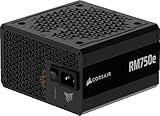
Start by adding up the power draw of your two hungriest parts, the GPU and CPU, then add roughly 150 watts for everything else. A mainstream RTX 5060 or 5070 build is happy on a quality 750W unit like the MSI MAG A750GL or CORSAIR RM750e, while a high-end CPU paired with a top GPU is better served by an 850W to 1000W supply such as the CORSAIR RM850e, be quiet! Pure Power 13 M 1000W, or ASUS TUF Gaming 1000W. Buying a little more than your peak draw keeps the PSU running in its efficient, quiet range rather than maxed out.
Understand 80 Plus Efficiency Ratings
- What it measures: how much wall power reaches your components versus being lost as heat; higher efficiency means less waste and a cooler, quieter unit.
- The tiers: 80 Plus Bronze (like the ARESGAME AGV 500W) is entry level; Gold (the MSI MAG and CORSAIR RMe units) is the mainstream sweet spot; Platinum (the ASUS ROG Strix 1000W) is premium.
- Practical pick: for most gaming builds, an 80 Plus Gold unit balances efficiency, price, and reliability.
Modern Standards and the New GPU Connector
Current graphics cards and standards have changed what a good PSU looks like. Look for an ATX 3.1 unit with PCIe 5.1 support, such as the MSI MAG A850GL or CORSAIR RM750e; these are designed to handle the brief power spikes modern GPUs produce without tripping. Just as important is the 12V-2×6 connector (the successor to 12VHPWR), which newer GPUs use for power. A supply that ships with the correct native 12V-2×6 cable, like the CORSAIR RMe series, saves you from fragile adapters and ensures a secure, safe connection.
Modular Versus Non-Modular Cables
Modularity affects tidiness and airflow more than performance. A fully modular PSU like the MSI MAG A750GL or be quiet! Pure Power 13 M lets you connect only the cables you need, keeping the case clean and airflow unobstructed. Non-modular units such as the ARESGAME AGV 500W have every cable permanently attached, which is fine for a budget build but leaves you stuffing unused cables somewhere. For most builders, fully modular is worth the small premium for the cleaner build and easier maintenance.
Leave Headroom for Upgrades
Buy the PSU for the system you might have, not just the one you have today. Running a supply near its maximum output all the time makes it hotter, louder, and shorter-lived, and it leaves no room for a future GPU upgrade. Sizing up to a quality 850W or 1000W unit like the CORSAIR RM850e or ASUS TUF Gaming 1000W means your next graphics card upgrade will not require a new power supply too. A good PSU often outlives two or three builds, so it is worth over-provisioning slightly.
Tips
- Size your PSU at roughly your peak system draw plus 20 to 30 percent so it runs cool and quiet.
- Choose an 80 Plus Gold, ATX 3.1 unit for the best balance of efficiency and future compatibility.
- Prefer a supply with a native 12V-2×6 cable over one that relies on an adapter for your GPU.
- Never pair a top-tier GPU with a no-name PSU; a reputable unit protects every other component you own.
Frequently Asked Questions
Is a 750W power supply enough for gaming?
For most mainstream builds with an RTX 5060 or 5070, yes. A quality 750W unit like the MSI MAG A750GL or CORSAIR RM750e handles them comfortably. Step up to 850W or 1000W only for high-end CPUs paired with top-tier graphics cards or if you want extra upgrade headroom.
What does 80 Plus Gold mean?
It is an efficiency certification: a Gold unit wastes less power as heat than Bronze, running cooler and quieter while trimming a little off your electricity use. Gold is the sweet spot for gaming PCs, balancing efficiency against price.
Do I need an ATX 3.1 power supply?
It is strongly recommended for new builds. ATX 3.1 units handle the rapid power spikes of modern GPUs and typically include the native 12V-2×6 connector current cards use, avoiding fragile adapters and improving reliability.
Is a modular power supply worth it?
For most people, yes. A fully modular unit lets you install only the cables you need, which improves airflow and makes the build far tidier. Non-modular supplies save a little money but leave you managing cables you will never use.
Conclusion
Choosing a gaming PSU comes down to four things: enough wattage with headroom, a trustworthy 80 Plus Gold rating, modern ATX 3.1 support with the right 12V-2×6 connector, and modular cables for a clean build. Get those right with a reputable unit and the power supply becomes a component you install once and forget, quietly and safely feeding every upgrade you make for years to come.