Key takeaways
- Top-tier gaming performance thanks to the 3D V-Cache CCD
- Full 16 cores make it a genuine productivity and content-creation chip
- Drops into existing AM5 boards, extending platform life
- Runs cooler and more efficiently than you would expect for the core count
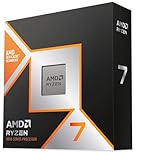
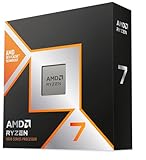
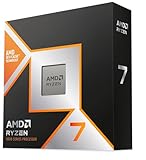
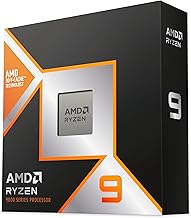
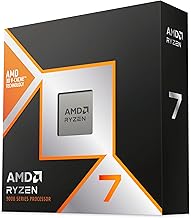
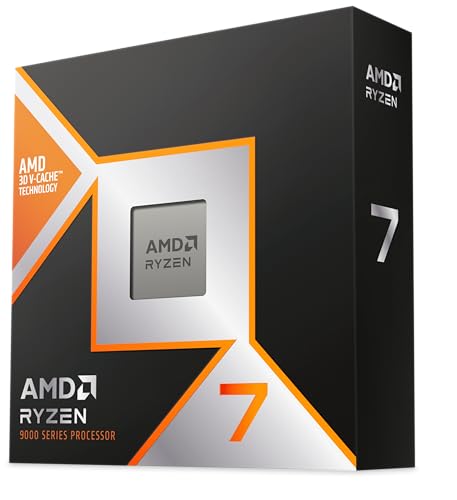
The AMD Ryzen 9 9950X3D is the 2026 flagship of AMD’s gaming-focused desktop lineup, a 16-core, 32-thread Zen 5 processor that pairs a stacked 3D V-Cache die with a second high-clocking CCD. In practice it tries to be two chips at once: a cache-loaded gaming monster and a fully-armed 16-core workstation part.
It is aimed at the enthusiast who refuses to compromise, the person building a single rig for both high-refresh 1440p gaming and serious creative or compilation workloads. If you only game, a cheaper chip will serve you; if you do both under one roof, this is the part written for you.
Our top picks




As an Amazon Associate we earn from qualifying purchases at no extra cost to you. Ratings are shown as listed on Amazon.
⚡ Save on Your Next PC — Amazon Prime
Prime members get fast free shipping on the systems above, plus early access to Prime Day & Black Friday PC deals. New members get a 30-day free trial.
Watch: Ryzen 9 9950X3D Review — Video Review
Design & Build
Physically it is a standard AM5 package, dropping into existing 600- and 800-series boards after a BIOS update, which protects the value of an earlier platform investment. The twist is internal: one CCD carries the 3D V-Cache for latency-sensitive games while the other clocks higher for threaded work, and AMD’s updated driver logic parks cores to steer each task to the right silicon. It stays within a 170W TDP but genuinely wants a good 280mm-plus AIO to hold boost clocks.
Performance
In gaming the 9950X3D lands within a whisker of the cheaper 9800X3D, trading blows title by title, because the extra cache is what moves the needle far more than raw core count at typical resolutions. Where it pulls decisively ahead is mixed and productivity work: Blender, code compiles, and heavy streaming-while-playing benefit from the full sixteen cores, and it comfortably outruns any single-CCD X3D chip there.
The caveat is that this dual-CCD design is only as good as its scheduling. On a clean, updated Windows install with the AMD chipset driver in place it behaves; on a neglected system you can occasionally catch a game running on the wrong CCD and losing a chunk of its lead. It is a small management tax for the flexibility.
Pros & Cons
- Top-tier gaming performance thanks to the 3D V-Cache CCD
- Full 16 cores make it a genuine productivity and content-creation chip
- Drops into existing AM5 boards, extending platform life
- Runs cooler and more efficiently than you would expect for the core count
- Expensive, and pure gamers pay for cores they may never use
- Dual-CCD scheduling can misfire without an up-to-date driver stack
- Needs a capable AIO to sustain its best clocks
Alternatives to Consider
If gaming is your only concern, the AMD Ryzen 7 9800X3D delivers nearly the same frame rates for meaningfully less money. Builders who lean toward heavy multi-threaded output over cache-sensitive games might prefer the standard Ryzen 9 9950X, while the Ryzen 9 9900X3D offers a 12-core middle ground that keeps the X3D gaming edge at a lower price.
Frequently Asked Questions
Is the 9950X3D worth it over the 9800X3D for gaming?
For gaming alone, not really. The two are close enough that most players won’t feel the difference; the 9950X3D earns its premium only when you also run demanding productivity workloads.
Do I need a new motherboard?
No. It uses the AM5 socket and works in existing B650, X670, B850, and X870 boards once you flash a supporting BIOS.
What cooler should I pair with it?
A 280mm or 360mm AIO, or a top-tier dual-tower air cooler, to let it hold boost clocks under sustained load.
Does the dual-CCD design cause gaming issues?
Rarely, and only if drivers are out of date. Keep Windows and the AMD chipset driver current and the scheduler routes games to the cache CCD correctly.
Verdict
The Ryzen 9 9950X3D is the do-everything AM5 flagship: essentially flagship gaming with a full 16-core workstation attached. It is overkill and overpriced for pure gamers, but for creators and power users who also want top frame rates, nothing else in the lineup covers both jobs as convincingly.