Key takeaways
- Refresh Rate: 144Hz is the practical minimum for competitive play; 180Hz-300Hz panels give fast-paced shooters and racing games a smoother edge.
- Panel Type: Fast IPS panels offer better color and viewing angles, while VA panels deliver deeper contrast and are common on curved budget monitors.
- Resolution & Size: QHD (1440p) at 27″-32″ balances sharpness and performance; 1080p suits smaller screens or tighter GPU budgets aiming for higher frame rates.
- Sync Technology: Confirm AMD FreeSync or NVIDIA G-Sync Compatible support matches your GPU to eliminate screen tearing during fast motion.
- Ergonomics & Curve: Height, tilt, and pivot adjustment improve comfort over long sessions, and 1000R-1500R curves add immersion without noticeable distortion.
What's inside
Choosing the right gaming monitor in 2026 means wading through a flood of refresh rate claims, panel types, and sync technologies that all promise smoother, sharper gameplay. With curved ultrawide-style panels, fast IPS options, and budget VA screens all competing for your desk space, it’s easy to overspend on features you won’t use or underspend and miss out on the responsiveness competitive titles demand.
This guide breaks down six of the most popular gaming monitors on the market right now, from Samsung’s Odyssey lineup to value-focused picks from KTC and Amzfast, so you can match panel type, refresh rate, and size to the way you actually play.
As an Amazon Associate we earn from qualifying purchases at no extra cost to you. Product prices and availability are accurate as of the date shown and are subject to change.




🎮 Get More From Your Setup — Free
Prime Gaming gives you free PC games every month, in-game loot, and a free Twitch channel sub — plus fast free shipping on all the gear above. New members get a 30-day free trial.
Watch: Best Buy Gaming Monitor — Video Review
How to Choose a Buy Gaming Monitor (2026)
- Refresh Rate: 144Hz is the practical minimum for competitive play; 180Hz-300Hz panels give fast-paced shooters and racing games a smoother edge.
- Panel Type: Fast IPS panels offer better color and viewing angles, while VA panels deliver deeper contrast and are common on curved budget monitors.
- Resolution & Size: QHD (1440p) at 27″-32″ balances sharpness and performance; 1080p suits smaller screens or tighter GPU budgets aiming for higher frame rates.
- Sync Technology: Confirm AMD FreeSync or NVIDIA G-Sync Compatible support matches your GPU to eliminate screen tearing during fast motion.
- Ergonomics & Curve: Height, tilt, and pivot adjustment improve comfort over long sessions, and 1000R-1500R curves add immersion without noticeable distortion.
The Best Buy Gaming Monitor (2026)s Reviewed
Samsung 32″ Odyssey G55C
This 1000R curved QHD panel wraps your peripheral vision for an immersive feel, and its 165Hz refresh rate with 1ms MPRT response keeps fast-moving action crisp. HDR10 and AMD FreeSync round out a well-balanced monitor for players who want size and immersion without stepping into ultra-premium pricing.
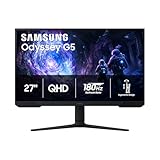
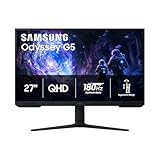
Samsung 27″ Odyssey G5 G51F
A strong all-rounder, this 27″ QHD flat panel hits 180Hz with Black Equalizer and Virtual Aim Point features tailored for shooters. Its height-adjustable stand and Auto Source Switch+ make it easy to live with day-to-day, not just during matches.
Samsung 32″ Odyssey G5 G50F
The Fast IPS panel here is the standout, delivering better color accuracy and viewing angles than typical VA curved monitors while still hitting 180Hz and 1ms response. NVIDIA G-Sync Compatible certification alongside AMD FreeSync makes it a safe pick regardless of your GPU brand.
KTC H25Y7 24.5″ 300Hz
Built for competitive gamers on a budget, this Fast IPS panel pushes up to 300Hz with genuine 240Hz support and 119% sRGB coverage for surprisingly accurate colors at this price point. Height, pivot, and tilt adjustment plus VESA compatibility make it easy to dial in the perfect setup.
Amzfast AMZG27C1 Pro 27″ Curved
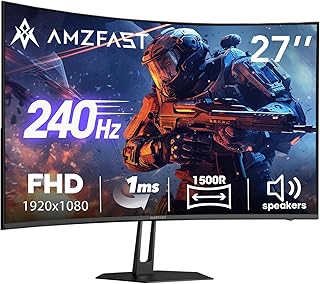
This 1500R curved 1080p monitor is built for value, offering 240Hz refresh, built-in speakers, and 130% sRGB coverage that punches above its price class. It’s a solid choice for players who want curved immersion and high refresh rates without investing in a QHD panel.
Frequently Asked Questions
Is 1440p or 1080p better for gaming in 2026?
1440p offers a sharper, more detailed image and is now well-supported by mid-range GPUs, making it the better choice for most gamers. 1080p remains relevant if you’re prioritizing very high refresh rates on a limited budget or older hardware.
Do I need G-Sync or FreeSync if I have a specific GPU brand?
NVIDIA GPUs work best with G-Sync or G-Sync Compatible monitors, while AMD GPUs pair with FreeSync, though most modern FreeSync monitors also work fine with NVIDIA cards via adaptive sync. Always check the manufacturer’s compatibility list if you plan to switch GPU brands later.
Are curved monitors actually better for gaming?
Curved panels, especially 1000R-1500R curves, can enhance immersion in open-world and racing games by filling more of your peripheral vision. The benefit is subjective, though, and flat Fast IPS panels typically offer better color accuracy for competitive or color-critical play.
What refresh rate do I actually need?
144Hz is a comfortable baseline for smooth, responsive gameplay in most titles. Competitive players in fast-paced shooters may benefit from 180Hz-300Hz, but the jump above 240Hz yields diminishing returns unless your GPU can consistently hit those frame rates.
Final Thoughts
For most buyers, the Samsung Odyssey G5 G50F stands out thanks to its Fast IPS panel and broad sync compatibility, while the Odyssey G51F is an excellent 27″ pick for shooter-focused players. Budget-conscious gamers wanting high refresh rates should look at the KTC H25Y7, which delivers standout performance for its price.