Our Top Picks
A 144Hz monitor gives your PC about 6.9 milliseconds to draw each frame, and a 240Hz monitor gives it just 4.2. That one number explains why the best PC for gaming depends on what you play, and it is the lens we use for the eight RTX 5060 Ti desktops below. For fast esports titles, the CyberPowerPC with its Core i7-14700F looks strongest by title. For big single-player games, memory and cooling details matter more. For open-world play with streaming on the side, the 32GB machines have the edge.
Eight RTX 5060 Ti desktops compared

CyberPowerPC Gaming PC, Intel Core i7-14700F, GeForce RTX 5060 Ti 8GB | Gamer Xtreme, 16GB DDR5, 1TB PCIe 4.0 SSD, WiFi Ready & Windows 11 Home (GXiVR8040A19)
One of the home product options compared in this guide.
View on Amazon
Skytech Gaming PC Desktop, Intel i5 14400F, RTX 5060 Ti 8GB, 16GB, 1TB | Windows 11, NVMe SSD, DDR4 3200 RAM, 750W GOLD PSU, Wi-Fi 5, Shadow 5 Series
One of the home product options compared in this guide.
View on Amazon
Gaming PC Desktop Computer Core Ultra 7 265F up to 5.3GHz, RTX 5060 Ti | 32GB DDR5 RAM, 1TB NVME, WiFi 6 & BT 5.4, 9× ARGB Fans,Liquid Cooled Windows 11, Mechanical Keyboard & Mouse
One of the home product options compared in this guide.
View on Amazon
AVGPC Blizzard Gaming PC - Intel® CPU Core i9 11900KF, RTX 5060 Ti, 32GB DDR4, 1TB NVME M.2 SSD, 360mm Liquid Cooler, ARGB Fans, WiFi/AC, TD500 Mesh White Case, Windows 11 Home i9 5060 Ti
One of the home product options compared in this guide.
View on Amazon
Lenovo Legion Tower 5i – AI-Powered Gaming PC - Intel® Core Ultra 7 265F Processor – NVIDIA® GeForce RTX™ 5060 Ti Graphics – 16 GB Memory – 1 TB Storage – 3 Months of PC GamePass
One of the home product options compared in this guide.
View on Amazon
msi Aegis RS2 AI Pink Gaming Desktop PC | NVIDIA GeForce RTX 5060 Ti | Intel Core Ultra 7 270K | 32GB DDR5 RAM | 1TB NVMe SSD | 360mm AIO Liquid Cooling | Wi-Fi 6E | Windows 11 Home | C2NVM7-2254US
One of the home product options compared in this guide.
View on Amazon
Skytech Gaming Azure 3 Gaming PC, Core i5 14400F, RTX 5060 Ti 8GB | Windows 11, NVMe SSD, DDR4 3200, 650W GOLD PSU, Wi-Fi 5, Azure 3 Series
One of the home product options compared in this guide.
View on Amazon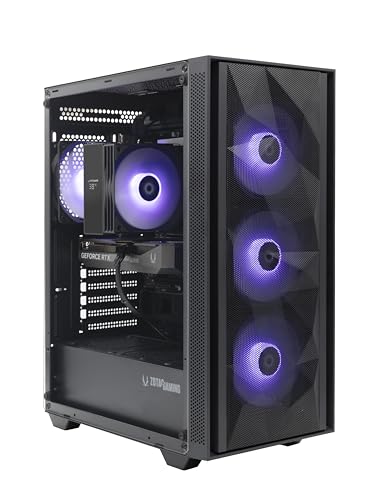
ZOTAC MEK Gaming PC Desktop, Core Ultra 5 250KF, NVIDIA RTX 5060 Ti 8GB | 16GB DDR5, 1TB NVMe SSD, 650W 80+ Gold PSU, WiFi 6E, Bluetooth 5.3, Windows 11 Home, GDDR7, up to 5.3GHz
One of the home product options compared in this guide.
View on Amazon| Model | Key point from title | Price tier | Best for |
|---|---|---|---|
| CyberPowerPC Gamer Xtreme | Core i7-14700F, RTX 5060 Ti 8GB, 16GB DDR5, 1TB | Mid-range | Esports high frame rates |
| Skytech Shadow 5 | Core i5 14400F, 8GB GPU, 16GB, DDR4 3200, 750W Gold | Budget | Esports on a budget |
| Evounic Gaming PC | Core Ultra 7 265F, 32GB DDR5, liquid cooled, keyboard and mouse | Mid-range | Streaming and open-world play |
| AVGPC Blizzard | Core i9 11900KF, 32GB DDR4, 360mm cooler, white case | Budget | Memory-heavy play on older platform |
| Lenovo Legion Tower 5i | Core Ultra 7 265F, 16GB, 1TB, Game Pass months | Mid-range | Brand-backed single-player |
| MSI Aegis RS2 AI Pink | Core Ultra 7 270K, 32GB DDR5, 360mm AIO, Wi-Fi 6E | Premium | Single-player and streaming |
| Skytech Azure 3 | Core i5 14400F, 8GB GPU, DDR4 3200, 650W Gold | Budget | Entry-level esports |
| ZOTAC MEK | Core Ultra 5 250KF, 16GB DDR5, 1TB, 650W Gold | Budget | Compact-spec single-player |
Price tiers are relative to this set only. Check the listing for the current price.
Match the PC to the game type
Frame time is the budget your PC has to draw one frame. At 60Hz it is 16.7 milliseconds, at 144Hz 6.9, at 240Hz 4.2 and at 360Hz 2.8. The shorter it gets, the more the processor, memory speed and game settings matter. At longer budgets, as in cinematic single-player titles, the graphics card does most of the work.
| Game type | What matters most | Candidates in this set |
|---|---|---|
| Esports, high frame rate | CPU speed, monitor refresh rate | CyberPowerPC, Skytech Shadow 5, Skytech Azure 3 |
| AAA single-player | GPU memory, cooling, SSD space | MSI Aegis, Lenovo Legion, Evounic |
| Open-world or streaming | 32GB RAM, cores, cooling | Evounic, MSI Aegis, AVGPC Blizzard |
Use the table as a starting point, not a verdict. Say you play a 240Hz shooter on weeknights and a story-driven RPG on weekends. Frame time points you to the CPU for the first game and to GPU memory for the second, and the same PC rarely maximizes both. In that case, favor the processor if the shooter is your main game, since you can lower RPG settings, but you cannot buy back lost frames in a competitive match. Reverse the choice if story games dominate your week.
The eight desktops, one by one
CyberPowerPC Gamer Xtreme (Core i7-14700F)
The title names a Core i7-14700F, an RTX 5060 Ti 8GB, 16GB of DDR5, a 1TB PCIe 4.0 SSD, WiFi readiness and Windows 11 Home, with model number GXiVR8040A19. It has the strongest processor class among the esports-leaning listings. The “WiFi Ready” wording is vague, so check the listing to see whether a Wi-Fi card is included.
- Pros: strong processor for high frame rates; DDR5; PCIe 4.0 SSD
- Cons: 16GB RAM; power supply and cooler not in the title
Who it’s for: esports players with a 240Hz monitor.
Skytech Shadow 5 (Core i5 14400F)
This listing names a Core i5 14400F, an RTX 5060 Ti 8GB, 16GB of RAM, a 1TB NVMe SSD, DDR4 3200 memory, a 750W Gold power supply and Wi-Fi 5. The DDR4 memory is older than the DDR5 on other machines, and the title names the power supply, which is a plus.
- Pros: 750W Gold supply named; solid esports processor class
- Cons: DDR4 platform; Wi-Fi 5; 16GB RAM
Who it’s for: budget-minded esports players at 144Hz.
Evounic Gaming PC (Core Ultra 7 265F)
The Evounic lists a Core Ultra 7 265F up to 5.3GHz, an RTX 5060 Ti, 32GB of DDR5, a 1TB NVMe SSD, WiFi 6, Bluetooth 5.4, nine ARGB fans, liquid cooling, a mechanical keyboard and mouse, and Windows 11. It is a lesser-known brand, so check the listing for warranty terms and who provides support. The title does not state GPU memory size.
- Pros: 32GB DDR5; liquid cooling; peripherals included
- Cons: brand support unclear; VRAM size unstated; power supply unstated
Who it’s for: streamers and open-world players who want everything in the box.
AVGPC Blizzard (Core i9 11900KF)
This one pairs an older eleventh-generation Core i9-11900KF with an RTX 5060 Ti, 32GB of DDR4, a 1TB NVMe SSD, a 360mm liquid cooler, ARGB fans, WiFi/AC and a white TD500 mesh case. The platform is a generation or more behind the others here and cannot move to DDR5, so upgrade options are limited.
- Pros: 32GB; 360mm cooler; mesh case airflow
- Cons: older processor generation; WiFi/AC is dated; power supply unstated
Who it’s for: buyers who want 32GB and a white case at a lower tier.
Lenovo Legion Tower 5i (Core Ultra 7 265F)
The title lists a Core Ultra 7 265F, an RTX 5060 Ti, 16GB of memory, 1TB of storage and three months of PC Game Pass. It does not state video memory, memory type or the power supply, so those are check-the-listing items.
- Pros: large-brand support channels; Game Pass months
- Cons: spare title; 16GB RAM
Who it’s for: single-player gamers who prefer a recognizable manufacturer.
MSI Aegis RS2 AI Pink (Core Ultra 7 270K)
This pink-themed tower (model C2NVM7-2254US) lists a Core Ultra 7 270K, an RTX 5060 Ti, 32GB of DDR5, a 1TB NVMe SSD, a 360mm AIO, Wi-Fi 6E and Windows 11 Home. It has the strongest processor and cooling on this list by title, and the color scheme is a deliberate style choice.
- Pros: 270K-class CPU; 32GB DDR5; 360mm AIO
- Cons: pink styling is not for everyone; VRAM and power supply unstated
Who it’s for: players who stream, create and game on one PC.
Skytech Azure 3 (Core i5 14400F)
The title lists a Core i5 14400F, an RTX 5060 Ti 8GB, an NVMe SSD, DDR4 3200, a 650W Gold power supply and Wi-Fi 5. It does not state memory or storage capacity. Check the listing for RAM and drive size before comparing it with the Shadow 5.
- Pros: named Gold supply; esports-capable processor
- Cons: RAM and SSD size unstated; Wi-Fi 5; DDR4
Who it’s for: entry-level esports setups where price matters most.
ZOTAC MEK (Core Ultra 5 250KF)
The ZOTAC lists a Core Ultra 5 250KF up to 5.3GHz, an RTX 5060 Ti 8GB with GDDR7, 16GB of DDR5, a 1TB NVMe SSD, a 650W 80+ Gold supply, WiFi 6E, Bluetooth 5.3 and Windows 11 Home. It is the most modest processor class here but names the full parts list clearly.
- Pros: clear parts list; DDR5; WiFi 6E
- Cons: modest processor tier; 650W leaves less upgrade room
Who it’s for: 1080p to 1440p single-player gamers on a plan.
How we picked these
We compared the eight listings by what the titles say about CPU, GPU, memory, cooling and power supply, then matched them to game types. Nobody on the team used or measured these units. Anything beyond the title is marked “check the listing,” and numbers we add are estimates with stated assumptions. Our basis is published specifications, manufacturer documentation and buyer reviews.
What to look for, by game type
Esports and high frame rates
Aim your spending at the processor and a high-refresh monitor. A 240Hz monitor wastes a slow CPU, and an RTX 5060 Ti class card can usually hold high frame rates in esports titles at lower settings. Turn down shadows and effects, which cost frames and rarely help you see targets.
Big single-player games
Here the GPU and its memory lead. Most listings name 8GB, and new releases with high texture settings can push past it. Plan to lower texture quality, or look for a 16GB variant if the listing offers it. SSD space also matters; see our gaming PC storage guide.
Open-world games and streaming
These workloads add background tasks. As a rough estimate, assume a game uses 10GB, a browser 3GB, a streaming app 2GB and Windows 4GB. That totals about 19GB, which is why 32GB is comfortable here and 16GB gets tight. Cooling also matters, because long sessions generate sustained heat. Our cooling guide explains airflow basics.
Power supply and upgrades
Two listings name 650W Gold and one names 750W Gold; the others do not state it. A card in this class does not need a huge supply, but upgrading to a stronger GPU later may. If you plan upgrades, read our piece on prebuilt gaming PC upgrades first.
Mistakes buyers make
- Buying for the GPU name alone. All eight share a card; the rest of the build differs.
- Ignoring VRAM. Eight gigabytes is the common figure here, not a universal one.
- Overlooking RAM type. DDR4 and DDR5 are not interchangeable.
- Trusting vague titles. When RAM, storage or power supply is unstated, ask or move on.
- Pairing a 240Hz monitor with a weak CPU. The CPU sets the ceiling.
Verdict
For esports, the CyberPowerPC with the Core i7-14700F is the strongest by title, and the Skytech Shadow 5 is the budget choice. For single-player and streaming, the MSI Aegis RS2 and Evounic stand out for 32GB and cooling, with the Lenovo Legion as the brand-backed option. Verify GPU memory, power supply and warranty on each listing before you buy.
Frequently asked questions
Is an RTX 5060 Ti enough for modern games?
For 1080p and 1440p at sensible settings, cards in this class are generally positioned by their maker for that range. The caveat is video memory: the 5060 Ti comes in 8GB and 16GB versions, and most listings here name 8GB. Texture-heavy releases and higher resolutions use more, so you may need to lower texture quality in the newest games. Check the listing to confirm which version you are buying.
Does the CPU matter more than the GPU for esports games?
In high-refresh esports titles, the processor often limits frame rates before the GPU does, because each frame needs game logic, draw calls and network handling. A 240Hz monitor gives the PC about 4.2 milliseconds per frame. That is why the Core i7-14700F or Core Ultra 7 processors are attractive for esports builds, while the GPU matters more in heavy single-player games.
Is 16GB of RAM enough for gaming?
Many games run on 16GB, and four listings here include that amount. However, running a browser, voice chat and a recording or streaming tool alongside a game can use several extra gigabytes, so 32GB is more comfortable. The Evounic, AVGPC and MSI listings name 32GB. Check the listing to see whether the memory is DDR4 or DDR5 and whether you can add more later.
Does an older Core i9-11900KF still make sense?
The AVGPC Blizzard pairs an eleventh-generation i9-11900KF with an RTX 5060 Ti, 32GB of DDR4 and a 360mm cooler. The processor is older than the 14th Gen and Core Ultra chips in the other listings, and it uses a platform that does not support DDR5. It can still run games, but check the listing for power supply details and consider the platform’s age before buying.
How much storage should a gaming PC have?
Most listings here name a 1TB SSD, which holds a handful of large games alongside Windows. Individual games commonly use tens of gigabytes, and some use over 100GB, so 1TB fills faster than expected. Plan for a second drive if you keep a big library installed. Our storage guide walks through the sizing in more detail.