Our Top Picks
The RX 6800 is the better buy for most gamers today: it matched the RTX 3070 Ti in raster performance at launch, and in recent VRAM-heavy games its 16 GB pulls clearly ahead of the 3070 Ti’s 8 GB. It also uses 40 W less power. The RTX 3070 Ti remains the pick for ray tracing in lighter games, DLSS 4 upscaling and CUDA-based creative work, as long as you accept lowering texture settings in newer titles.
These two cards competed directly in 2021. AMD launched the RX 6800 in October 2020 at $579, and NVIDIA answered with the RTX 3070 Ti in May 2021 at $599. Their average performance was nearly identical then. The difference since has come from game requirements growing past 8 GB of VRAM.

GIGABYTE AORUS Radeon RX 6800 Master 16G Graphics Card, MAX-Covered Cooling, 16GB 256-bit GDDR6, GV-R68AORUS M-16GD Video Card
Chosen because it specifies MAX-Covered Cooling and 16GB 256-bit GDDR6.
View on Amazon
PowerColor Red Dragon AMD Radeon RX 6800 Gaming Graphics Card with 16GB GDDR6 Memory, Powered by AMD RDNA 2, Raytracing, PCI Express 4.0, HDMI 2.1, AMD Infinity Cache (Renewed)
Chosen because it specifies Powered by AMD RDNA 2 and Raytracing.
View on Amazon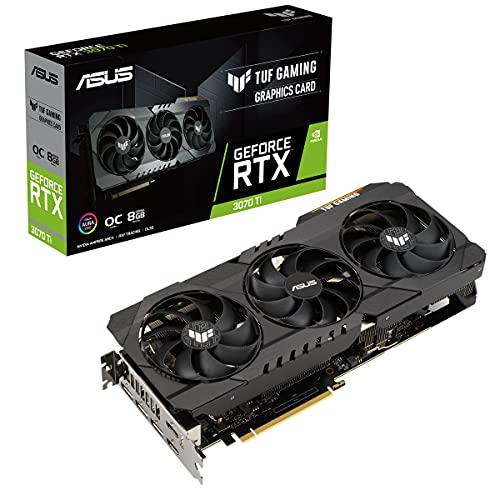
ASUS TUF Gaming NVIDIA GeForce RTX 3070 Ti OC Edition Graphics Card (PCIe 4.0, 8GB GDDR6X, HDMI 2.1, DisplayPort 1.4a, Dual Ball Fan Bearings, Military-Grade Certification, GPU Tweak II) (Renewed)
Chosen because it specifies 8GB GDDR6X and HDMI 2.1.
View on Amazon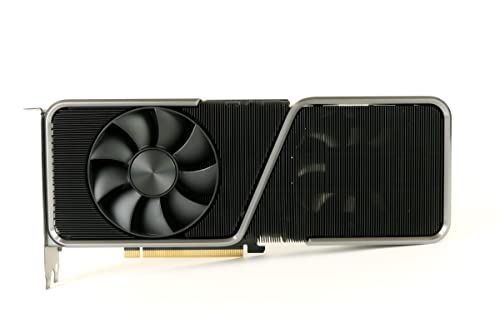
NVIDIA - GeForce RTX 3070 Ti 8GB GDDR6X PCI Express 4.0 Graphics Card - Dark Platinum and Black (Renewed)
Chosen because it specifies GeForce RTX 3070 Ti 8GB GDDR6X PCI Express 4.0 Graphics Card and Dark Platinum and Black (Renewed).
View on AmazonSpec Sheet
| Specification | RX 6800 | RTX 3070 Ti |
|---|---|---|
| Architecture | RDNA 2.0 | Ampere |
| Release date | 28 October 2020 | 31 May 2021 |
| Launch price (MSRP) | $579 | $599 |
| Shaders | 3840 stream processors | 6144 CUDA cores |
| Boost clock | 2105 MHz | 1770 MHz |
| Process | 7 nm | 8 nm |
| TDP | 250 W | 290 W |
| Memory | 16 GB GDDR6 | 8 GB GDDR6X |
| Memory bus | 256-bit | 256-bit |
| Bandwidth | 512.0 GB/s | 608.3 GB/s |
| Cache | 4 MB L2 + 128 MB L3 | 4 MB L2 |
| Interface | PCIe 4.0 x16 | PCIe 4.0 x16 |
| Power connectors | 2x 8-pin | 1x 12-pin |
| Length / width | 267 mm, 2-slot | 267 mm, 2-slot |
| Outputs | 1x HDMI, 2x DisplayPort, 1x USB Type-C | 1x HDMI, 3x DisplayPort |
Both cards use a 256-bit bus. NVIDIA spent its budget on faster GDDR6X for more bandwidth, while AMD went for double the capacity plus a 128 MB Infinity Cache. That design choice decides most of this comparison in 2026.
Raster Performance: Tied Then, Diverging Now
At launch the two cards were very close. TechPowerUp’s 50-game comparison found the RTX 3070 Ti 0.8% slower than the RX 6800 at 1440p on average, with AMD leading by about 3.5% in DirectX 12 and Vulkan titles. Back then TechPowerUp noted that none of its tested games suffered noticeably from the 3070 Ti’s smaller memory. TechSpot’s 52-game benchmark (Hardware Unboxed) also concluded the two were very close overall, with a few titles strongly favoring one card.
Newer releases look different. More recent per-game data at 1440p ultra shows the RX 6800 well ahead in several titles that go past 8 GB, in some cases by 70% or more, as the 3070 Ti runs out of VRAM and stutters. Games that stay within 8 GB still show the cards close together. Current benchmark aggregates put the RX 6800 about 6-7% ahead at 1440p on average, with a much wider spread depending on the game.
Typical 1440p high-setting results in demanding modern games fall around 60-90 FPS for both cards when VRAM is not a limit. These figures vary with settings, CPU and patches. The 3070 Ti’s numbers drop sharply once memory runs out.
Ray Tracing
The RTX 3070 Ti has the stronger ray tracing hardware. In titles with moderate RT effects and textures that fit in 8 GB, it is generally well ahead of the RX 6800, whose first-generation ray accelerators lose more performance with RT on. The catch is that ray tracing raises VRAM use, so in newer games combining RT and high textures, the 3070 Ti can hit its memory limit before it uses its RT advantage. The 3070 Ti is the better RT card in practice only when you also lower texture quality.
Upscaling and Frame Generation
- RTX 3070 Ti: DLSS 4 Super Resolution (transformer model) and Ray Reconstruction. No DLSS Frame Generation, which needs RTX 40 or newer. FSR 3 frame generation works in games that support it.
- RX 6800: FSR 3.1 upscaling and frame generation, plus AMD Fluid Motion Frames at the driver level. No FSR 4, which is limited to RDNA 4.
DLSS 4’s upscaling is noticeably sharper and more stable than FSR 3.1, especially in Balanced and Performance modes. That is a real advantage for the 3070 Ti. DLSS also lowers VRAM use somewhat by rendering at a lower internal resolution, which helps ease the 8 GB limit.
VRAM: The Deciding Factor
| Scenario | Typical VRAM use | RX 6800 (16 GB) | RTX 3070 Ti (8 GB) |
|---|---|---|---|
| 1080p high | 6-8 GB | Plenty | OK in most games |
| 1440p high | 8-11 GB | Plenty | Over budget in many new titles |
| 1440p + ray tracing | 10-12 GB | Comfortable | Reduced textures required |
| 4K high | 11-14 GB | Workable | Not practical in new games |
For a 1440p card bought in 2026, 8 GB is a significant handicap. The RX 6800’s 16 GB lets it use high and ultra textures for years.
Power, PSU and Fitment
The RTX 3070 Ti is rated at 290 W, a big jump over the RTX 3070, mainly because of its power-hungry GDDR6X. The RX 6800 is rated at 250 W. PSU sizing as GPU TDP + CPU + about 150 W of headroom, with a 105 W CPU:
- RX 6800: 250 + 105 + 150 = 505 W, so a quality 650 W unit.
- RTX 3070 Ti: 290 + 105 + 150 = 545 W, so a quality 650-750 W unit.
The 3070 Ti Founders Edition uses a 12-pin connector with an included adapter, while many partner cards use standard 8-pin plugs. The RX 6800 reference card uses two 8-pin connectors. Both reference cards are 267 mm long and 2 slots wide, so case fit is equal. Partner models are often longer and thicker.
Used-Market Snapshot
Both cards are now bought mainly used. Broad current ranges: the RX 6800 usually sells for about $250-$320 used, and the RTX 3070 Ti for about $220-$280 used. The 3070 Ti often costs a little less because of its 8 GB limit.
Cost per performance at launch MSRP, setting the 3070 Ti at 100 and the RX 6800 at about 106 at 1440p today:
- RX 6800: $579 / 106 = about $5.46 per point.
- RTX 3070 Ti: $599 / 100 = $5.99 per point.
Apply the same math to used listings. If the 3070 Ti is cheap enough to beat the RX 6800 per point, it can still make sense for 1080p players who want DLSS.
Pick X If / Pick Y If
| Situation | RX 6800 | RTX 3070 Ti |
|---|---|---|
| 1440p AAA with high textures | Pick this | |
| Long-term ownership (3+ years) | Pick this | |
| Modding and texture packs | Pick this | |
| 1080p with DLSS, lighter RT games | Pick this | |
| Blender, CUDA or NVENC streaming | Pick this | |
| Lower power and heat | Pick this | |
| Cheapest used deal at 1080p | Compare prices | Compare prices |
Buying Used: Quick Checks
- Stress-test for 15-20 minutes and watch memory and hotspot temperatures. GDDR6X on the 3070 Ti can run hot.
- Check fans for rattle and bearing noise.
- For a Founders Edition 3070 Ti, confirm the 12-pin adapter is included.
- Enable Resizable BAR (Smart Access Memory) after installing. It helps the RX 6800 in particular.
Final Recommendation
When they launched, the RX 6800 and RTX 3070 Ti were evenly matched. Since then, the RX 6800’s 16 GB has made it the better 1440p card, with steadier performance in new games and lower power draw. The RTX 3070 Ti still has the stronger RT hardware and better upscaling, so it remains a reasonable used option for 1080p, DLSS-focused gaming or CUDA work, provided you accept its 8 GB ceiling.
Frequently Asked Questions
Is the RX 6800 faster than the RTX 3070 Ti?
At launch the two were essentially tied, with TechPowerUp’s 50-game average showing less than 1% difference at 1440p. In newer games that use more than 8 GB of VRAM, the RX 6800 is often much faster. Current aggregates put it slightly ahead on average, with larger leads in memory-heavy titles.
Is 8 GB on the RTX 3070 Ti enough in 2026?
For 1080p at medium-to-high settings, 8 GB is still usable in most games. At 1440p with high textures, many recent titles exceed 8 GB, which causes stuttering or low-resolution textures. Lowering texture quality and using DLSS helps, but the limit remains.
Which card is better for ray tracing?
The RTX 3070 Ti has stronger ray tracing hardware and DLSS 4 upscaling, so it wins in RT titles that fit within 8 GB. In newer games where RT plus high textures go past 8 GB, its advantage shrinks or disappears. The RX 6800 handles RT but takes a larger performance hit.
What power supply is recommended?
A quality 650 W PSU works well for the RX 6800 with a typical gaming CPU. For the RTX 3070 Ti, 650-750 W gives more margin for its 290 W rating and transient spikes. Use separate PCIe cables for each power connector where possible.
Can either card use DLSS Frame Generation or FSR 4?
No. DLSS Frame Generation needs RTX 40 or newer, and FSR 4 is limited to RDNA 4 (RX 9000) cards. Both can use FSR 3 frame generation in supported games, and the RX 6800 also supports AMD Fluid Motion Frames through its driver.