Key takeaways
- Speed: Pick a resolver with a nearby server for the lowest lookup times.
- Reliability: Major public resolvers offer excellent uptime compared with some ISP defaults.
- Security: Options like Quad9 block known malicious domains, adding a layer of protection.
- Privacy: Resolvers supporting encrypted DNS keep your lookups hidden from snoopers.
What's inside
Your DNS settings quietly shape every online session, translating server names into addresses before a single packet of game data flows. Choosing a faster, more reliable DNS resolver in 2026 can shave milliseconds off matchmaking, reduce connection hiccups, and even improve security against certain attacks. Yet most gamers never touch these settings, leaving performance on the table.
This guide explains how DNS affects your gaming, which resolvers are worth switching to, and how the right router can lock in those gains across every device in your home. By the end you will know exactly how to tune your network for snappier, more dependable online play.
As an Amazon Associate we earn from qualifying purchases at no extra cost to you. Product prices and availability are accurate as of the date shown and are subject to change.


⚡ Save on Your Next PC — Amazon Prime
Prime members get fast free shipping on the systems above, plus early access to Prime Day & Black Friday PC deals. New members get a 30-day free trial.
Watch: Best DNS For Gaming 2026 — Video Review
What DNS Actually Does for Gaming
DNS, the domain name system, acts as the internet’s address book. When you launch a game or join a lobby, your device asks a DNS resolver to translate a hostname into an IP address so it can connect. A slow or overloaded resolver adds a small delay to that lookup, which is most noticeable when connecting, matchmaking, or loading server lists.
DNS does not change your raw in-game ping to a server once you are connected, but a fast resolver reduces the time spent establishing and re-establishing connections. It can also route you to better content-delivery endpoints for patches and downloads, meaning quicker updates on release day.
Choosing a Faster DNS Resolver
Popular public resolvers like Cloudflare’s 1.1.1.1, Google’s 8.8.8.8, and Quad9 are free and often faster than the default DNS your ISP provides. The best choice depends on your location, so it pays to test a couple and keep the one that responds quickest from your connection.
- Speed: Pick a resolver with a nearby server for the lowest lookup times.
- Reliability: Major public resolvers offer excellent uptime compared with some ISP defaults.
- Security: Options like Quad9 block known malicious domains, adding a layer of protection.
- Privacy: Resolvers supporting encrypted DNS keep your lookups hidden from snoopers.
Applying DNS at the Router Level
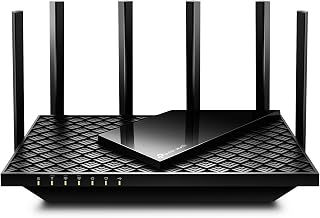
Changing DNS on a single PC helps that one device, but setting it on your router applies the improvement to your console, phone, and every gadget at once. A capable gaming router makes this simple and adds quality-of-service features that prioritize game traffic. The TP-Link Archer AXE75 and ASUS TUF Gaming BE6500 both offer straightforward custom-DNS fields alongside gaming accelerators, while the GL.iNet Flint 2 gives advanced users granular control over DNS and routing.
Combining DNS With Low-Latency Hardware
DNS tuning delivers the most benefit when paired with a modern router that reduces bufferbloat and prioritizes real-time traffic. Wi-Fi 6, 6E, and Wi-Fi 7 routers such as the Archer GE650 or Flint 3 keep latency low under load, so your optimized DNS lookups are not undone by a congested network. For the best results, wire your gaming device to the router with Ethernet whenever possible.
Frequently Asked Questions
Does changing DNS lower my in-game ping?
Not directly. DNS speeds up the lookup step when connecting and matchmaking, but your ping to a game server is determined by routing and distance. A better resolver mainly improves connection times and reliability.
What is the best free DNS for gaming?
Cloudflare 1.1.1.1 is frequently the fastest, with Google 8.8.8.8 and Quad9 as strong alternatives. Test them from your own connection, since the ideal choice varies by region and ISP.
Is it better to set DNS on my router or device?
Setting it on the router covers every device automatically, including consoles that make custom DNS awkward. Set it on a single device only if you want different settings for one machine.
Can the wrong DNS cause lag or disconnects?
A slow or unreliable resolver can cause longer load times and occasional connection failures. Switching to a reputable public resolver usually resolves those issues and improves overall stability.
Conclusion
Optimizing DNS is one of the easiest free tweaks a gamer can make, and pairing it with a fast, low-latency router locks in the benefit across your whole network. Test a public resolver like Cloudflare, apply it at the router level on a model such as the Archer AXE75 or Flint 2, and connect over Ethernet for the snappiest, most reliable online sessions in 2026.