Key takeaways
- Cache: The 9800X3D carries 96MB of total L3 thanks to 3D V-Cache, against 32MB on the 9700X — the single biggest driver of the gaming gap.
- Clock speeds: The 9700X boosts higher (up to 5.5GHz) with a lower base clock, while the 9800X3D trades a little peak frequency for a much higher base and far more cache.
- Power and cooling: 120W TDP on the 9800X3D versus 65W on the 9700X, which can be lifted to a 105W mode in BIOS. The 9700X is dramatically easier to cool.
- Gaming performance: Expect roughly 15–20% higher average frame rates from the 9800X3D at 1080p, stretching well beyond 30% in cache-hungry titles like flight sims, factory builders and grand strategy.
- Productivity: Much closer. The 9700X’s higher boost helps in lightly threaded work, while the 9800X3D’s larger power budget usually edges ahead in sustained rendering and compilation.
- Price: The 9700X typically costs substantially less, and that difference can fund a GPU tier upgrade — which often matters more above 1440p.
What's inside
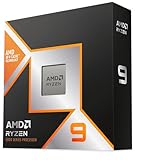
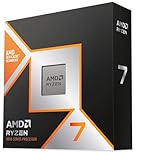
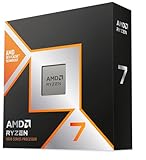
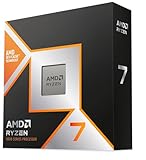
AMD’s Zen 5 desktop stack has settled into two clear lanes, and nothing illustrates the split better than the Ryzen 7 9800X3D versus the Ryzen 7 9700X. On paper they look like siblings: eight cores, sixteen threads, the same Zen 5 architecture, the same AM5 socket, the same DDR5 memory and PCIe 5.0 support. The separation comes down to one thing — a 64MB slab of second-generation 3D V-Cache stacked onto the compute die — and a price gap that has stayed stubbornly wide since launch.
That choice matters more in 2026 than it did two years ago. Modern GPUs have comfortably outrun mid-tier CPUs at 1080p and 1440p, upscaling and frame generation push internal render resolutions down (which shifts the bottleneck squarely onto the processor), and the simulation, strategy and open-world titles dominating playtime charts are precisely the games that punish a small cache pool. Meanwhile, the 9700X has drifted into genuine value territory. Here’s how the two actually compare when your money is on the table.
As an Amazon Associate we earn from qualifying purchases at no extra cost to you. Product prices and availability are accurate as of the date shown and are subject to change.


⚡ Save on Your Next PC — Amazon Prime
Prime members get fast free shipping on the systems above, plus early access to Prime Day & Black Friday PC deals. New members get a 30-day free trial.
Watch: Ryzen 7 9800X3D vs 9700X: 2026 Gaming CPU — Video Review
Quick Verdict
Buy the Ryzen 7 9800X3D if gaming is the primary reason the PC exists — especially at high refresh rates, in CPU-bound sims, or paired with a high-end GPU you don’t want to hold back. Buy the Ryzen 7 9700X if you’re building to a budget, playing at 1440p or 4K with a mid-range card, or you want a cool, quiet, low-power system where the savings go toward a better GPU. Neither is a bad chip; they’re aimed at different builders.
Key Differences
- Cache: The 9800X3D carries 96MB of total L3 thanks to 3D V-Cache, against 32MB on the 9700X — the single biggest driver of the gaming gap.
- Clock speeds: The 9700X boosts higher (up to 5.5GHz) with a lower base clock, while the 9800X3D trades a little peak frequency for a much higher base and far more cache.
- Power and cooling: 120W TDP on the 9800X3D versus 65W on the 9700X, which can be lifted to a 105W mode in BIOS. The 9700X is dramatically easier to cool.
- Gaming performance: Expect roughly 15–20% higher average frame rates from the 9800X3D at 1080p, stretching well beyond 30% in cache-hungry titles like flight sims, factory builders and grand strategy.
- Productivity: Much closer. The 9700X’s higher boost helps in lightly threaded work, while the 9800X3D’s larger power budget usually edges ahead in sustained rendering and compilation.
- Price: The 9700X typically costs substantially less, and that difference can fund a GPU tier upgrade — which often matters more above 1440p.
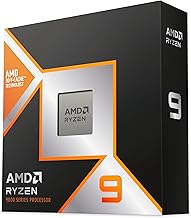
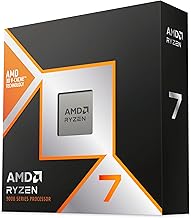
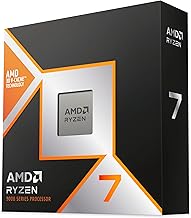
AMD Ryzen 7 9800X3D
The 9800X3D is still the reference point for gaming CPUs. AMD’s second-generation packaging places the cache beneath the compute die rather than on top, which improves thermal transfer and allowed AMD to ship the first fully unlocked X3D part. In practice that means higher sustained clocks than the older 7800X3D, real overclocking and Curve Optimizer headroom, and none of the frequency compromise that defined the first V-Cache generation. Frame-time consistency is where it shines hardest — 1% lows in busy multiplayer maps and dense simulation saves hold up far better than raw averages suggest.
It’s also the safest long-term buy on AM5 if you’re driving a flagship GPU or a 240Hz-plus display. Because demand has kept it popular, it’s widely sold as a bundle: the Ryzen 7 9800X3D + TUF Gaming X870-PLUS WiFi kit is a clean, well-supported pairing, while the Micro Center combos with the MSI PRO X870E-P or the GIGABYTE X870 Gaming WIFI6 board typically undercut buying the parts separately and arrive with the BIOS support already sorted. Budget for a competent 240mm AIO or a large tower air cooler.
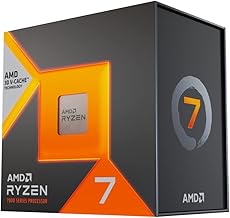
AMD Ryzen 7 9700X
The 9700