Key takeaways
- Prioritize cache over cores: For gaming specifically, large L3 cache does more for frame rates than extra cores. AMD’s 3D V-Cache chips consistently outperform higher-core-count processors in games despite similar or lower core counts, because game engines benefit enormously from keeping data close to the CPU.
- Factor in total platform cost: A $250 CPU on a new AM5 board with DDR5 can easily cost $200 more than a $180 chip dropped into an existing AM4 system. If you already own an AM4 motherboard and DDR4, an upgrade path within that ecosystem often delivers better value than starting over.
- Match the CPU to your GPU and resolution: At 4K, most modern processors perform within a few percent of one another because the GPU is the limiting factor. At 1080p and 1440p with a high-refresh monitor, CPU choice matters enormously. Buy accordingly rather than overspending for resolutions you don’t play at.
- Check cooling requirements and included coolers: Some budget chips ship with a competent stock cooler, saving you $30-40. Higher-TDP processors need aftermarket cooling, which needs to be part of your budget math — an unbudgeted tower cooler can push an otherwise affordable build over the line.
- Consider upgrade longevity: AM5 remains a supported socket with future CPU releases planned, meaning a board bought today can accept a drop-in upgrade in a few years. AM4 is mature and cheap but effectively at the end of its road. Decide whether you’re building for now or for the next five years.
What's inside
Building a gaming PC in 2026 means navigating a CPU market that has never been more crowded — or more confusing. Spend too little and you bottleneck a perfectly good graphics card; spend too much and you’re paying for productivity cores that will sit idle while you play. The $300 ceiling is the sweet spot where gaming performance stops scaling linearly with price, but knowing which chip actually delivers at that budget requires cutting through spec sheets full of core counts and clock speeds that tell you surprisingly little about real frame rates.
This guide breaks down the processors that genuinely earn their place in a sub-$300 gaming build. We’ve focused on chips that pair sensibly with mid-range and high-end GPUs, factored in platform costs like motherboards and memory, and weighted our picks toward 1% lows and frame-time consistency rather than headline benchmark averages. Whether you’re building fresh on AM5 or squeezing one final upgrade out of an AM4 board, there’s a clear winner here for your situation.
As an Amazon Associate we earn from qualifying purchases at no extra cost to you. Product prices and availability are accurate as of the date shown and are subject to change.





⚡ Save on Your Next PC — Amazon Prime
Prime members get fast free shipping on the systems above, plus early access to Prime Day & Black Friday PC deals. New members get a 30-day free trial.
Watch: Best CPU for Gaming Under $300 — Video Review
How to Choose CPU for Gaming Under $300
- Prioritize cache over cores: For gaming specifically, large L3 cache does more for frame rates than extra cores. AMD’s 3D V-Cache chips consistently outperform higher-core-count processors in games despite similar or lower core counts, because game engines benefit enormously from keeping data close to the CPU.
- Factor in total platform cost: A $250 CPU on a new AM5 board with DDR5 can easily cost $200 more than a $180 chip dropped into an existing AM4 system. If you already own an AM4 motherboard and DDR4, an upgrade path within that ecosystem often delivers better value than starting over.
- Match the CPU to your GPU and resolution: At 4K, most modern processors perform within a few percent of one another because the GPU is the limiting factor. At 1080p and 1440p with a high-refresh monitor, CPU choice matters enormously. Buy accordingly rather than overspending for resolutions you don’t play at.
- Check cooling requirements and included coolers: Some budget chips ship with a competent stock cooler, saving you $30-40. Higher-TDP processors need aftermarket cooling, which needs to be part of your budget math — an unbudgeted tower cooler can push an otherwise affordable build over the line.
- Consider upgrade longevity: AM5 remains a supported socket with future CPU releases planned, meaning a board bought today can accept a drop-in upgrade in a few years. AM4 is mature and cheap but effectively at the end of its road. Decide whether you’re building for now or for the next five years.
The Best Picks Reviewed
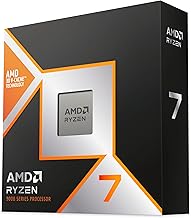
AMD Ryzen 7 9800X3D
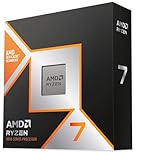
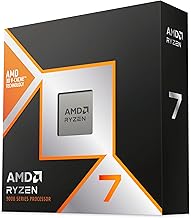
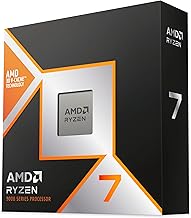
The 9800X3D remains the definitive gaming processor, combining eight Zen 5 cores with second-generation 3D V-Cache that sits beneath the compute die for dramatically improved thermals and full overclocking support. It typically sits just above the $300 mark depending on retailer, so watch for sales — if you catch it at budget, nothing else in this guide touches it for high-refresh 1080p and 1440p gaming.
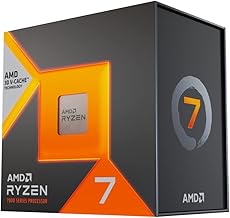
AMD Ryzen 7 7800X3D
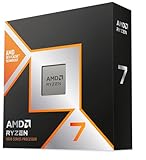
Still the value champion of the X3D lineup, the 7800X3D delivers roughly 90-95% of its successor’s gaming performance at a meaningfully lower price, and it runs cool and quiet on modest cooling thanks to its conservative 120W package power. For anyone building a dedicated gaming rig on AM5 under $300, this is the most defensible purchase on the list.
AMD Ryzen 7 5800X3D
The chip that proved cache is king, the 5800X3D remains a remarkable option for anyone sitting on an AM4 board with DDR4 memory. It trades blows with far newer processors in cache-sensitive titles and turns an aging system into a legitimate high-refresh gaming machine for a fraction of a full platform rebuild — just verify your motherboard’s BIOS support first.
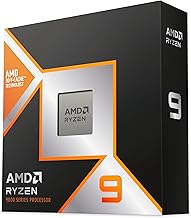
AMD Ryzen 5 9600X
Six Zen 5 cores at high clocks make the 9600X a smart entry point into AM5 for builders pairing a mid-range GPU with a 1440p display. It won’t match the X3D chips in CPU-bound scenarios, but it leaves substantial budget headroom for your graphics card while keeping the door open to a 3D V-Cache upgrade down the line.
AMD Ryzen 5 5500
At the absolute entry level, the 5500 is a competent six-core, twelve-thread chip that ships with a usable Wraith Stealth cooler and pairs well with budget AM4 boards. It’s genuinely limited by its reduced PCIe support and smaller cache, but for esports titles and 60fps gaming on a strict budget, it does the job for remarkably little money.
Frequently Asked Questions
Do I really need 3D V-Cache for gaming?
Not universally, but the gains are substantial in the games most likely to stress a CPU — simulation titles, strategy games, MMOs and open-world engines can see 20-30% higher frame rates. If you play at 4K with a mid-range GPU, the benefit shrinks considerably, and a standard chip like the 9600X may serve you better financially.
Is AM4 still worth buying in 2026?
Only if you already own the platform. Buying a new AM4 motherboard and DDR4 memory today means investing in a dead-end socket, but dropping a 5800X3D into a board you already have is one of the best value upgrades available at any price.
How many cores do I need for gaming?
Six cores with SMT remains a functional minimum for modern titles, and eight is the comfortable sweet spot. Beyond that, additional cores contribute almost nothing to gaming performance and are better justified by streaming, video editing or heavy multitasking workloads.
Will a $300 CPU bottleneck a high-end GPU?
Not meaningfully, provided you choose well. The 7800X3D and 9800X3D are genuinely flagship-tier gaming processors despite their price, and either will feed a top-end graphics card without limiting it at 1440p or 4K.
Final Thoughts
For most builders, the AMD Ryzen 7 7800X3D is the clear recommendation — it delivers near-flagship gaming performance, runs efficiently, and sits comfortably within budget on a socket with a future. If you can stretch to catch the Ryzen 7 9800X3D on sale, it’s the outright fastest gaming CPU here and worth the premium for competitive high-refresh play. And for anyone already on AM4, the Ryzen 7 5800X3D remains the smartest upgrade in PC gaming, turning an aging build into something genuinely modern without touching your motherboard or memory.