Key takeaways
- Refresh rate: 144Hz is a great baseline; competitive players want 180Hz-240Hz, while casual gamers are happy at 120Hz-165Hz.
- Panel type: IPS balances speed and color, VA offers deep contrast, and OLED delivers the best blacks and response times.
- Resolution: Match to your GPU. 1080p for high frames, 1440p for the sweet spot, 4K for maximum detail.
- Adaptive sync: FreeSync or G-Sync eliminates tearing and keeps motion smooth across variable frame rates.
- Response time: Lower is better for fast games; 1ms or the sub-millisecond figures on OLED reduce motion blur.
What's inside
So what’s the best gaming monitor? The honest answer is that it depends on your GPU, the games you play, and whether you chase competitive frame rates or cinematic visuals. The market spans blazing 240Hz esports panels, gorgeous QD-OLEDs, and value FHD screens that punch above their price.
This guide cuts through the jargon of refresh rates, response times, and panel types to help you match a monitor to your setup. Below, we explain the essentials and highlight the standout displays of 2026.
As an Amazon Associate we earn from qualifying purchases at no extra cost to you. Product prices and availability are accurate as of the date shown and are subject to change.




🎮 Get More From Your Setup — Free
Prime Gaming gives you free PC games every month, in-game loot, and a free Twitch channel sub — plus fast free shipping on all the gear above. New members get a 30-day free trial.
Watch: Best What’s The Best Gaming Monitor — Video Review
How to Choose a Gaming Monitor
- Refresh rate: 144Hz is a great baseline; competitive players want 180Hz-240Hz, while casual gamers are happy at 120Hz-165Hz.
- Panel type: IPS balances speed and color, VA offers deep contrast, and OLED delivers the best blacks and response times.
- Resolution: Match to your GPU. 1080p for high frames, 1440p for the sweet spot, 4K for maximum detail.
- Adaptive sync: FreeSync or G-Sync eliminates tearing and keeps motion smooth across variable frame rates.
- Response time: Lower is better for fast games; 1ms or the sub-millisecond figures on OLED reduce motion blur.
The Best Gaming Monitors Reviewed
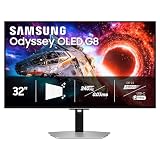
Samsung 27″ Odyssey OLED G5 (QD-OLED, 180Hz)
This QD-OLED stunner combines 180Hz, a 0.03ms response, and G-Sync compatibility. It’s the premium pick for gamers who want elite visuals and speed.
ASUS TUF Gaming 27″ (FHD, 240Hz)
For competitive play, the TUF’s 240Hz fast IPS panel and 0.3ms response deliver razor-sharp motion, with 99% sRGB for accurate color too.
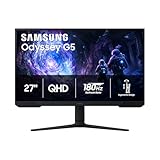
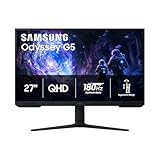
Samsung 27″ Odyssey G5 (QHD, 180Hz)
A brilliant all-rounder, this QHD G5 offers 180Hz, HDR10, and a height-adjustable stand, hitting the sweet spot for most gamers.
Samsung 32″ Odyssey G55C (QHD Curved, 165Hz)
The immersive 32-inch curved G55C brings QHD at 165Hz with a 1000R curve, perfect for engrossing single-player and cinematic experiences.
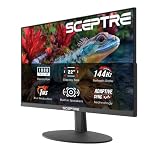
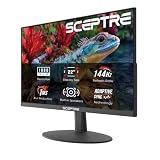
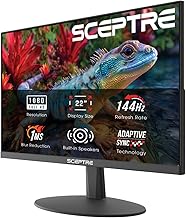
Sceptre 22″ (FHD, 144Hz)
The budget champion, this 144Hz Sceptre adds built-in speakers and dual inputs, offering smooth gaming for smaller desks and tighter wallets.
Frequently Asked Questions
Is OLED worth it for a gaming monitor?
OLED delivers unmatched contrast and response times for a premium experience. If budget allows, it’s a noticeable visual upgrade over IPS or VA.
What refresh rate is best?
144Hz suits most gamers, while 240Hz benefits competitive players. Ensure your GPU can push enough frames to justify the higher rate.
Should I get 1440p or 4K?
1440p is the current sweet spot for performance and clarity. Choose 4K only if you have a powerful GPU and prioritize visual detail.
Do I need adaptive sync?
Yes, FreeSync or G-Sync eliminates tearing and smooths gameplay. It’s a standard feature well worth having on any gaming monitor.
Final Thoughts
The Samsung Odyssey OLED G5 is the best overall for visuals, while the ASUS TUF 240Hz leads for competitive play. The Samsung Odyssey G5 QHD offers the best all-around value.