Key takeaways
- 1080p: budget builds, esports players who want maximum frames, and older or mid-range GPUs.
- 1440p: the best all-rounder for 2026, balancing sharpness and high refresh rates on modern mid-to-high-end cards.
- 4K: single-player and cinematic gamers with a high-end GPU who prioritize maximum detail over frame rate.
What's inside
Choosing a gaming resolution is really a choice about balance: sharpness versus frame rate versus the cost of the graphics card needed to drive it. In 2026, 1080p, 1440p, and 4K each make sense for a different kind of player, and picking the wrong one either wastes money on a monitor your GPU cannot feed or leaves image quality on the table.
This guide breaks down what each resolution actually demands from your hardware, how pixel density and screen size change the picture, and which type of gamer each option suits best. By the end you will know exactly which resolution matches your GPU, your budget, and the way you play.
As an Amazon Associate we earn from qualifying purchases at no extra cost to you. Product prices and availability are accurate as of the date shown and are subject to change.




⚡ Save on Your Next PC — Amazon Prime
Prime members get fast free shipping on the systems above, plus early access to Prime Day & Black Friday PC deals. New members get a 30-day free trial.
Watch: 1080p vs 1440p vs 4K for Gaming — Video Review
What Each Resolution Really Means
Resolution is the number of pixels on screen: 1080p is 1920×1080, 1440p (QHD) is 2560×1440, and 4K is 3840×2160. Jumping from 1080p to 1440p adds about 78 percent more pixels, and 4K has four times the pixels of 1080p. More pixels mean a sharper, more detailed image, but every one of them has to be rendered by your GPU every frame, which is why higher resolutions hit performance hard.
The GPU Cost of Each Step
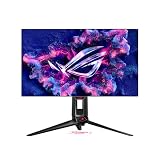
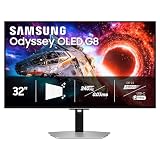
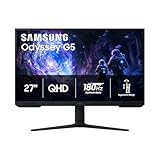
Your graphics card is the deciding factor. 1080p is comfortable for mid-range cards and lets you chase very high refresh rates. 1440p, the current sweet spot, needs a solid modern GPU but rewards you with a noticeably crisper image while still hitting high frame rates on monitors like the ASUS TUF Gaming VG27AQ3A or the Samsung Odyssey G5. 4K is genuinely demanding and really wants a high-end card to stay above 60fps in modern titles, so it pairs best with premium panels such as the Samsung Odyssey OLED G6.
Pixel Density and Screen Size
Resolution only tells half the story; how sharp it looks depends on screen size too. On a 27-inch panel, 1440p hits a pixel density that looks crisp without demanding 4K horsepower, which is exactly why 27-inch QHD monitors dominate 2026 gaming. Push 1080p onto a large screen and individual pixels become visible; put 4K on a 27-inch panel and the extra sharpness is hard to appreciate at normal viewing distance. Match the resolution to the panel size for the best result.
Refresh Rate Versus Resolution
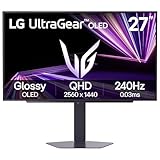
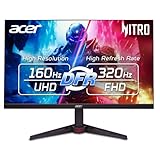
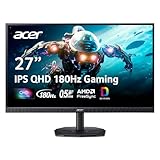
For competitive players, frame rate often matters more than raw sharpness. A fast 1440p 180Hz monitor like the Acer Nitro or the LG Ultragear 27GS60QC lets you enjoy both a detailed image and the high refresh rate that smooths motion and tightens aim. If you play fast shooters and value every frame, a lower resolution at a higher refresh rate can be the smarter buy than a sharper but slower 4K panel.
Who Each Resolution Suits
- 1080p: budget builds, esports players who want maximum frames, and older or mid-range GPUs.
- 1440p: the best all-rounder for 2026, balancing sharpness and high refresh rates on modern mid-to-high-end cards.
- 4K: single-player and cinematic gamers with a high-end GPU who prioritize maximum detail over frame rate.
Tips
- Match resolution to your GPU tier: mid-range for 1080p/1440p, high-end for 4K.
- On a 27-inch screen, 1440p is the sweet spot for sharpness without crushing performance.
- Competitive players should weigh a fast 1440p 180Hz panel over a slower 4K one.
- Use upscaling tech like DLSS or FSR to make higher resolutions playable on weaker cards.
Frequently Asked Questions
Is 1440p worth it over 1080p?
For most people, yes. On a 27-inch monitor the jump in sharpness is obvious, and modern mid-range GPUs can still deliver high frame rates at 1440p, making it the best balance in 2026.
Can my GPU handle 4K gaming?
Only if it is a high-end card. 4K has four times the pixels of 1080p, so mid-range GPUs will struggle to stay above 60fps in demanding titles unless you lean heavily on upscaling.
Does 4K make competitive games easier?
Not really. Competitive titles benefit more from high frame rates and low latency than from extra sharpness, so many pros play at 1080p or 1440p to maximize refresh rate.
What resolution is best for a 27-inch monitor?
1440p. It hits an ideal pixel density on a 27-inch screen, staying crisp without the heavy GPU cost of 4K, which is why 27-inch QHD panels are so popular.
Conclusion
For most gamers in 2026, 1440p on a 27-inch monitor is the resolution to target: it looks sharp, runs fast on modern mid-range hardware, and does not force you into a top-tier GPU. Save 1080p for budget or esports-focused builds, and reserve 4K for high-end rigs where cinematic detail matters more than chasing the highest possible frame rate.