Key takeaways
- Resolution and size: QHD at 27 inches, like the Samsung Odyssey OLED G6, offers the sharpest pixel density for competitive play, while 4K panels such as the LG 32GX850A suit immersive single-player worlds.
- Refresh rate: Higher is smoother, so a 240Hz or dual-mode 165/330Hz panel gives esports players the fluid motion advantage they crave.
- QD-OLED vs. WOLED: QD-OLED, seen in the Samsung Odyssey and ASUS ROG models, delivers vivid color volume, while LG’s WOLED panels excel at deep blacks and text clarity.
- HDR certification: Look for VESA DisplayHDR TrueBlack 400, which lets OLED’s perfect blacks shine and adds real punch to highlights in supported games.
- Burn-in protection: Modern panels include OLED care features and pixel-shifting, like Samsung’s OLED Safeguard, so factor in warranty length when comparing long-term value.
What's inside
OLED has gone from an exotic luxury to the gold standard for gaming displays, and 2026 is arguably the best year yet to make the leap. With per-pixel lighting, near-instant response times, and inky true blacks, an OLED gaming monitor delivers contrast and motion clarity that traditional LCD panels simply cannot match. Refresh rates now soar past 240Hz, HDR is genuinely impactful, and burn-in protections have matured, making these screens a legitimate long-term investment.
We compared the leading QD-OLED and WOLED gaming monitors across sizes from a sharp 27-inch QHD to sprawling 49-inch ultrawides and dual-mode 4K panels. Our judging focused on refresh rate, resolution, HDR performance, and overall value. Below you will find our top picks, followed by a buying guide that demystifies OLED jargon and answers the questions gamers ask before spending on a premium display.
As an Amazon Associate we earn from qualifying purchases at no extra cost to you. Product prices and availability are accurate as of the date shown and are subject to change.


⚡ Save on Your Next PC — Amazon Prime
Prime members get fast free shipping on the systems above, plus early access to Prime Day & Black Friday PC deals. New members get a 30-day free trial.
Watch: Best OLED Monitor 2026 — Video Review
How to Choose an OLED Gaming Monitor
- Resolution and size: QHD at 27 inches, like the Samsung Odyssey OLED G6, offers the sharpest pixel density for competitive play, while 4K panels such as the LG 32GX850A suit immersive single-player worlds.
- Refresh rate: Higher is smoother, so a 240Hz or dual-mode 165/330Hz panel gives esports players the fluid motion advantage they crave.
- QD-OLED vs. WOLED: QD-OLED, seen in the Samsung Odyssey and ASUS ROG models, delivers vivid color volume, while LG’s WOLED panels excel at deep blacks and text clarity.
- HDR certification: Look for VESA DisplayHDR TrueBlack 400, which lets OLED’s perfect blacks shine and adds real punch to highlights in supported games.
- Burn-in protection: Modern panels include OLED care features and pixel-shifting, like Samsung’s OLED Safeguard, so factor in warranty length when comparing long-term value.
The Best OLED Gaming Monitors Reviewed
Samsung Odyssey OLED G6
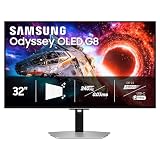
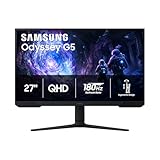
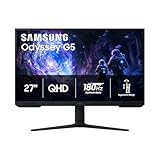
The 27-inch Odyssey OLED G6 is our top all-round pick. Its QD-OLED QHD panel runs at a blazing 240Hz with a 0.03ms response, glare-free coating, and Pantone validation. Add OLED Safeguard protections and a three-year warranty, and it is a confident, well-priced entry into premium OLED gaming.
LG UltraGear 27GX704A
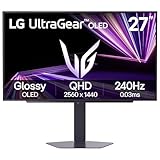
LG’s 27GX704A brings WOLED strengths to the table with QHD resolution, 240Hz, 0.03ms, G-Sync compatibility, and DisplayHDR TrueBlack 400. HDMI 2.1 and DisplayPort inputs make it console-friendly, and LG’s color accuracy and deep blacks make it a superb competitive and cinematic all-rounder.
LG UltraGear 32GX850A
For those who want it all, the 32-inch 32GX850A pairs 4K UHD sharpness with a clever dual-mode that switches between 165Hz at 4K and 330Hz at a lower resolution. G-Sync, FreeSync Premium Pro, and TrueBlack 400 round out a flexible flagship for gamers who refuse to compromise.
ASUS ROG XG27AQDMGR
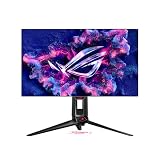
The ASUS ROG XG27AQDMGR earns the highest rating in our lineup. Its 27-inch 1440p glossy OLED runs at 240Hz with 0.03ms, a Neo Proximity sensor, OLED Care Pro, and DisplayHDR 400. The glossy TrueBlack coating gives colors extra pop, making it a stunning showcase panel.
Samsung Odyssey OLED G9
If immersion is the goal, the 49-inch Odyssey G93SC ultrawide is unmatched. Its curved QD-OLED DQHD canvas runs at 240Hz with 0.03ms response, G-Sync compatibility, and FreeSync Premium Pro. It effectively replaces a dual-monitor setup with one seamless, jaw-dropping display for sim and RPG fans.
Frequently Asked Questions
Is OLED burn-in still a concern in 2026?
Modern OLED gaming monitors include pixel-shifting, logo dimming, and panel refresh routines, plus features like Samsung’s OLED Safeguard. With normal mixed use and these protections, burn-in is far less likely than in early panels, and warranties often cover it.
What is the difference between QD-OLED and WOLED?
QD-OLED, used by Samsung and ASUS here, adds a quantum-dot layer for brighter, more saturated color. WOLED, LG’s approach, uses a white OLED base and is prized for deep blacks and crisp text. Both look excellent for gaming.
Do I need 4K or is QHD enough?
QHD at 27 inches offers a great balance of sharpness and high refresh rates for competitive gaming. 4K, as on the LG 32GX850A, delivers more detail for immersive titles but demands a stronger graphics card to drive it.
Are these monitors good for consoles?
Yes. Models with HDMI 2.1, such as the LG UltraGear panels, support high-refresh gaming from PS5 and Xbox Series X. Just confirm the specific input supports the resolution and frame rate your console outputs.
Final Thoughts
An OLED gaming monitor is the single most dramatic visual upgrade available in 2026, and prices have finally reached reasonable territory. The Samsung Odyssey OLED G6 is our best overall pick for its balance of speed, color, and warranty, while the LG 32GX850A tempts 4K enthusiasts with dual-mode flexibility and the 49-inch Odyssey G9 delivers unrivaled immersion. Match the size and resolution to your GPU and desk, and you will never look at LCD the same way again.