Key takeaways
- Strong 1440p performance: Smooth high-refresh gaming in modern titles.
- DLSS 4 and Blackwell: Big frame-rate gains and improved ray tracing.
- GDDR7 memory: Fast 12GB framebuffer on a 192-bit bus.
- SFF options: Compact models fit small form factor builds.
What's inside
The NVIDIA GeForce RTX 5070 has quickly become one of the most talked-about graphics cards for gamers who want strong 1440p performance without stepping up to flagship pricing. Built on NVIDIA’s Blackwell architecture with 12GB of fast GDDR7 memory and DLSS 4 support, it delivers a compelling mix of speed, efficiency, and modern features.
Because the RTX 5070 comes in many board-partner versions, choosing the right one matters. In this review we compare popular options from GIGABYTE, MSI, and PNY, looking at cooling, size, and clock speeds so you can pick the card that fits your case and performance goals.
As an Amazon Associate we earn from qualifying purchases at no extra cost to you. Product prices and availability are accurate as of the date shown and are subject to change.


🎮 Get More From Your Setup — Free
Prime Gaming gives you free PC games every month, in-game loot, and a free Twitch channel sub — plus fast free shipping on all the gear above. New members get a 30-day free trial.
Watch: 5070 Rtx: Review & Buyer’s Guide — Video Review
Design & Build
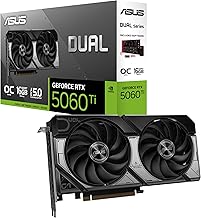
All these RTX 5070 cards share the same core GPU, so the differences come down to cooler design, size, and build quality. The GIGABYTE Gaming OC and AERO OC models use the company’s WINDFORCE cooling system with multiple fans and a robust heatsink, keeping temperatures low and noise in check during long sessions. The AERO OC’s white styling is a nice option for lighter-themed builds.
The GIGABYTE Eagle OC ICE SFF and PNY Triple Fan SFF-Ready cards are designed with smaller form factor builds in mind, making them great choices for compact cases where clearance is tight. The MSI Ventus 2X OC takes a more compact dual-fan approach with clean black styling, ideal for builders who want solid cooling in a shorter card. Build quality across the lineup is high, with sturdy backplates and quality fans.
Performance
Performance is excellent and largely consistent across these cards, since they run the same RTX 5070 chip with 12GB of GDDR7 on a 192-bit bus and PCIe 5.0 support. Expect smooth high-refresh 1440p gaming in modern titles, with DLSS 4 boosting frame rates dramatically in supported games and ray tracing handled far better than previous generations.
Factory overclocks create small differences. The PNY Triple Fan cards boost to around 2587MHz, while the MSI Ventus 2X OC pushes to roughly 2542MHz, with the GIGABYTE OC models tuned similarly. In practice these clock differences translate to only a few frames, so cooling capacity, noise, and physical size are more meaningful decision factors than the modest OC gaps. The triple-fan GIGABYTE and PNY cards tend to run coolest under sustained load, while the compact models trade a little thermal headroom for space savings.
Pros & Cons
- Strong 1440p performance: Smooth high-refresh gaming in modern titles.
- DLSS 4 and Blackwell: Big frame-rate gains and improved ray tracing.
- GDDR7 memory: Fast 12GB framebuffer on a 192-bit bus.
- SFF options: Compact models fit small form factor builds.
- 12GB capacity: Enough for now, but heavy 4K texture use can push limits.
- Minor OC differences: Factory clocks vary little between models.
- Size varies: Triple-fan cards need more case clearance.
Alternatives to Consider
Pick based on your case and cooling priorities. If you have a full-size tower and want the coolest, quietest operation, the triple-fan GIGABYTE Gaming OC or PNY OC cards are ideal. Building in a compact case? The GIGABYTE Eagle OC ICE SFF or the SFF-Ready PNY models are purpose-built for tight spaces. Budget-minded shoppers might also consider a renewed PNY card for savings, while anyone chasing 4K performance could look at a higher-tier GPU. For most 1440p gamers, though, any of these RTX 5070 variants delivers essentially the same great experience.
Frequently Asked Questions
Is the RTX 5070 good for 1440p gaming?
Yes, it’s an excellent 1440p card, delivering smooth high-refresh performance in modern games. With DLSS 4 enabled, it can even stretch comfortably toward 4K in many titles.
Do the different brands perform differently?
Only marginally. Since they use the same GPU, real-world performance gaps between the GIGABYTE, MSI, and PNY cards are just a few frames. Cooling, noise, and size are the more meaningful differences.
Is 12GB of VRAM enough?
For 1440p gaming, 12GB of GDDR7 is plenty for current titles. Very high-resolution 4K gaming with maxed textures can approach the limit in a few demanding games, but it’s well-suited to its target resolution.
Should I get an SFF version?
If you’re building in a compact case, the SFF-ready and ICE SFF models ensure it fits. In a standard tower, a full-size triple-fan card offers slightly better cooling.
Verdict
The RTX 5070 is a fantastic choice for 1440p gamers, and the board partner you choose mostly comes down to size and cooling. For full-size builds, the triple-fan GIGABYTE Gaming OC and PNY OC cards run cool and quiet, while the GIGABYTE Eagle OC ICE SFF and PNY SFF-Ready models are perfect for compact rigs. Pick the version that fits your case, and you’ll enjoy the same strong Blackwell-powered performance with DLSS 4.