Key takeaways
- Top-tier 4K: The RTX 5080 cards lead benchmarks for high-resolution gaming.
- Great value flagship: The RX 9070 XT balances strong numbers with a lower price.
- Options for every tier: From 1080p to 4K, there’s a benchmarked pick.
What's inside
GPU benchmarks are the truest measure of a graphics card’s real-world muscle, cutting through marketing to show how each chip actually performs in games and creative apps. Heading into 2026 and beyond, the latest RDNA 4 Radeon and RTX 50-series cards deliver impressive benchmark numbers across resolutions, but knowing which card tops the charts for your needs is what matters. This review looks at standout GPUs and how they stack up.
Below I evaluate these cards’ benchmark-worthy performance, weigh their strengths and trade-offs, and help you match a GPU to your gaming resolution and budget. From mainstream 1080p performers to high-end 4K powerhouses, there’s a benchmark leader here for every tier.
As an Amazon Associate we earn from qualifying purchases at no extra cost to you. Product prices and availability are accurate as of the date shown and are subject to change.


🎮 Get More From Your Setup — Free
Prime Gaming gives you free PC games every month, in-game loot, and a free Twitch channel sub — plus fast free shipping on all the gear above. New members get a 30-day free trial.
Watch: Gpu Benchmark 2026: Review & Buyer’s Guide — Video Review
Design & Build
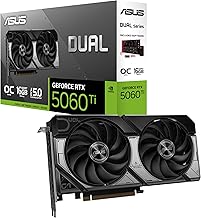
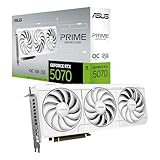
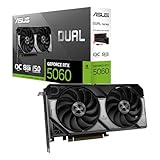
These cards span mainstream to high-end, and their designs reflect that. The ASUS TUF RTX 5080 and PNY RTX 5080 Epic-X are large, premium cards with robust cooling built to sustain top benchmark numbers at high clocks. The ASUS Prime RX 9070 XT sits at the value flagship level with a well-cooled, compact-ish design, while the RTX 5060 Ti, RTX 5060, and GIGABYTE AERO models are more modest in size for smaller builds. Across the range, cooling quality directly affects sustained benchmark performance, so the beefier heatsinks on the high-end cards pay off under load.
Performance
Benchmark performance scales clearly across these cards. At the top, the RTX 5080 models deliver excellent 4K frame rates with DLSS 4, making them the choice for high-refresh 4K gaming and demanding creative work. The Radeon RX 9070 XT posts strong 1440p and capable 4K numbers with 16GB of VRAM, offering superb value. The RTX 5060 Ti (16GB) is a solid 1440p performer, while the RTX 5060 and AERO OC handle 1080p and light 1440p gaming well. In benchmarks, VRAM capacity and upscaling features noticeably affect results at higher resolutions, so factor those in.
Pros & Cons
- Top-tier 4K: The RTX 5080 cards lead benchmarks for high-resolution gaming.
- Great value flagship: The RX 9070 XT balances strong numbers with a lower price.
- Options for every tier: From 1080p to 4K, there’s a benchmarked pick.
- High-end cards are large: RTX 5080 models need ample case space and power.
- 8GB limits some: Entry cards can be VRAM-constrained at higher settings.
- Prices climb fast: Top benchmark performance carries a premium.
Alternatives to Consider
Your ideal card depends on your target resolution. For chart-topping 4K benchmarks, the ASUS TUF or PNY RTX 5080 lead, though they demand a strong PSU and case clearance. For excellent 1440p and 4K value, the Radeon RX 9070 XT is hard to beat. Mainstream gamers focused on 1440p should look at the RTX 5060 Ti (16GB), while budget builders will find the RTX 5060 or GIGABYTE AERO OC deliver solid 1080p numbers. Match the card’s benchmark tier to your monitor.
Frequently Asked Questions
Why do GPU benchmarks matter?
They show real performance in games and apps, helping you compare cards objectively rather than relying on marketing claims. Look for benchmarks at your target resolution.
Which card is best for 4K?
The RTX 5080 models top 4K benchmarks with DLSS 4, while the RX 9070 XT offers capable 4K at better value. Choose based on budget and desired frame rates.
Does VRAM affect benchmark scores?
Yes, especially at higher resolutions and settings. Cards with 16GB hold up better in demanding scenarios than 8GB models, which can be constrained.
Do upscaling features change results?
Definitely. DLSS 4 and AMD’s upscaling boost frame rates significantly, so benchmarks with these features enabled reflect a smoother real-world experience.
Verdict
GPU benchmarks make choosing a card far easier once you know your target resolution. For the best 4K numbers, the RTX 5080 models lead, while the Radeon RX 9070 XT offers outstanding 1440p and 4K value. Mainstream gamers are well served by the RTX 5060 Ti, and budget builders by the RTX 5060. Match the benchmark tier to your monitor and budget, and you’ll land a card that performs exactly as expected.