Key takeaways
- Refresh rate: Aim for 100Hz minimum and 144Hz if you play competitive shooters. The jump from 60Hz is the single biggest upgrade you’ll feel, and it’s affordable at this price. Just confirm the high refresh rate is available over the port you’ll actually use — some budget panels cap HDMI lower than DisplayPort.
- Resolution vs. size: Stick with 1080p at 22–24 inches and 1440p at 27 inches. A 27-inch 1080p panel works but looks noticeably soft up close, so if you want that size on a budget, decide whether sharpness or refresh rate matters more to you.
- Panel type: IPS gives the best color and viewing angles, VA delivers deeper blacks and better contrast for single-player and horror games, and TN is fastest but washes out off-angle. Under $200 you’ll mostly choose between IPS and VA — both are solid.
- Adaptive sync: FreeSync or G-Sync Compatible support eliminates screen tearing without the input lag of V-Sync. This is essentially free on modern budget monitors, so there’s no reason to buy one without it.
- Connectivity and extras: Check for DisplayPort if you want full refresh rate from a desktop GPU, and count HDMI ports if you’re also connecting a console. VESA mounting, built-in speakers, and flicker-free backlighting are nice-to-haves that some budget models skip.
What's inside
Shopping for a gaming monitor under $200 is genuinely tricky in 2026. The budget tier is crowded with panels that promise “144Hz” and “1ms” on the box but deliver smeared motion, washed-out color, and backlight bleed you’ll notice the moment you load a dark dungeon. Meanwhile, the specs that actually matter for a good gaming experience — real refresh rate, adaptive sync support, panel type, and honest color coverage — are often buried or omitted entirely.
This guide cuts through that. We’ve picked six monitors that genuinely land under $200 and deliver where it counts, covering everything from a 144Hz esports panel to a 1440p option for players who care more about sharpness than frame counts. Below you’ll find our top picks, a short buying checklist, quick expert reviews of each display, and answers to the questions budget buyers ask most.
As an Amazon Associate we earn from qualifying purchases at no extra cost to you. Product prices and availability are accurate as of the date shown and are subject to change.







⚡ Save on Your Next PC — Amazon Prime
Prime members get fast free shipping on the systems above, plus early access to Prime Day & Black Friday PC deals. New members get a 30-day free trial.
Watch: Best Gaming Monitor Under $200 — Video Review
How to Choose Gaming Monitor Under $200
- Refresh rate: Aim for 100Hz minimum and 144Hz if you play competitive shooters. The jump from 60Hz is the single biggest upgrade you’ll feel, and it’s affordable at this price. Just confirm the high refresh rate is available over the port you’ll actually use — some budget panels cap HDMI lower than DisplayPort.
- Resolution vs. size: Stick with 1080p at 22–24 inches and 1440p at 27 inches. A 27-inch 1080p panel works but looks noticeably soft up close, so if you want that size on a budget, decide whether sharpness or refresh rate matters more to you.
- Panel type: IPS gives the best color and viewing angles, VA delivers deeper blacks and better contrast for single-player and horror games, and TN is fastest but washes out off-angle. Under $200 you’ll mostly choose between IPS and VA — both are solid.
- Adaptive sync: FreeSync or G-Sync Compatible support eliminates screen tearing without the input lag of V-Sync. This is essentially free on modern budget monitors, so there’s no reason to buy one without it.
- Connectivity and extras: Check for DisplayPort if you want full refresh rate from a desktop GPU, and count HDMI ports if you’re also connecting a console. VESA mounting, built-in speakers, and flicker-free backlighting are nice-to-haves that some budget models skip.
The Best Picks Reviewed
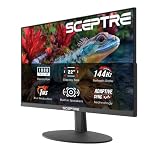
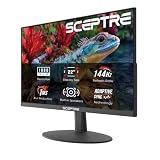
Sceptre E225W-FW144 22-Inch 144Hz
This is the value pick for competitive play — a true 144Hz refresh rate at a price most brands reserve for 75Hz panels, with both HDMI and DisplayPort so you can actually hit that ceiling. The 22-inch size keeps the whole frame in your field of view, which is exactly what you want for shooters, and built-in speakers mean you can skip desk clutter if you’re gaming in headphones anyway.
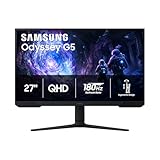
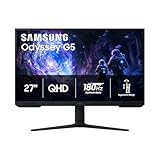
Samsung 27″ Odyssey G5 (G51F) QHD
The G51F is the sharpness upgrade in this roundup: 1440p across 27 inches is a meaningfully more detailed picture than 1080p, and Samsung’s panel tuning gives it better contrast and color consistency than most budget rivals. It’s the pick if you play story-driven or open-world games and want a monitor that doubles as a genuinely pleasant workspace.
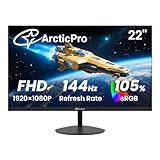
ArcticPro 22-Inch 144Hz
ArcticPro pairs a 144Hz panel with 105% sRGB coverage, which is unusually good color for this price bracket and makes games look punchier than the typical budget display. It’s a strong alternative to the Sceptre 22-inch if color accuracy matters to you as much as motion clarity.
Sceptre E275W-FW100T 27-Inch Prime
If you want a big screen without stretching your budget, this 27-inch panel delivers 100Hz, 100% sRGB, and dual HDMI plus DisplayPort — a genuinely generous port selection at this tier. The frameless design and eye-care backlighting make it a comfortable pick for long sessions, though at 1080p across 27 inches you’ll want to sit a bit further back.
Philips 221V8LB 22-Inch VA
The Philips leans on its VA panel for deep blacks and strong contrast, which pays off in darker games where cheaper IPS displays look grey and flat. At 100Hz it’s not an esports monitor, but with VESA mounting and flicker-free backlighting it’s the most well-rounded budget option for mixed gaming and everyday use.
Frequently Asked Questions
Is 144Hz worth it over 60Hz on a budget monitor?
Absolutely — it’s the most noticeable upgrade you can make at this price. Motion looks dramatically smoother in fast games, and even scrolling a webpage feels different. Just make sure your GPU can push enough frames to take advantage of it.
Can I get 1440p under $200 in 2026?
Yes, but your options are limited. The Samsung Odyssey G5 (G51F) is the standout, and it typically sits right at the edge of this budget. Expect to trade some refresh rate headroom for that extra resolution.
Do I need DisplayPort, or is HDMI enough?
HDMI is fine for consoles and most modern GPUs, but some budget monitors cap their maximum refresh rate over HDMI while allowing the full rate over DisplayPort. If you’re on a desktop PC and buying a 144Hz panel, use DisplayPort to be safe.
Is a curved monitor better for gaming?
At 24 inches the curve is subtle — it can feel slightly more immersive in racing and single-player games, but it won’t improve your performance. Choose based on whether you like the look, not because you expect a competitive edge.
Final Thoughts
For most players, the Sceptre E225W-FW144 is the smartest buy in this roundup — a real 144Hz panel with DisplayPort at a price that leaves room in the budget for a decent headset. If you’d rather have resolution than raw speed, the Samsung Odyssey G5 (G51F) is the clear winner and the only 1440p option here worth recommending. And if you want a larger screen without sacrificing color accuracy, the Sceptre E275W-FW100T 27-inch strikes the best balance of size, ports, and value.